
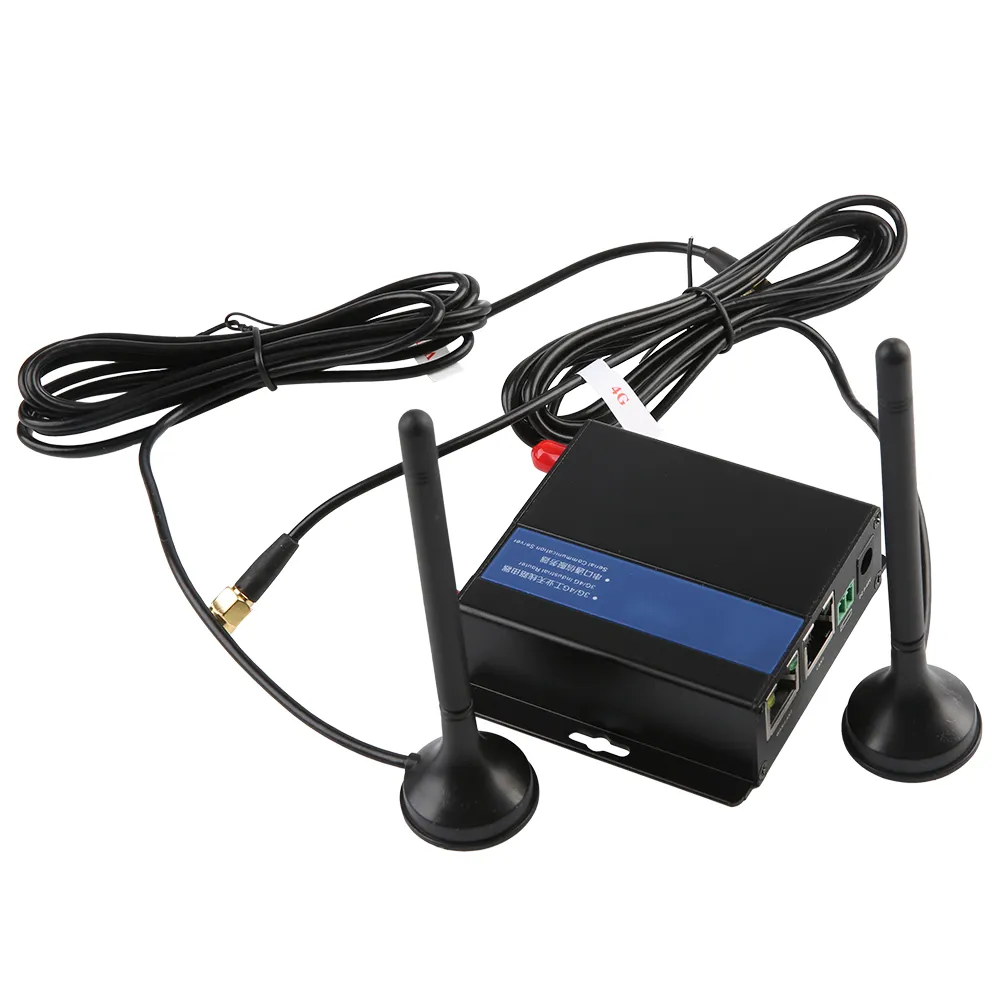
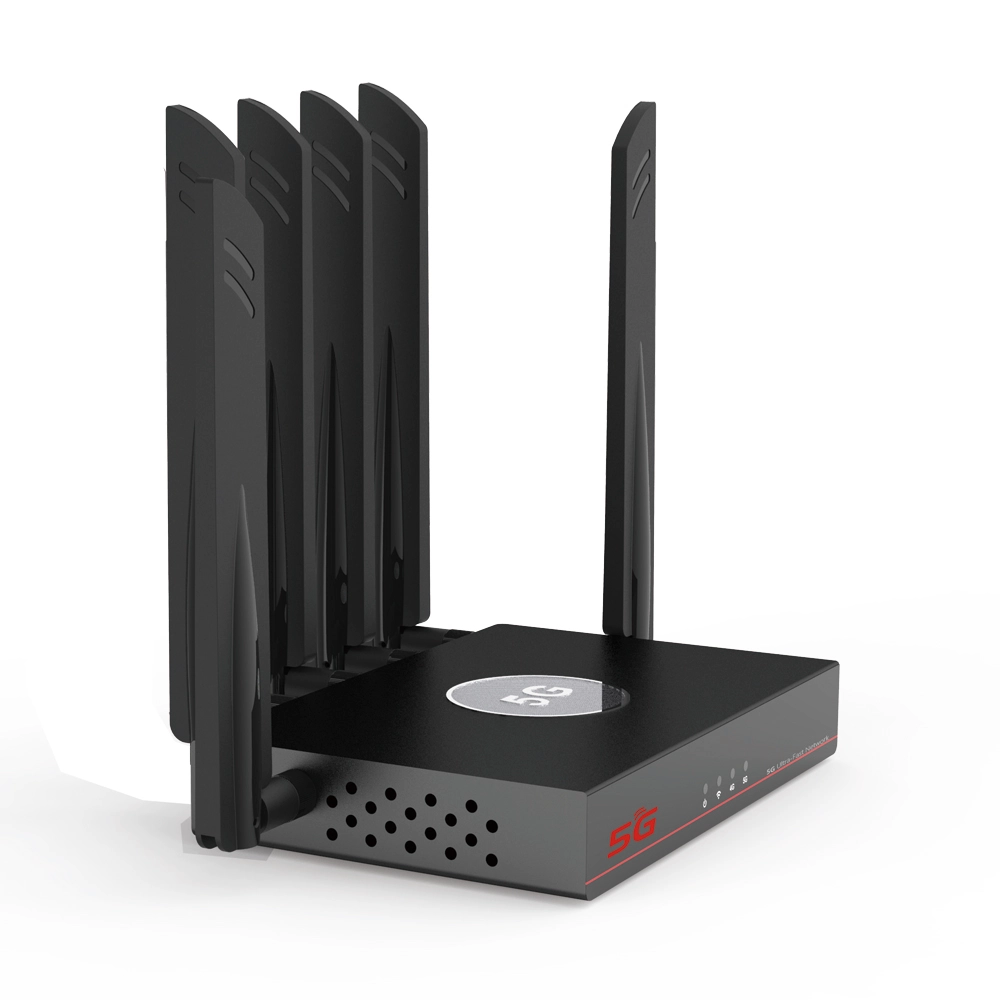
In today’s rapidly advancing industrial control and IoT technology landscape, we often encounter seemingly contradictory situation: CNC machines that have been running stably on production lines for over a decade, reliable sensors in environmental monitoring systems, or traditional controllers managing lighting in buildings—most of these devices rely on serial communication interfaces for data exchange. However, modern enterprises are pursuing equipment networking such as industrial 4g wifi router or 5g router industrial, cloud data uploads, and remote intelligent control. How can these aging serial devices, which are like information islands to be integrated into modern Ethernet world? Serial-to-Ethernet technology and its corresponding hardware devices serve as the crucial bridge to resolve this core contradiction.
A serial-to-Ethernet converter is a key industrial communication conversion tool. Its core function is to convert traditional serial communication interface signals into network protocol data packets based on Ethernet. This conversion greatly expands the application range of serial devices, enable remote monitoring, centralized management and data integration. It has become an indispensable bridge in industrial automation, IoT and intelligent system construction, solve the problems of aging equipment networking and long-distance data transmission.
1. Break Distance Limitations and Enable Remote Communication and Control
Traditional serial communication such as RS-232, RS-485 or RS-422 has clear limitations on effective transmission distance. For example, the recommended maximum distance for RS-232 is about 15 meters only, even with differential signaling using RS-485, it is difficult to exceed 1200 meters at specific baud rates, this severely restricts equipment deployment flexibility. Serial-to-Ethernet devices encapsulate serial data into TCP or UDP packets (core protocols in the TCP/IP suite) and transmit them over the ubiquitous Ethernet or even the Internet, theoretically break geographical limitations and enable remote access and control across floors, factory sites or even cities. Engineers can debug field equipment thousands of miles away from a central control room, greatly improve operational efficiency and response speed.
2. Centralize Disparate Devices and Enable Centralized Management and Monitoring
In the era before network integration, manage serial devices scattered across different locations required frequent on-site inspections or dedicated monitoring computers for each device—both costly and inefficient. Serial-to-Ethernet technology allows all serial devices to connect to unified LAN or WAN. Administrators can use an integrated monitoring software platform to simultaneously monitor the operational status of hundreds or thousands of devices on a single graphical interface, receive alarm information and download historical data. This centralized management model is the foundation of modern industrial IoT and build automation systems.
3. Protect Existing Investments and Extend the Lifespan of Aging Equipment
Many core production devices or precision instruments in various industries are expensive and operate stably, but their communication interfaces often remain in serial era. Phasing out these devices while they are still in good working condition just for networking capabilities would result in enormous resource waste. Serial-to-Ethernet solutions provide an economical, smooth upgrade path. Users needn’t to replace the main equipment—just connect a converter to the serial port to grant it network communication capabilities, enable it to exchange data with next-generation host software, MES or ERP systems, thus perfectly integrate into smart factory systems and effectively protect the company’s prior investments.
4. Simplify Wiring Structures and Reduce Overall Deployment Costs
Traditional long-distance serial communication requires laying specialized shielded cables, material costs and construction complexity will rise sharply if distance increases. In contrast, utilize existing enterprise Ethernet infrastructure or lay standard Cat5 or Cat6 network cables is generally more economical and convenient. Network cabling supports star topologies, make expansion and maintenance easier. Serial-to-Ethernet converters allow serial devices in different areas to connect to nearby network switches, simplify the entire system’s physical wiring structure and significantly reduce costs for cables, conduits and labor in large-scale projects.
5. Enable Multi-Host Access and Data Sharing
Most traditional serial communication modes are one-to-one, meaning a serial port is typically exclusively accessed by a single host such as an industrial PC. When a serial-to-Ethernet device operates in a network environment, its data stream becomes IP-based network data. Through network programming, multiple client computers, servers or mobile terminals can simultaneously access data from the same serial device (under permission management). This greatly facilitates production data sharing, multi-department collaborative monitoring and data backup. For example, production and technical support departments can simultaneously view real-time operating parameters of the same machine.
6. Enhance Communication Security and Access Control
Physical serial communication inherently lacks advanced security mechanisms—anyone with physical access to the port can connect to the device. Networked serial converters can integrate rich security features such as MAC address filtering, IP address whitelists, firewall rule settings and even VPN tunnel encryption. Administrators can set access permissions for different users or user groups and maintain detailed access logs, ensure that only authorized personnel and systems can communicate with critical industrial equipment to enhance the security of the entire control system.
7. Support Flexible and Diverse Network Operating Modes
Advanced serial-to-Ethernet devices typically support multiple network operating modes to suit different application scenarios. In server mode, the converter acts as a network server waiting for client connections; in client mode, it can actively connect to a designated remote server to upload data; other supported modes include PPP, HTTP for management and more. This flexibility allows it to be used not only for traditional polling-based data acquisition but also for active-reporting IoT sensor node applications, and can be easily embedded into B/S-based web monitoring systems.
8. Improve Data Transmission Reliability and Stability
Long-distance serial communication is susceptible to electromagnetic interference, ground potential differences and signal attenuation, this will lead to increased bit error rates. Ethernet communication is inherently designed with stronger anti-interference capabilities and robust error-checking and retransmission mechanisms such as TCP. Through serial-to-Ethernet conversion, data transmitted over a LAN or well-designed network environment achieves much higher reliability than direct long-distance serial links. Many converters also feature watchdogs, auto-reconnection, data buffering and other mechanisms to ensure data won’t be lost during network fluctuations and that connections can be automatically restored.
9. Seamlessly Integrate with Modern Software and Cloud Platforms
Today’s mainstream industrial configuration software, SCADA systems, historical databases and various cloud IoT platforms almost exclusively have network-oriented standard interfaces and SDKs. Integrate serial devices with these modern software platforms often requires additional driver development. Serial-to-Ethernet converters “virtualize” the serial port as a local network port or a standard TCP socket on the computer, allow host software to access remote devices as if access a local serial port or an ordinary network server, achieve plug-and-play seamless integration and significantly shorten system development and integration cycles.
10. Serve as the Core of Distributed Data Acquisition Systems
In large-scale distributed applications such as environmental monitoring, smart agriculture and power line inspection, sensing nodes often number in the hundreds or thousands and are spread over vast areas, it is impractical to lay dedicated lines from each node back to the center. By using serial-to-Ethernet modules that support wired or wireless networks, each sensor terminal typically with a serial output can act as an independent network node, send data to a local gateway or directly to a cloud data center. This architecture greatly simplifies system complexity and is a key technical means to enable massive device access and wide-area coverage.
11. Empower Mobile Operations and Remote Diagnostics
Combined with VPN and mobile internet technologies, serial-to-Ethernet solutions enable engineers to securely access field device serial ports from anywhere with network connectivity using laptops, tablets or even smartphones. This fundamentally changes equipment debugging and maintenance. When a device fails, experts needn’t to be physically present—they can perform remote diagnostics, parameter modifications and even firmware upgrades, significantly reduce equipment downtime, lower travel costs and improve after-sales service quality and efficiency.
12. Facilitate Protocol Conversion and System Interconnection
Many serial-to-Ethernet devices are not just physical-layer converters; they also incorporate powerful protocol conversion functions. For example, they can convert serial device data using Modbus or Siemens PPI protocols into standard industrial protocols like Modbus TCP or OPC UA that run over Ethernet. This allows industrial equipment from different brands and with different protocol standards to communicate at the same network level, break down protocol barriers and lay the foundation for true system interconnection and information integration.
13. Simplify System Expansion and Device Addition/Removal
Add or remove devices in a network-based serial device system becomes extremely simple. New devices only need their serial ports connected to a converter and plugged into the network, with simple configuration on the server side to be incorporated into the management system. This will avoid the complex operations required by traditional serial systems, such as add serial port cards and resolve IRQ and I/O address conflicts. This hot-swappable, flexible configuration capability allows systems to quickly adapt to changes in production processes and scale expansion.
14. Provide Rich Data Processing and Gateway Functions
Today’s high-end serial-to-Ethernet devices have evolved from simple converters into intelligent edge gateways. They may have local data preprocessing capabilities such as data filtering, packaging, simple calculations, alarm determination and even lightweight script execution. This will reduce the load on central servers, buffers data during network outages, and enables resume-from-breakpoint transmission after network recovery. They can serve as protocol bridges between LANs and WANs, enable more complex system integration.
15. Serve Specific Industries and Emerge Applications
Serial-to-Ethernet applications have penetrated various industries. In financial sector, it connects ATMs, card readers and other devices to bank backend networks; in healthcare, it integrates monitors and laboratory equipment into hospital information systems; in transportation, it connects signal controllers and information displays to traffic command centers; in renewable energy, it uploads data from photovoltaic inverters and charging stations to monitoring platforms. As IoT deepens, its application scenarios continuing to expand.
16. Reduce Long-Term Maintenance and Upgrade Costs
From a full lifecycle perspective, a network-based device management system is far easier to maintain and upgrade than a system based on discrete serial ports. Software updates and configuration deployments can be done in batches over the network. Fault diagnosis can be performed remotely. The system’s manageability and observability are greatly enhanced. While an initial investment in conversion equipment may be required, the resulting savings in subsequent maintenance labor, time and production losses avoided through rapid response often far exceed the initial investment.
Conclusion
In summary, serial-to-Ethernet technology is far more than a simple interface conversion. It is a strategic bridge to connect the past and the future, bridge the physical and digital world. By integrating classic serial communication technology into modern network architectures, it unlocks the data potential of a vast installed base of legacy equipment, provide a robust, economical and flexible access-layer solution for industrial digital transformation and IoT implementation. In the foreseeable future, with further development of edge computing and Industrial Internet, serial-to-Ethernet devices will continue to evolve, play an even more intelligent and central role, and continuously empowering the intelligent upgrading of thousands of industries.



What can we do for you?