
Upgrading a transnational data link by a single cellular category can slash critical cloud-synchronization latency by up to 40%, directly preventing the split-second transactional time-outs that cost financial tech firms and automated logistics hubs millions in operational friction. When global procurement directors and network system architects scan the international market for the best 5g modem, they are not hunting for a consumer USB dongle to plug into a personal laptop. They are searching for an enterprise-grade routing core—a ruggedized piece of silicon infrastructure capable of anchoring high-density industrial telemetry, securing multi-branch data tunnels, and maintaining relentless corporate uptime under the world’s most volatile carrier conditions.
Resolving Spectrum Fragmentation Across Regional Gateways
The hidden operational cost of scaling an international business lies in radio frequency fragmentation. A network fleet deployed across Germany or France operates on fundamentally different 5G NR bands than infrastructure anchored in Indonesia, Brazil, or Mexico. For logistics managers, buying region-specific, low-tier hardware forces their engineering teams into an endless cycle of warehouse fragmentation and complex firmware updates.
Standardizing on a premium best 5g modem solution eliminates this friction at the hardware layer. These advanced industrial modems integrate comprehensive global Sub-6GHz band support natively into a single chip architecture. Utilizing 4×4 MIMO antenna aggregation, the modem dynamically samples, aggregates, and locks onto local carrier frequencies across Latin America, Europe, and the Asia-Pacific. Whether an automated distribution center sits in the heart of Berlin or on the outskirts of Bogota, the modem bypasses carrier congestion by combining separate spectrum blocks into a single high-velocity data pipe, establishing a stable fiber-equivalent link where physical cables cannot reach.
Edge Intelligence and Protocol Security for Mission-Critical Telemetry
A high-performance cellular gateway must do more than move packets quickly; it must protect the data it carries while surviving the physical environments of industrial edge deployment. An unventilated utility cabinet in the Australian outback or a manufacturing plant floor in Nigeria presents thermal stresses that instantly freeze consumer-grade hardware.
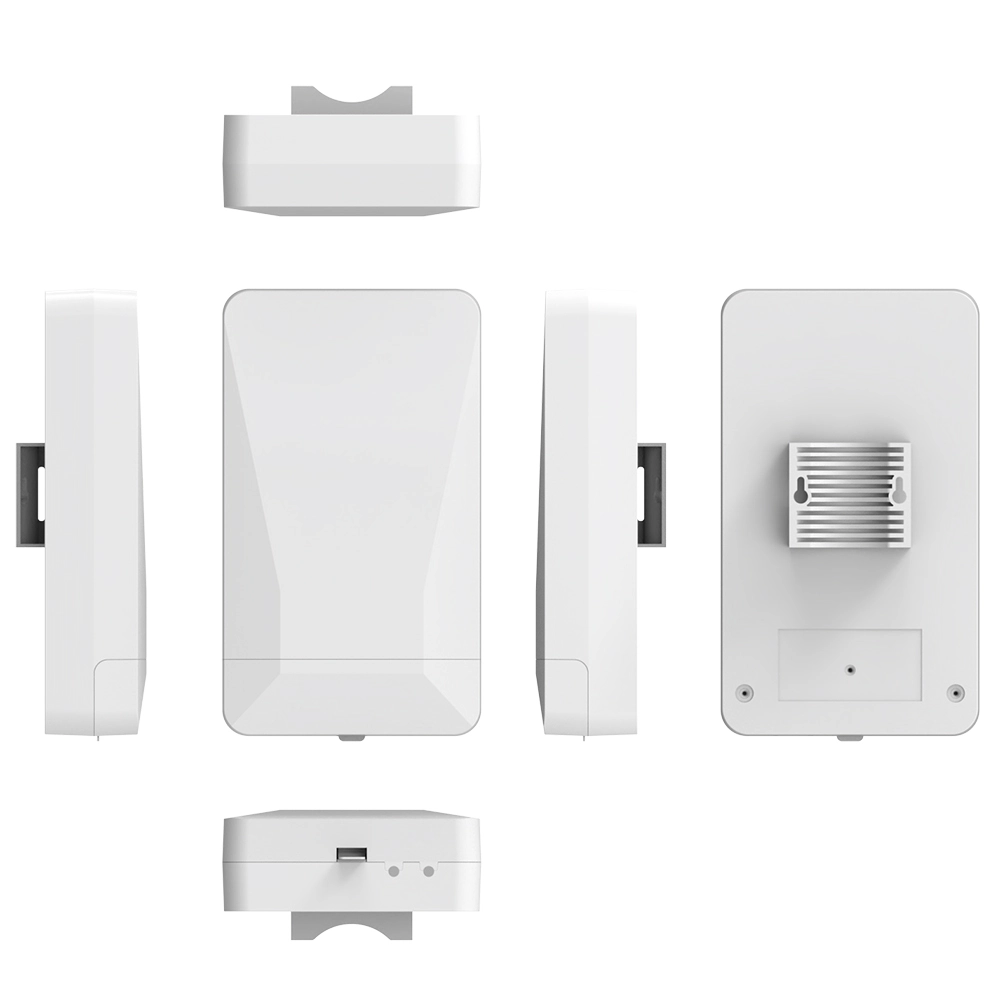
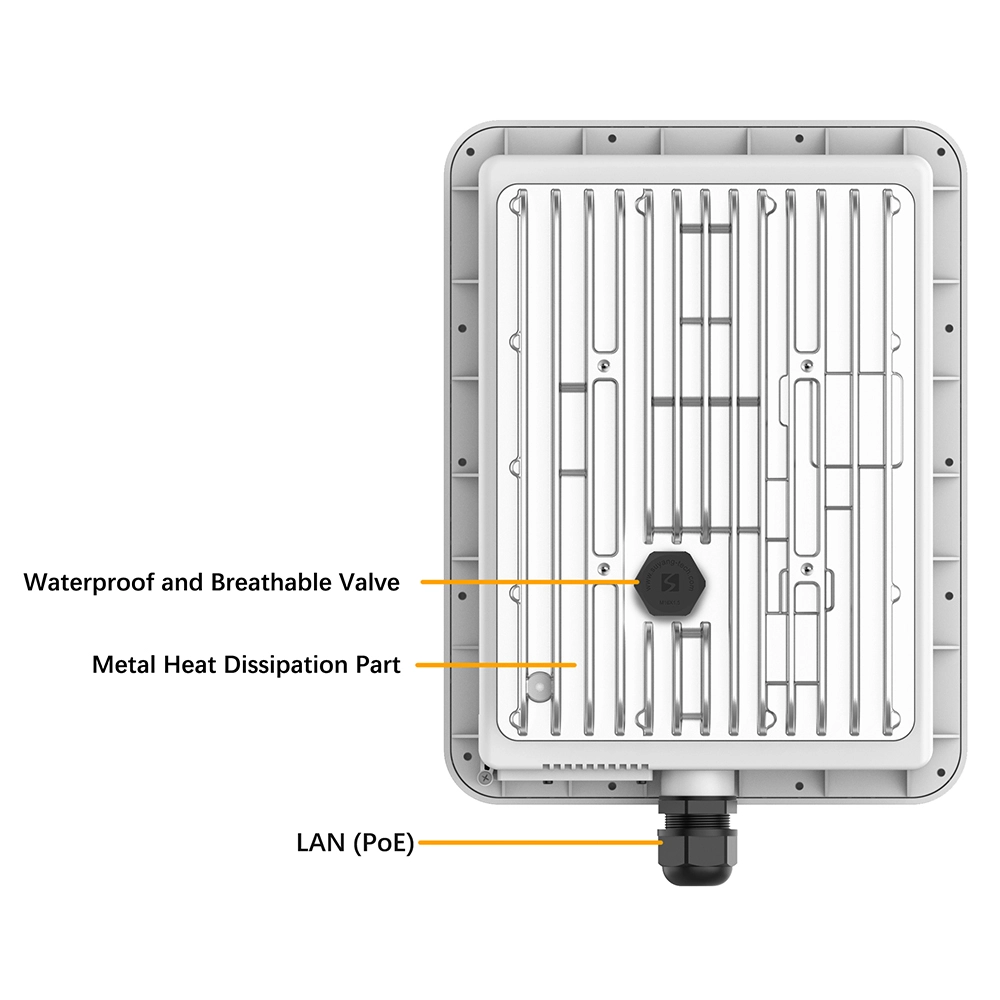
Enterprise-class 5G modems employ premium die-cast alloy heat-sinking and fanless cooling architectures, ensuring uninterrupted maximum throughput at ambient temperatures stretching from -10°C to +55°C. Within this hardened exterior, the device operates as an active security perimeter. By processing heavy encryption protocols via dedicated hardware-acceleration engines inside the network processor, the modem runs persistent corporate VPN tunnels like IPSec, WireGuard, and OpenVPN without experiencing packet queues or speed degradation. This allows remote oil rigs, smart grids, or automated kiosks to transmit sensitive operational data across public cellular towers with zero risk of exposure or unauthorized interception.
To streamline the equipment evaluation process for international sourcing teams, the reference below clarifies the engineering benchmarks that separate corporate-grade cellular gateways from standard market alternatives:
| Operational Metric | Industrial Enterprise 5G Gateway (AX3000 Platform) | Standard Retail 5G Router / Consumer Dongle | Direct Business Value for Global Projects |
| Processor Framework | Quad-Core Network Processor with Hardware Crypto Engines | Dual-Core Consumer System-on-Chip (SoC) | Eliminates data throttling and routing freezes during massive parallel device connections. |
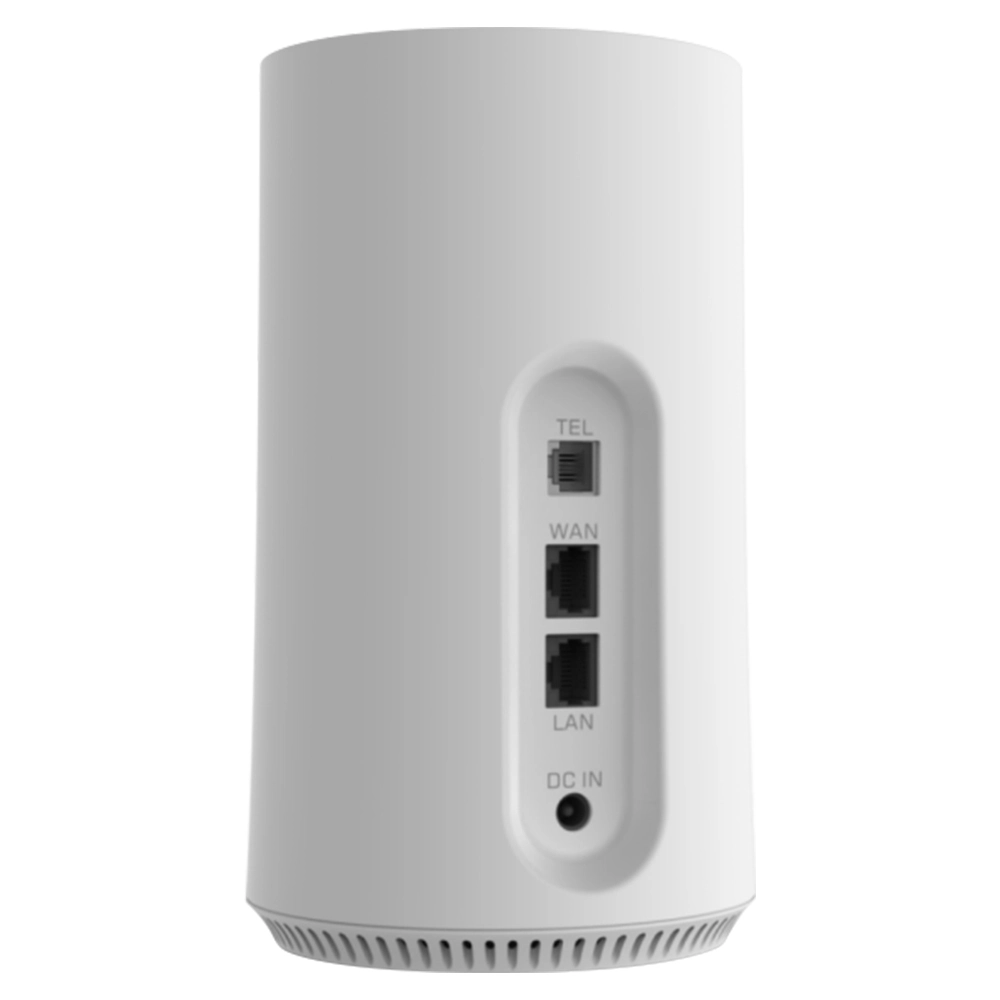
| Interface Scalability | Multi-Gigabit 2.5GbE LAN/WAN + Industrial Serial Ports | Standard 1GbE Ports / USB Only | Prevents local hardware bottlenecks, ensuring maximum cellular velocity reaches the local server array. |
| Link Autonomy Protocol | Hardware Watchdog with Active Dual-SIM Failover | Software-Only Reconnection Loops | Eradicates operational downtime by executing immediate carrier failovers during local tower blackouts. |
| Fleet Management Compatibility | Full TR069 / TR181 Centralized Fleet Provisioning | Local Web Page Configuration Only | Empowers a home-office IT division to monitor, diagnose, and patch thousands of overseas devices instantly. |
Maximizing Supply Chain Efficiency via Direct Manufacturing R&D
Securing high-speed business continuity across international borders demands uncompromising component control, which is why partnering directly with a manufacturer boasting over a decade of wireless terminal R&D results in a 30% higher first-pass production line yield than relying on third-party trading brands.
When managing massive global infrastructure tenders—such as providing high-speed backup networks for thousands of chain retail stores, remote ATMs, or maritime logistics hubs—off-the-shelf retail products fall short. An engineering-driven manufacturing partner can adapt the core firmware to lock onto specified private 5G frequencies, optimize internal routing paths for proprietary corporate protocols, and flash tailored carrier configurations before the hardware ever leaves the assembly line. This deep manufacturing integration accelerates regional compliance approvals, minimizes deployment delays, and dramatically lowers the total cost of ownership (TCO) for enterprise networks worldwide.
Global B2B Procurement & 5G Modem FAQ
1. How does the “best 5g modem” maintain stable data connections if a local telecom tower goes offline?
Our enterprise-grade modems incorporate an independent hardware watchdog combined with dual-SIM slots. The device continuously verifies network integrity by executing low-level ping tests to your designated corporate servers. If the primary carrier network drops or suffers extreme packet loss, the modem automatically re-initializes and switches connection priority to the secondary backup SIM within seconds, preserving active database and VPN sessions.
2. Can these 5G modems be managed and updated remotely without sending technicians to remote sites?
Yes. Every modem we manufacture features full compatibility with the TR069 (CWMP) protocol. This allows your central IT department to monitor real-time signal diagnostics (including RSRP, RSRQ, and Signal-to-Noise Ratio), push batch security patches, change APN profiles, and alter configuration scripts across thousands of deployed units globally from a single central management console.
3. Why are 2.5GbE ports necessary on a high-speed 5G modem gateway?
Modern 5G NR networks frequently cross the 1 Gbps download threshold in optimal conditions. If an enterprise router only utilizes standard 1-Gigabit Ethernet ports, the physical port creates a permanent bottleneck, wasting the premium cellular bandwidth. Integrating 2.5GbE multi-gigabit interfaces ensures that the full unthrottled velocity of the 5G base station reaches your internal local area network (LAN) and core enterprise switches.
4. How do these devices resist data corruption and lag when running continuous industrial automation protocols?
Unlike consumer hardware that queues packets sequentially, our enterprise systems feature advanced Quality of Service (QoS) prioritization algorithms and ample industrial RAM. The modem recognizes time-sensitive industrial automation and telemetry protocols, prioritizing them over standard administrative background traffic, keeping latency metrics stable and within single-digit milliseconds.
5. Do your 5G modems support private 5G frequency bands for mining, utility, and seaport tenders?
Absolutely. Because we drive our own R&D and control our automated production lines, we routinely customize internal radio frequency frameworks and core firmware to support specific private 5G bands, such as CBRS spectrums in North America or localized industrial utility bands worldwide, providing isolated, high-security wireless coverage for smart factories and isolated job sites.
6. What customization options do you offer for global internet service providers (ISPs) or large enterprise buyers?
We offer extensive OEM/ODM solutions tailored to major project requirements. Our engineering division can customize the physical casing with your corporate branding, build bespoke Web UI management dashboards, pre-configure secure APN credentials for seamless deployment, and embed digital eSIM chips directly onto the motherboard to eliminate physical SIM card logistics and field theft risks.


What can we do for you?