
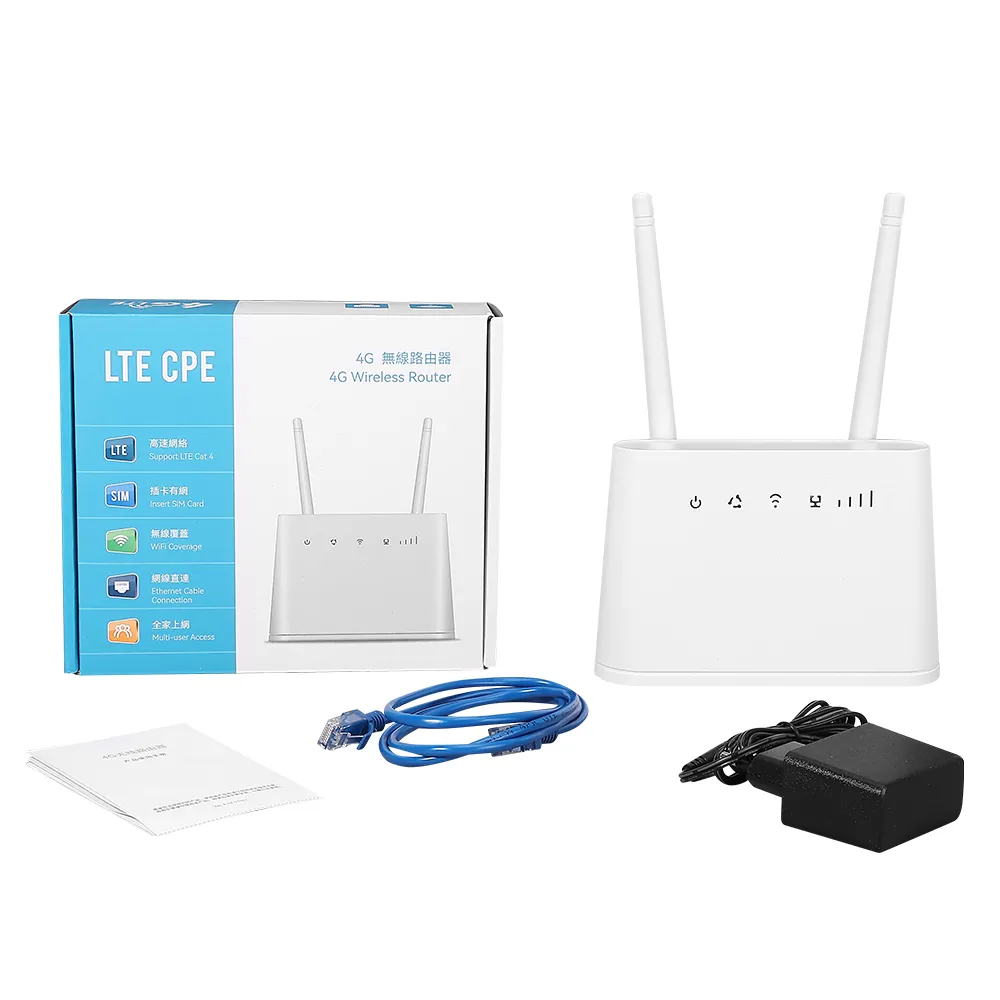
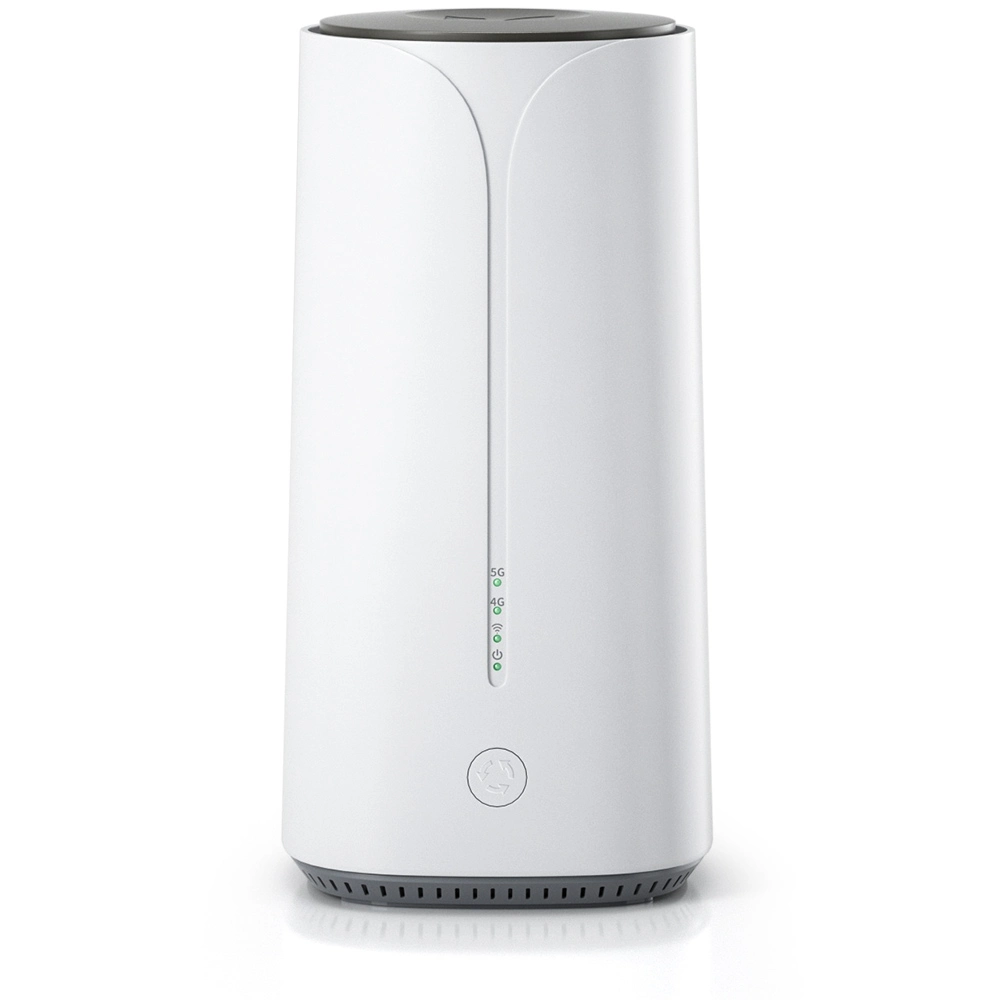
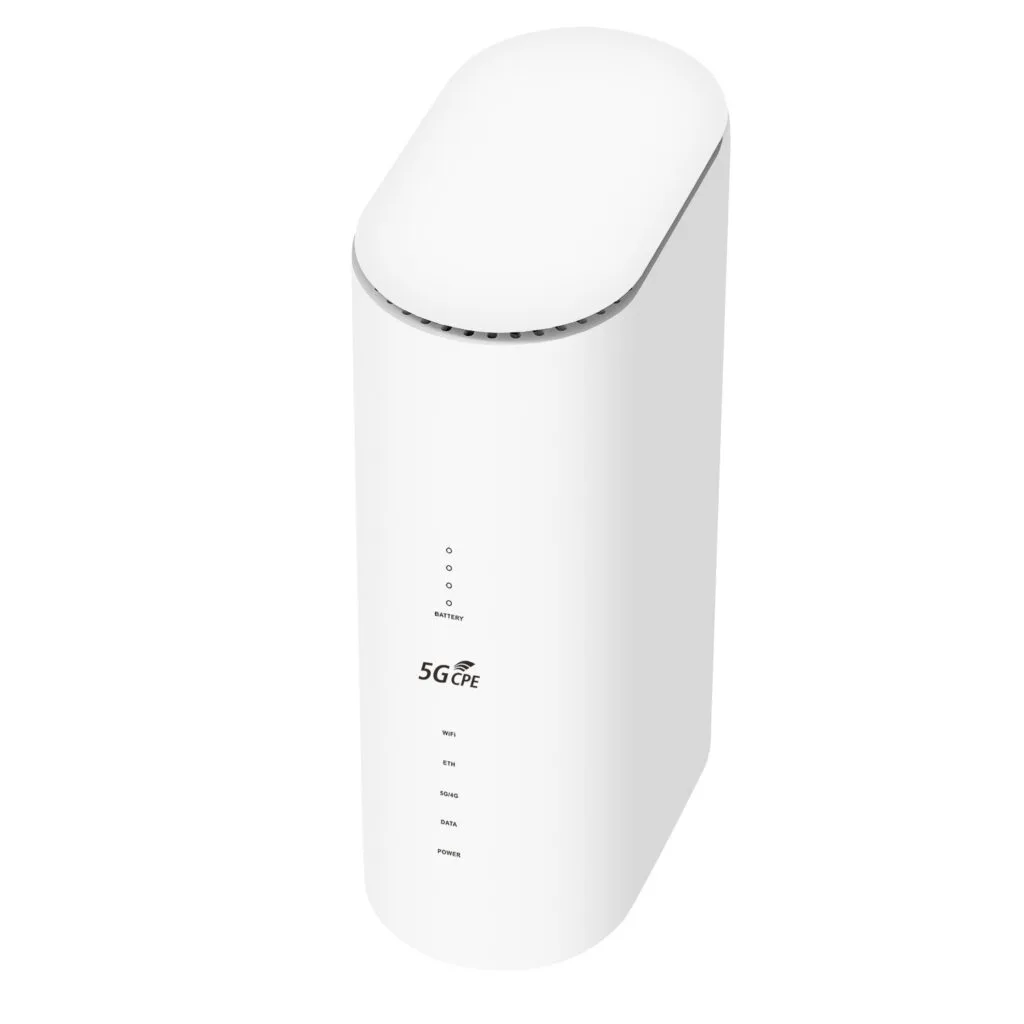
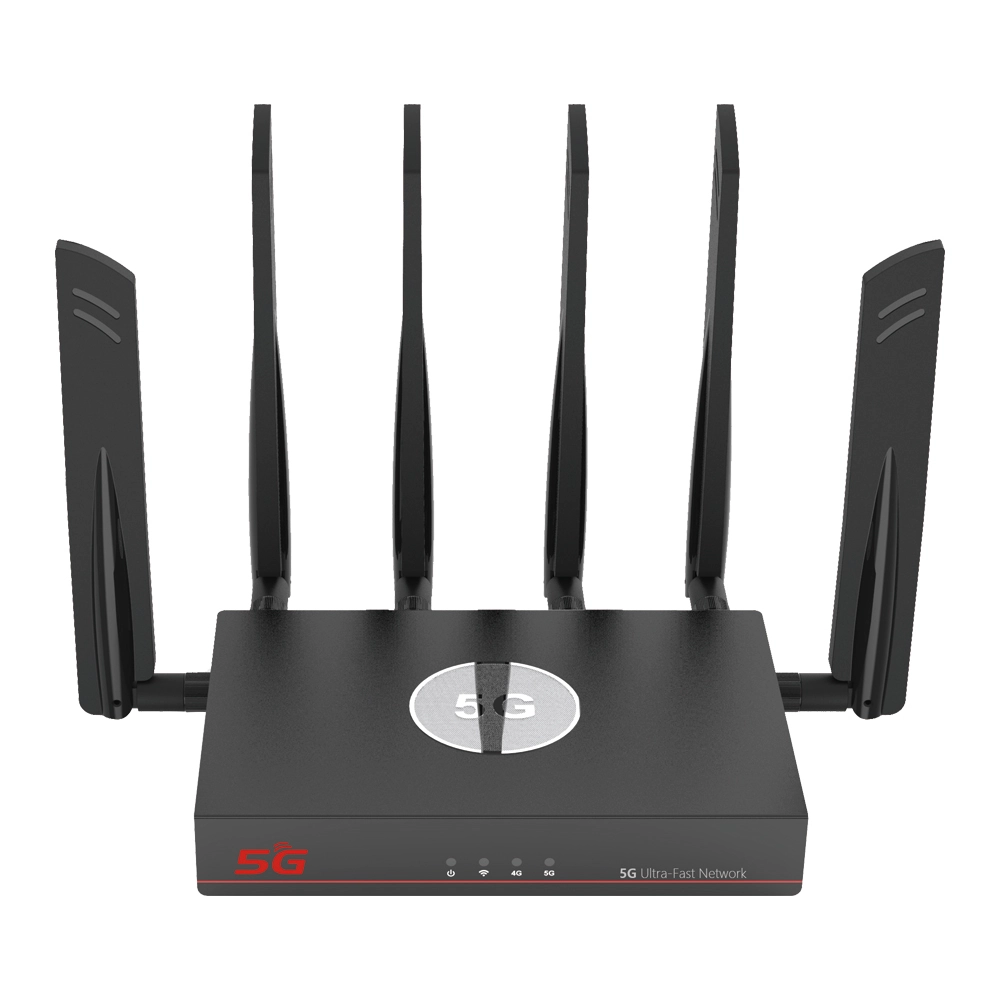
When shopping for a new router such as strong 4g lte router 300m or 5g cellular modem router or mobile hotspot device, you may come across a less intuitive term among the complex list of specifications: cat baseband. In the field of mobile communications, cat baseband is a common yet highly technical term that directly affect the internet speed and experience of user devices. Simply put, it refers to the technical capability level supported by a cellular terminal modem (baseband chip), categorized by Category, often abbreviated as Cat. This seemingly simple word carries the core technical metric that determines the speed of your mobile network experience. It doesn’t refer to an animal, but rather a crucial benchmark in the evolution of mobile communication technology. Understand it will help you to see clearly the upper limits of a device’s network capabilities, allow you to make more informed choices.
1.Clear the Fog: What Cat Baseband Exactly Is?
First, let’s break down the term. Baseband is short for baseband processor or baseband chip, the core component in mobile devices responsible for handling all cellular network wireless signals. You can think of it as the device’s network translator, responsible for converting the data such as text and images we want to send into radio waves for transmission, while simultaneously translating received radio waves back into data we can understand.
Cat, on the other hand, is English abbreviation for Category. In the specifications established by the 3rd Generation Partnership Project (3GPP), the international communication standards organization, a series of category levels were introduced to clearly define the network technology capabilities supported by different baseband chips. Therefore, cat baseband fully means: the specific technical capability level that the baseband chip meets, as defined by 3GPP. This level directly determines the maximum data transmission rate the device can achieve under ideal network conditions, the complexity of carrier aggregation technology it supports and other key performance metrics.
2.Why Are Cat Levels Needed?
As mobile communications evolved from 3G to 4G LTE and then to 5G NR, the technical standards became extremely complex. Simply stating that a phone supports 4G network is far from sufficient, because even within the same 4G category, the technical implementation and performance ceilings can vary dramatically. Without a unified classification system, consumers and operators would struggle to accurately evaluate and compare the network performance of different devices.
3GPP provided the industry with a clear performance benchmark by defining a series of levels from Cat.1 to Cat.24 (within the LTE framework). Each level specifies the peak uplink and downlink rates achievable under specific modulation schemes, multi-antenna technologies and carrier aggregation configurations. This ensures that routers from different manufacturers, all claiming support for the same cat level, have consistent theoretical maximum network performance, safeguard market standardization and transparency.
3.From Cat.1 to Cat.24: A Brief History of Rate Evolution
Looking back at the LTE era, the history of cat level development is essentially a history of ever-increasing mobile network speeds. Early Cat.3 and Cat.4 were the mainstays during the early popularization of 4G networks, offering peak downlink rates of 100Mbps and 150Mbps respectively, which met the basic needs for HD video streaming and high-speed downloading at the time.
As carrier aggregation technology matured, higher cat levels emerged. For example, Cat.6 introduced dual downlink carrier aggregation for the first time, boost peak rates to 300Mbps which known as “4G+.” Cat.12 and higher levels further supported more complex carrier aggregation such as three-carrier, four-carrier or even five-carrier and higher-order modulation techniques like 256-QAM, push the potential of LTE to its limits. The theoretical peak downlink rate of Cat.24 approached 3Gbps, lay the foundation for a smooth transition from 4G to 5G.
4.The Cornerstone of IoT: Why Cat.1 Still Gaining Attention Today?
Interestingly, in 5G era, a relatively ancient level—Cat.1 (and its subsequent optimized version, Cat.1 bis)—has returned to the spotlight, become a key technology in the Internet of Things (IoT) field. Unlike Cat.16 and Cat.24, which pursue extreme speeds, Cat.1 focuses more on balancing cost, power consumption and complexity.
It supports downlink rates of 10Mbps and uplink rates of 5Mbps, which is sufficient for most IoT applications such as smart meters, shared devices, wearables and vehicle diagnostic systems. More importantly, Cat.1 modules can directly access existing, widely covered 4G networks without the need for new base stations. Moreover, their chip design and antenna complexity are far lower than those of higher “cat” levels, result in lower cost and power consumption. Therefore, in the massive IoT scenarios require wide-area medium-to-low-speed connectivity, Cat.1 has become an ideal choice that is more advanced than traditional 2G/3G and more economical and practical than high-end 4G and 5G.
5.Cat Level in the 5G Era: NR UE Capability Levels
Enter 5G era, the 3GPP standards still employ the concept of user equipment capability levels, but the naming and connotation have evolved. In 5G NR specifications, radio frequency and baseband capabilities of user equipment are mainly defined through “NR UE capability levels,” such as commonly heard n1, n2 and n3 etc. These define the maximum bandwidth, modulation order, number of MIMO layers etc., that the device supports in millimeter wave or Sub-6GHz frequency bands, collectively determine the peak data rate of 5G.
Although specific numbers like “Cat.XX” are not as frequently highlighted in early 5G marketing as they were in the 4G era, the core concept remains the same: using standardized capability level classifications to define a device’s performance ceiling under new technologies. For example, a phone that supports a higher NR UE capability level can unlock the full potential of the 5G network it’s connected to, achieve multi-gigabit download speeds.
6.Carrier Aggregation: The Key Engine to Raise Cat Levels
To understand how higher cat levels achieve impressive speeds, you must understand carrier aggregation, the core technology behind it. Think of the wireless spectrum resources used for communication as a highway. In the early days of 4G, a device might only be allowed to travel on a single, fixed-width “lane” (one carrier).
Carrier aggregation technology allows a baseband chip to simultaneously occupy two, three or even more lanes (multiple carriers), merge the capacity of these lanes to significantly increase the total bandwidth for data transmission. The number of carriers a cat level can aggregate and the maximum bandwidth of each carrier are core parameters determine its peak data rate. From the dual-carrier aggregation of Cat.6 to the five-carrier aggregation of Cat.24, the continuous upgrading of this technology has driven the rapid rate increases in LTE.
7.Higher-Order Modulation: Carry More Information Per Signal
In addition to widening the “highway” (carrier aggregation), improve the “transport efficiency of each vehicle” is equally important, and that’s where modulation technology comes in. Modulation determines how data is “loaded” onto radio waves. Higher-order modulation is like using more sophisticated containers, allow more “cargo” to be packed in a single shipment.
In LTE, the transition from early 64-QAM to later widely supported 256-QAM meant that each signal symbol could carry 6 bits of data instead of 8, theoretically increase transmission efficiency by 33% on the same bandwidth. Some experimental technologies have even explored 1024-QAM. Higher cat levels typically support higher-order modulation schemes, which is another key way to increase data rates.
8.Multi-Antenna Technology (MIMO): From Single Lane to Multi-Lane Traffic
MIMO technology is another pillar support higher cat levels. It involves using multiple antennas at both transmitting and receiving ends to create multiple parallel data streams. Imagine building multiple parallel virtual lanes on the same frequency lane through spatial layering.
A common configuration is 4×4 MIMO downlink, where the base station uses four antennas to transmit and the phone uses four antennas to receive, theoretically allow four independent data streams to be transmitted simultaneously, multiply the data rate. Higher cat levels like Cat.18 and above often support more powerful MIMO configurations, such as downlink 8 streams or more, maximize the spatial utilization of the wireless spectrum.
9.Relationship Between Cat Levels and Your Actual Internet Speed
It’s important to clarify that the cat level of a device claims represents its theoretical peak speed achievable under ideal laboratory conditions. Your actual experienced speed is the result of multiple factors work together: device capability (the “cat” level), network-side configuration (the carrier aggregation combinations enabled by the operator, base station antenna configuration), current network congestion level, signal strength and server performance.
Owning a phone that supports Cat.18 is like owning a top-tier sports car – it determines your speed limit. But if you’re driving on congested city roads (busy network) or country lanes (edge of base station coverage), you won’t be able to unleash its full performance. However, a higher cat level means the device has the “ticket” to access more advanced network features (like more carrier aggregation, higher-order MIMO). When network conditions are favorable, you will experience speeds far exceeding those of lower-level devices.
10.How to Check Your Device’s Cat Level?
For common users, the specific cat level information of a device is usually not directly displayed in the system settings. The most authoritative way is to visit the official websites of chip manufacturers such as Qualcomm, MediaTek and HiSilicon and look up the technical specifications of the specific baseband chip used in your device, which will clearly list the supported LTE categories and 5G NR capability levels.
Additionally, some professional device information detection apps can sometimes identify some capability parameters of the baseband chip. Before purchasing a device, read the detailed product specifications or consult the manufacturer’s customer service is effective way to understand its network capability level.
11.How Much Should Cat Levels Matter When Choose a router?
When choose a router such as strong 4g lte router 300m or 5g cellular modem router, the cat level or its corresponding 5G capability is an important fundamental metric, but there’s no need to blindly chase the highest number. For the vast majority of users, under current network environments, routers support Cat.12 to Cat.18 levels are already capable of fully unleashing the potential of operators’ 4G+ networks, smoothly handling all HD video streaming, large file downloads and online gaming needs.
It’s more important to pay attention to whether the router has comprehensive support for mainstream network frequency bands, as this directly affects signal reception capability. For 5g cellular modem router, you need to check whether they support the core 5G frequency bands deployed by your local operator such as n41, n78, n79 etc. and practical features like 5G data concurrency under dual SIM dual standby. Consider the cat or capability level as a reference to ensure a performance baseline and future compatibility, and make a comprehensive decision based on overall hardware configuration, system experience and price.
12.The Future from a Baseband Perspective: Directions of Technological Evolution
The technological race in baseband chips never stops. Future directions will go beyond simply increase speeds, evolving towards greater integration, intelligence and efficiency. On one hand, basebands will be more deeply integrated with application processors and AI processors, enable intelligent power management and performance scheduling based on real-time network conditions and application needs.
On the other hand, support for non-terrestrial networks like satellite communications is becoming a new feature of high-end basebands. Simultaneously, in the development of 5G-Advanced and 6G, basebands will need to handle more complex spectrum usage methods such as full duplex and intelligent reflecting surfaces, more extreme low latency and highly reliable communications. These will all define the next generation of capability levels.
13.Conclusion: Understand the Core Value of Cat Baseband
In summary, the cat in cat baseband is a refined label of technical capability. It’s not a marketing gimmick but a quantitative rating of a device’s core cellular network performance based on globally unified communication standards. From Cat.4 to Cat.24, which pushed 4G speeds to new heights, to Cat.1 which empowers massive IoT, to the NR UE capability levels define 5G experiences, this concept runs throughout the development of mobile communications.
Understand it not only helps us cut through the fog of specifications when choose devices, make choices that better suit our needs, but also allow us to see how wireless technologies—through innovations like carrier aggregation, higher-order modulation and MIMO—have step-by-step brought high-speed mobile internet into reality and continue to shape the way we will connect in the future.


What can we do for you?