
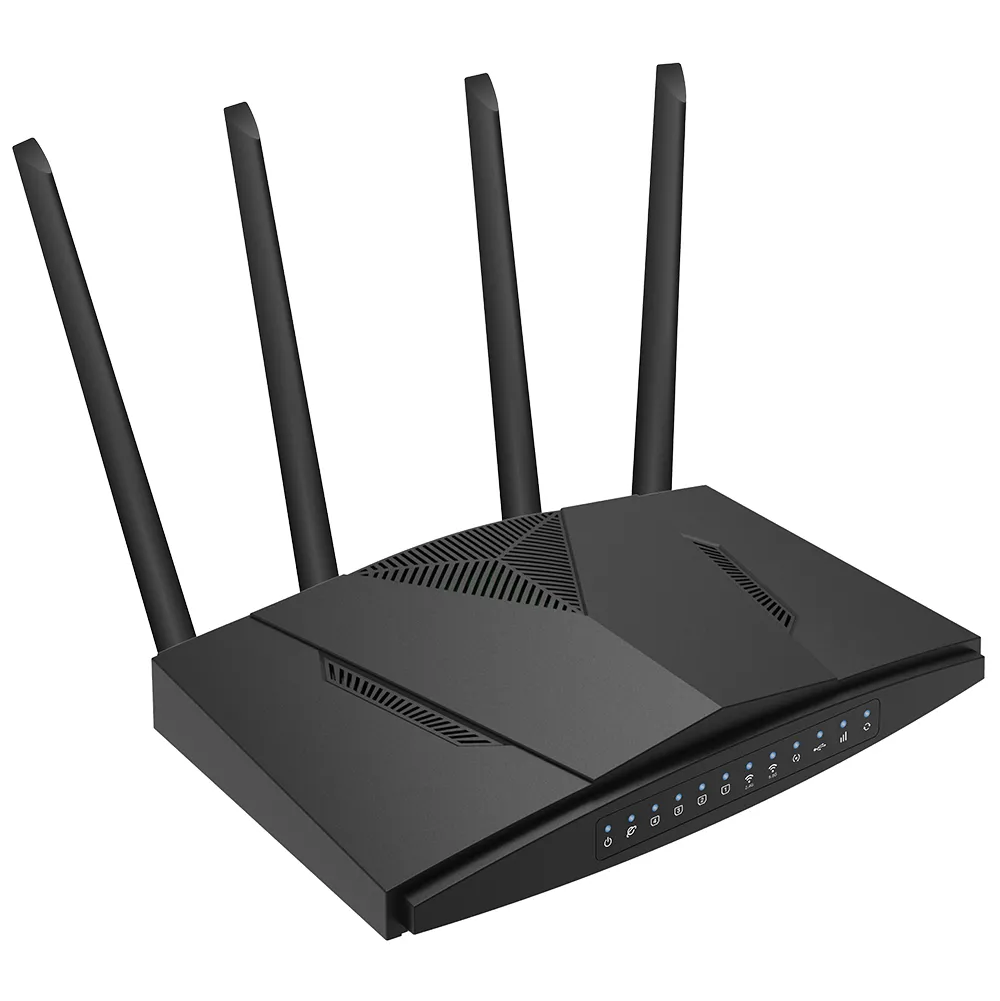
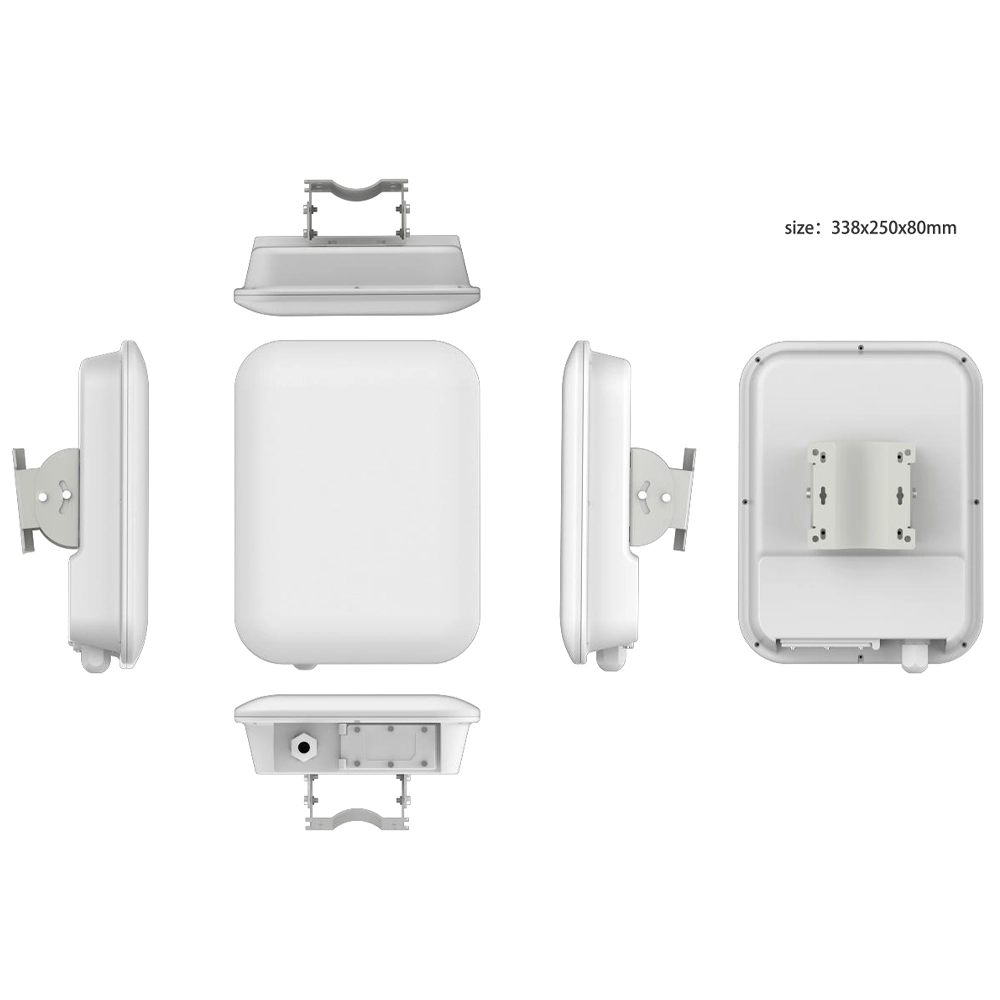
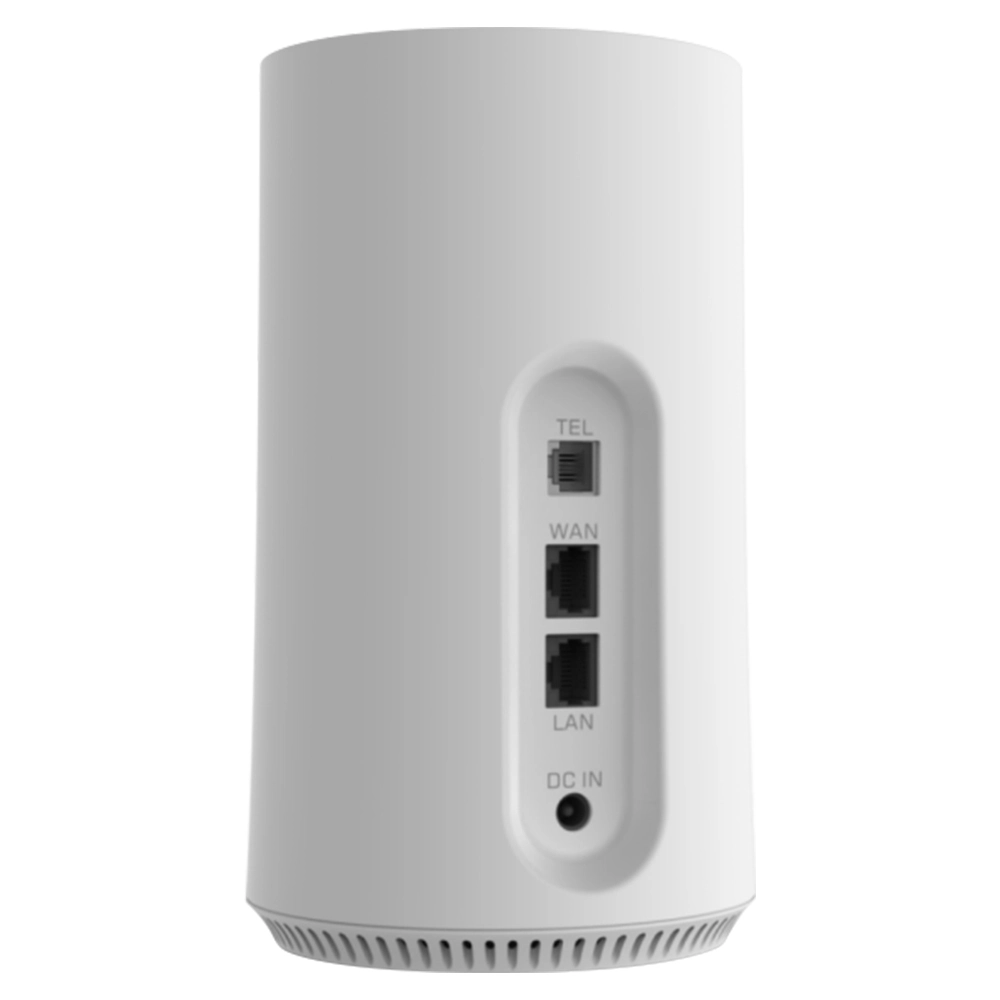
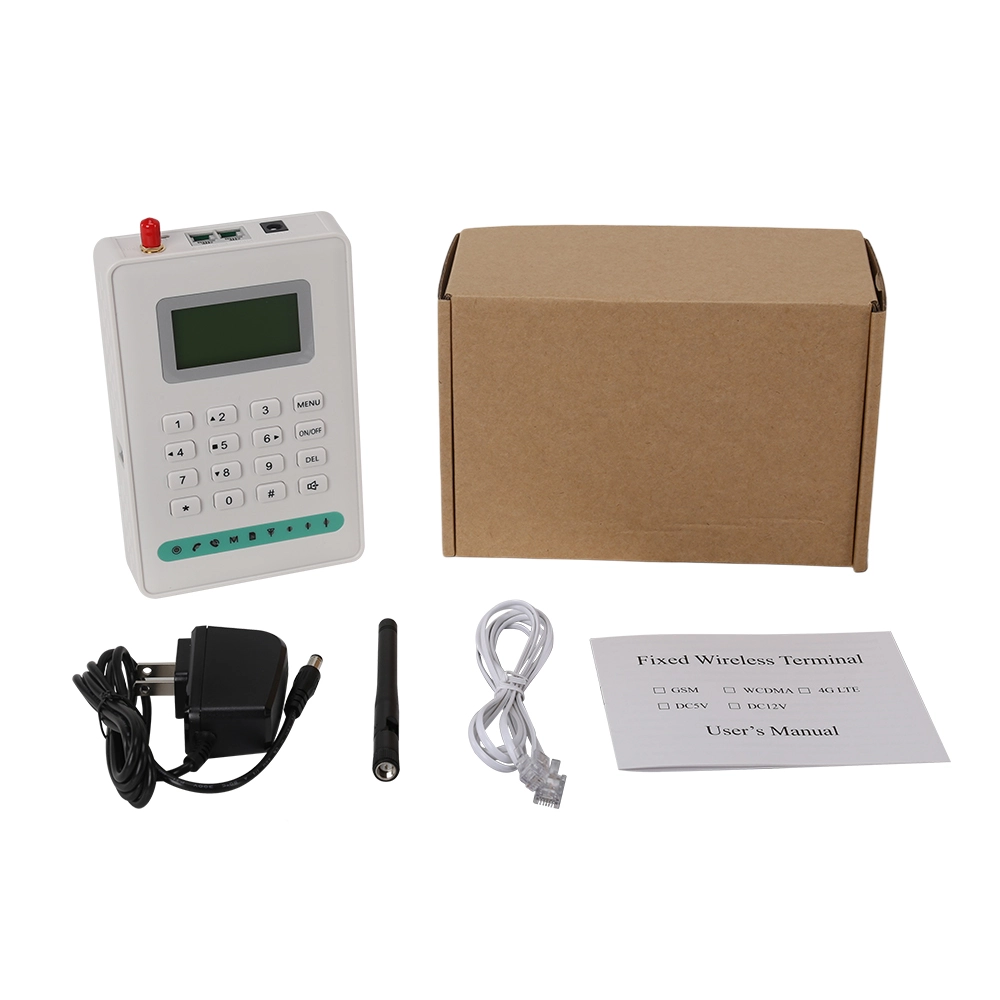
When you want to buy replacement batteries for fixed wireless terminal 4g, gsm fixed wireless terminal, 4g lte router with sim card slot or wifi router with 5g sim card slot, the prominent “3.7V” marking is almost an everpresent label. What does 3.7 volts really mean? Why has it become the “golden standard” voltage for batteries in consumer electronics? What electrochemistry and practical philosophy lie behind it?
In the world of lithium battery, 3.7V is a critical nominal voltage parameter, most commonly referring to lithiumion batteries that use cathode materials such as lithium cobalt oxide (LCO) or ternary materials (NMC/NCA). This voltage is not constant, it represents the average operating plateau during typical discharging or charging process. Understanding electrochemistry behind 3.7V, corresponding battery types, its safe operating range and application considerations in different devices is essential for correct selection, using and maintenance.
1.Definition: From “Nominal” to “Plateau”
First, 3.7V is not the battery’s output voltage at every moment. Strictly speaking, it is a nominal voltage — like a person’s average height. Lithiumion battery’s voltage changes dynamically during charging and discharging, the voltage reaches about 4.2V (for most chemistries) after fully charged, the voltage gradually drops when it discharges. When the voltage falls to about 3.0V, devices typically shut down automatically to protect the battery. 3.7V is average value of a relatively flat and prolonged voltage segment on discharge curve from 4.2V down to 3.0V — professionally called discharge voltage plateau, this value intuitively reflects power level of the battery for most of its working time.
2.Electrochemical Origin: Cathode Determines the Voltage Ceiling
A battery’s voltage stems from electrical potential difference between cathode and anode materials, 3.7V is closely tied to current mainstream cathode materials for lithiumion batteries. The first commercially successful lithium cobalt oxide (LCO) battery has a theoretical voltage plateau around 3.7V, later ternary materials (NMC or NCA) and some manganese spinel (LMO) batteries also have operating voltage ranges roughly in this range. Difference between these materials create anode (usually graphite) collectively sets 3.7V as the central value, in short electrochemical properties of mainstream cathodes have established the market position of 3.7V.
3.Not the Only Standard: Other Voltage Systems
Beware that equating 3.7V with all lithium batteries is a common mistake, Lithium battery family has other voltage members as well. For example, lithium iron phosphate (LFP) batteries have nominal voltage of 3.2V, a flatter discharge plateau, excellent safety and long cycle life—widely used in EVs and energy storage. Also primary (nonrechargeable) lithium metal batteries such as lithium thionyl chloride, can be 3.6V or even higher. So when you see a voltage label, you must consider the battery type (rechargeable or not) and cathode chemistry.
4.Single Cell vs. Combination: The Voltage Magic from “Cell” to “Pack”
When we say 3.7V lithium battery, in most cases we mean an independent battery unit — a cell, but manufacturers often combine multiple cells to achieve higher voltage or larger capacity. Series increases voltage: two 3.7V cells in series →7.4V nominal; three in series →11.1V (very common in laptop batteries and drone batteries). Parallel increases total capacity while keeping voltage the same, an “11.1V” battery pack likely contains three 3.7V cells wired in series.
5.Interrelated Parameters: Voltage vs. Capacity vs. Internal Resistance
Voltage is a key parameter, but it must be understood alongside capacity (usually in mAh or Ah) and internal resistance. Capacity determines endurance, internal resistance affects burst power and efficiency. A 3.7V battery can range from a few hundred mAh to several thousand mAh. A battery with excessive internal resistance will see its terminal voltage drop significantly under high current due to internal losses, causing unstable operation or premature shutdown, so to evaluate a 3.7V battery requires considering whether its capacity is genuine and whether its internal resistance is low enough.
6.Safe Voltage Window: Red Line for Overcharge and Overdischarge
Around central 3.7V, there is a clear safe voltage window. For the vast majority of 3.7V nominal lithiumion batteries:
Charge cutoff voltage: 4.20V±0.05V, charge above this=overcharge, which can force too many lithium ions into the anode, potentially causing lithium metal plating, electrolyte decomposition, gas generation, swelling, leakage, fire, or even explosion. Discharge cutoff voltage: typically 2.75V to 3.0V, discharge below this=overdischarge, which can dissolve the copper current collector on the anode, collapse the cathode structure, cause permanent capacity loss or even internal short circuits. Therefore, any device or charger that uses 3.7V lithium battery must have precise voltage management.
7.Charger Matching: Why You Can’t Mix Randomly
Based on safety window above, to charge a 3.7V lithium battery need a dedicated lithiumion charger. These chargers follow Constant Current/Constant Voltage (CC/CV) algorithm: first charge at constant current until about 4.2V, then switch to constant 4.2V voltage while current gradually decreases until full. Using a charger designed for other battery types (e.g. NiMH) or unmatched power supply will easily lead to overcharge, which is extremely hazardous. The charger’s output voltage must match the battery’s charge cutoff voltage.
8.Application Analysis: Why Consumer Electronics Love 3.7V
The dominance of 3.7V lithium batteries in consumer electronics is the result of an optimal balance between performance and cost. High energy density — meets demanding requirements for thin, light, longlasting devices such as 4g lte router with sim card slot or wifi router with 5g sim card slot. Operating voltage range matches integrated circuit chips (e.g. on fixed wireless terminal 4g or gsm fixed wireless terminal motherboards) —no complex stepdown conversion needed for efficient power delivery. After decades of mass production, LCO and ternary material processes are mature and costs are well controlled. Under the triple constraints of portability, performance and price, 3.7V lithium battery has become the default choice.
9.Performance Degradation: Voltage as a Window into Battery Health
With repeated using, 3.7V battery’s performance will degrade gradually, and this will be reflected in its voltage behavior. An aged battery shows: Increased internal resistance→voltage drops faster during discharge, the plateau shortens, usable capacity declines. Fully charged voltage may drop slightly, discharge cutoff voltage may need to be set higher to avoid damage. Observing how the discharge curve changes under a fixed load is an important way to assess battery health. Generally when capacity falls below 80% of its initial value, replacement should be considered.
10.Subtle Differences: 3.8V/3.85V — The Pursuit of Energy Density
Sometimes you can see batteries labeled 3.8V or even 3.85V nominal, these batteries usually use highvoltage LCO or modified ternary materials. By adjusting cathode formulation and process, the operating voltage plateau is slightly raised, allowing a small increase in energy (Energy=Voltage×Capacity) without changing size or weight — thus improving runtime. Such batteries have correspondingly higher charge cutoff voltages, e.g. 4.35V or 4.4V, they are essentially technological offshoots of the 3.7V family, but need stricter charger compatibility.
11.Measurement and Diagnosis: The Real World with a Multimeter
To know realtime status of 3.7V lithium battery, the most straightforward tool is a digital multimeter.
Measure opencircuit voltage (no load state) for rough stateofcharge estimate:
Above 4.1V → roughly full.
3.6V – 3.8V → medium.
Below 3.5V → low.
However more accurate diagnosis requires measuring voltage under load, if battery voltage drops unusually quickly under typical operating current, the battery likely has high internal resistance and is aging.
12.Voltage Science of Storage and Transport
For long time storage of 3.7V lithium battery, the voltage state is critical. The International Air Transport Association (IATA) and other authorities recommend storing at 30%–50% of nominal capacity — that is roughly 3.6V to 3.8V for a 3.7V battery. Storing fully charged will accelerate electrolyte decomposition and electrode aging, storing fully discharged (very low voltage) will cause overdischarge damage and may make the battery impossible to recharge, so you’d better charge or discharge the battery to about half capacity before storage if you don’t want to use them for long time.
13.Buying Guide: Reading Between Specification Lines
When you want to buy 3.7V lithium battery, do not look at only voltage and capacity. First check to see if chemistry matches your device (e.g. LCO or NMC), second check to see if the claimed capacity is realistic — grossly exaggerated claims are almost always false. For highcurrent devices (drones, power tools), choose batteries labeled highrate or powertype — these have lower internal resistance. Always buy reputable brands or trustworthy sellers — their builtin protection circuits are higher quality and effectively prevent overcharge, overdischarge and short circuits.
14.Protection Circuit Module (PCM): The Hidden Guardian
Almost all finished 3.7V battery packs used in consumer electronics (i.e. not bare cells) incorporate a critical component — a protection circuit board. This small board monitors voltage, current and temperature. In case of overcharge, overdischarge, short circuit or overcurrent, it’ll cut off the circuit automatically. It is the last line of defense for safe operation, keep battery within its safe voltage window. Don’t use or modify a battery with damaged protection board, and avoid using unprotected bare cells unless you have professional battery management system knowledge.
15.Environment Temperature Effects: Voltage Thermal expansion and contraction
Temperature has significant effect on voltage behavior of 3.7V lithium battery. Low temperature (below 0°C): Chemical reaction rate become slow, internal resistance rises sharply→discharge voltage plateau drops noticeably→usable capacity plummets→devices may shut down unexpectedly. High temperature (above 45°C): While discharge performance may seem better, side reactions accelerate, lifespan is harmed and thermal runaway risk increases. To avoid using or charging batteries in extreme temperatures — this is a key rule for longevity and safety.
16.Future Evolution: Will Voltage Keep Rising?
The relentless pursuit of higher energy density drives research into highervoltage cathode materials, as mentioned before, 3.8V and 3.85V systems have been appeared, more advanced research such as lithiumrich manganesebased cathodes with theoretical voltages exceeding 4.5V. However, higher voltage brings big challenges: Electrolytes need a wider electrochemical stability window to avoid decomposition. Electrode materials must remain structurally stable at higher voltages, so the 3.7V platform will likely remain mainstream for the foreseeable future, evolution will be more about finetuning materials and improving system management.
17.Recycling and Environmental Responsibility: EndofLife Thinking
Every 3.7V lithium battery that reaches the end of its life should be properly recycled. These batteries contain valuable metals — cobalt, nickel, lithium, as well as electrolytes that will harm the environment. Professional recyclers discharge, crush, sort and refine to recover these metals, simply discarding them will waste resources and poses safety hazards (e.g. short circuit or fire) and environmental risks. As consumers, we should return spent batteries to designated collection points, complete their responsible lifecycle.
18.Summary: 3.7V — Balance Point of an Era
In summary, 3.7V is far more than a simple numeric label. It is a balanced equilibrium point, precisely calibrated between contemporary lithiumion electrochemistry and market demands — the optimal tradeoff among energy density, safety margin, manufacturing cost and ease of using. Understanding it means understanding its dynamic operating range, its strict safety boundaries, its matching logic with devices and full lifecycle management. From gsm fixed wireless terminal to fixed wireless terminal 4g, from 4g lte router with sim card slot to wifi router with 5g sim card slot, this quiet 3.7V energy source continuously powers our digital lives. Only by correctly understanding and carefully handling it we can harness this energy safely and efficiently, letting technology truly serve us.




What can we do for you?