
The Hidden Trap in Low-Cost Procurement
In B2B procurement, the initial unit price of networking hardware often receives disproportionate attention. This focus is understandable—procurement teams operate under budget constraints, and a lower price per unit directly improves short-term financial metrics. However, this narrow lens overlooks what industry practitioners know all too well: the total cost of owning and operating networking equipment over its lifecycle frequently dwarfs the initial purchase price.
For buyers sourcing bulk 4G LTE routers or wholesale 5G cellular routers for enterprise, industrial, or outdoor applications, understanding Total Cost of Ownership (TCO) is not an academic exercise—it is a critical practice that separates profitable deployments from budget-draining projects.
Industry research consistently shows that a single field technician visit to diagnose and resolve a router issue can range from $150 to over $1,000, factoring in labor, travel, and lost productivity. When a deployment involves hundreds or thousands of devices, the cumulative impact of frequent failures becomes a significant operational expense that can erode the entire value proposition of a low-cost supplier.
This article examines the key drivers of hidden maintenance costs in cellular router deployments and provides a practical framework for B2B buyers to evaluate suppliers based on long-term value rather than short-term price.
Section 1: The Three Pillars of Hidden Maintenance Costs
Understanding where hidden costs originate is the first step toward avoiding them. Based on field data from large-scale network deployments, three primary areas consistently generate unexpected expenses.
1.1 Network Instability and Service Interruptions
The modem is the critical component that determines connection stability. Lower-quality modems, often found in budget-oriented devices, are more susceptible to signal degradation, overheating, and firmware instability. The consequences manifest as frequent connection drops, spontaneous reboots during business hours, and reduced throughput under normal signal conditions.
Each interruption translates to business impact: point-of-sale systems go offline, remote monitoring feeds stop, production line data fails to transmit, and customer-facing services experience outages. Unlike hardware replacement costs, lost business revenue during downtime rarely appears on maintenance invoices but is acutely reflected in quarterly results.
1.2 Environmental Durability Deficits
Networking equipment deployed outside controlled data centers faces demanding conditions. Industrial cabinets experience temperature fluctuations, outdoor enclosures endure direct sunlight and moisture, and remote sites may lack climate control.
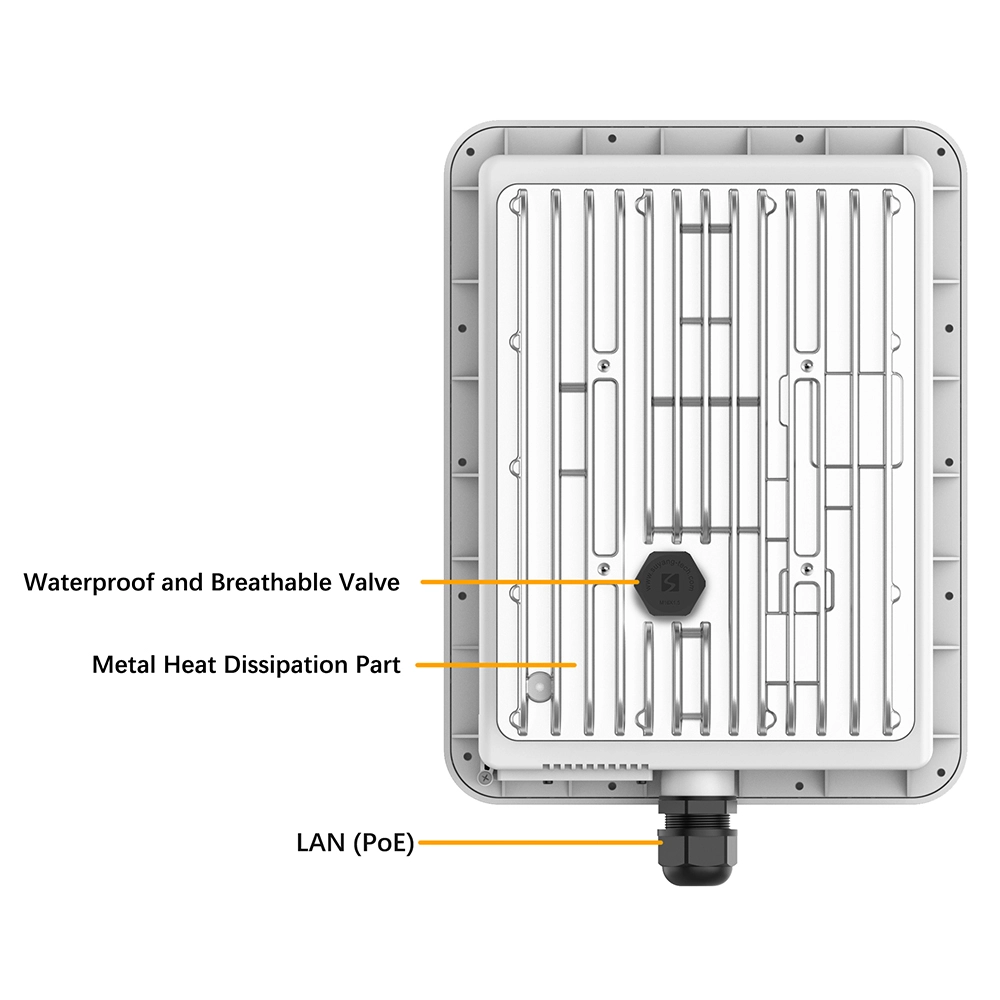
Budget-focused manufacturers often reduce costs by using lower-grade plastics for housings, omitting thermal management features, and selecting components with narrower operating temperature ranges. Over time, these compromises lead to housing warping or cracking under thermal stress, internal component failure from accumulated heat, and connector degradation from vibration or humidity.
The result is premature hardware failure requiring emergency replacement and unplanned technician dispatches. A device that costs $50 less at purchase but fails two years earlier than a more robust alternative has generated negative ROI when replacement logistics are factored in.
1.3 The “Truck-Roll” Trap
Perhaps the most controllable hidden cost is on-site maintenance. When devices lack comprehensive remote management capabilities, routine tasks such as configuration changes, firmware updates, and diagnostic checks require physical presence at the installation site.
Consider a scenario where a router configuration error causes connectivity loss across multiple sites. Without remote management, a technician must be dispatched to each location, travel and mileage costs accumulate, and productivity is lost across multiple staff members. With average dispatch costs ranging from $150 to $500 per site, a single configuration issue affecting 20 sites can generate $3,000 to $10,000 in avoidable expense.
Section 2: Key Technical Features That Drive TCO Reduction
When evaluating bulk 4G LTE router or 5G cellular router suppliers, B2B buyers should prioritize technical capabilities that directly correlate with lower ongoing maintenance costs.
2.1 Hardware Watchdog: Autonomous Recovery
A hardware watchdog is an independent supervisory circuit that monitors the router’s operating system. When a system freeze or software crash occurs—a common symptom of network instability—the watchdog automatically triggers a hard reset without human intervention. This feature restores connectivity within 90 seconds of failure detection, eliminates 70–80% of unnecessary truck rolls caused by temporary software faults, and provides documented recovery logging for troubleshooting.
2.2 TR069 and CWMP Support: True Remote Management
TR069 is the industry-standard protocol for remote device management. Combined with CWMP, it enables comprehensive remote administration including bulk configuration deployment across thousands of devices, remote firmware upgrades with rollback options, real-time performance monitoring, and automated provisioning for new installations. Organizations implementing full TR069 management report reducing IT labor costs by 70–80%, largely eliminating physical site visits for configuration changes.
2.3 Industrial Temperature Rating and Environmental Compliance
Router specifications should include detailed operating temperature ranges validated by third-party testing. For outdoor deployments, consider the following classifications:
| Application Environment | Recommended Temperature Range | Key Requirements |
| Indoor, climate-controlled | 0°C to 40°C | Standard commercial grade |
| Industrial cabinet | -10°C to 55°C | Enhanced ventilation |
| Outdoor enclosure | -30°C to 70°C | Industrial-grade housing, IP65+ |
| Extreme remote sites | -40°C to 75°C | Military/industrial grade |
Section 3: A Practical Framework for Supplier Evaluation
B2B buyers can systematically evaluate potential suppliers based on TCO-relevant criteria. This approach moves beyond unit price comparison to identify partners that minimize long-term operational expense.
3.1 Manufacturing Quality Indicators
| Assessment Area | Questions to Ask | What to Look For |
| Production Testing | What testing is performed on every unit? | 100% functional testing; burn-in; RF verification |
| Yield Rate | What is your first-pass yield rate? | Industry average: 95–97%; top: 98%+ |
| Quality Certifications | Which quality systems are in place? | ISO 9001, ISO 14001 |
| Component Traceability | Can components be traced to batches? | Full batch traceability |
3.2 Technical Capability Assessment
| Assessment Area | Questions to Ask | What to Look For |
| R&D Investment | What percentage of revenue goes to R&D? | Top-tier: 8–12%; mid-tier: 4–7% |
| Protocol Support | Which remote management protocols? | TR069, SNMP v3, HTTPS, cloud platform |
| Customization | Can firmware be customized? | Custom boot, VPN integration, regional bands |
| Obsolescence Planning | How are end-of-life components handled? | Formal lifecycle management; advance notice |
3.3 Operational Support Evaluation
| Assessment Area | Questions to Ask | What to Look For |
| Warranty Terms | What is the coverage period? | Minimum 12 months; 24–36 months preferred |
| Technical Support | What are support hours and SLAs? | 24/7 availability; defined response times |
| Documentation | What documentation is provided? | Full technical specs; user manuals; API docs |
| RMA Process | How are defects handled? | Advance replacement; local RMA centers |
Section 4: The Business Case for Value-Based Procurement
Adopting a TCO-focused procurement approach requires a shift in mindset. The following considerations help justify this transition to procurement teams and executive stakeholders.
4.1 Quantifying the TCO Difference
A comprehensive TCO calculation should include direct hardware costs (unit price, shipping, duties, spare parts), operational maintenance costs (truck-roll dispatches, remote IT labor, helpdesk staffing, training), and business impact costs (revenue lost during downtime, productivity loss, overtime premiums, customer compensation).
When these categories are totaled over a 3-to-5-year deployment horizon, the findings are consistent: the lowest unit price supplier rarely delivers the lowest total cost. Organizations that have systematically tracked these metrics report TCO differences of 2x to 4x between entry-level and quality-focused suppliers across typical enterprise deployments.
4.2 Strategic Considerations Beyond Direct Costs
While quantified savings are compelling, several qualitative benefits further strengthen the value-based procurement case: reduced outages lead to higher customer satisfaction and operational continuity; IT teams can focus on strategic initiatives rather than routine maintenance; robust remote management makes scaling faster and cheaper; and quality devices are more likely to support future firmware upgrades and new features.
Section 5: Practical Recommendations for Procurement Professionals
Based on this analysis, B2B buyers can implement the following recommendations to minimize TCO when sourcing 4G and 5G routers.
Pre-Procurement:
– Document current failure rates and maintenance costs as a baseline
– Define minimum technical requirements including hardware watchdog and TR069
– Request MTBF (Mean Time Between Failures) data from all suppliers
– Specify required operating temperature ranges based on actual deployment environments
Evaluation and Selection:
– Conduct pilot deployments with 10–20 units from each shortlisted supplier
– Run performance tests under simulated environmental conditions
– Verify remote management capabilities with real-world scenarios
– Interview existing customers about their maintenance experience
– Calculate projected TCO for each candidate before final decision
Post-Procurement:
– Establish regular performance reviews focused on failure rates and support response
– Track maintenance data to identify recurring issues
– Maintain a formal feedback loop to suppliers regarding quality concerns
Conclusion: Shifting from Price-Centric to Value-Centric Procurement
The most expensive network investment you can make may be the one that appears cheapest on the initial purchase order. Hidden maintenance costs—from truck rolls and downtime to premature hardware failure and excessive IT labor—transform low unit prices into high total costs.
For B2B buyers sourcing bulk 4G LTE routers or wholesale 5G cellular routers, the transition from price-centric to value-centric procurement is not about spending more. It is about spending smarter by: understanding the true drivers of TCO in networking deployments; prioritizing technical features that reduce ongoing maintenance needs; evaluating suppliers based on quality, capability, and support—not just price; and calculating the long-term financial impact of procurement decisions.
Buyers who adopt this framework consistently achieve lower total costs, higher network reliability, and greater operational efficiency. Those who remain focused solely on unit price will continue to fund the hidden maintenance costs of inferior hardware, often without realizing it until quarterly budgets reveal why operational expenses consistently exceed projections.
The shift requires discipline and a willingness to look beyond the immediate budget cycle. But for organizations deploying hundreds or thousands of cellular routers, the long-term savings are not marginal—they are transformative. In an era where connectivity is mission-critical, investing in reliable infrastructure is a strategic necessity that delivers returns through reduced operational friction and uninterrupted business operations.



What can we do for you?