
- Basic Definition and Core Concept of Serial Communication
- The Fundamental Distinction Between Asynchronous and Synchronous Communication
- In-depth Analysis of Asynchronous Serial Data Frame Structure
- Baud Rate: The Lifeline of Communication Speed
- The Art of Configuring Data Bits, Stop Bits and Parity
- Classic Physical Interface Standard: RS-232’s Rise, Fall and Legacy
- Adapting to Industrial Needs: RS-485 and RS-422 Standards
- Evolution of Logic Levels: From TTL to UART
- UART: Hardware Heart of Serial Communication
- Full-Duplex, Half-Duplex and Simplex Communication Modes
- Flow Control: Safety Valve Against Data Loss
- Core Role of Serial Communication in Embedded Development
- Application Layer Protocols Built on Top of Serial Communication
- Bridging Modern Computers with Serial Devices
- Common Troubleshooting Steps
- Future Outlook and Irreplaceability of Serial Communication
In today’s rapid advancing digital technology landscape, numerous high-speed and complex communication protocols emerging one after another. However, there is one technology born in the early years of computing, has remained relevant for years in many professional fields such as industrial control, embedded systems and device debugging due to its extreme simplicity, remarkable reliability and low cost, even it has traversed several technological eras but still plays an indispensable role in countless critical scenarios, this technology is serial communication. For many electronic engineers, embedded developers and industrial automation professionals, serial communication acts as silent and reliable old friend—the most direct tool for connect, debug and controll devices.
Basic Definition and Core Concept of Serial Communication
Serial communication, short for serial port communication, is rooted in the concept of “serial.” Unlike parallel communication which transmits multiple bits simultaneously over multiple data lines, serial communication uses only one data channel to transmit the bits that make up a byte or character one after another in time sequence. Imagine a single-file line of train cars, each representing a bit, has to pass through a unique tunnel one by one—this is an intuitive analogy for serial transmission. The advantage of this method is that it greatly simplifies the physical connection, requiring only a few wires to achieve bidirectional communication, reducing wiring complexity and hardware cost. This makes it particularly suitable for applications with long distances or stringent hardware resource constraints.
The Fundamental Distinction Between Asynchronous and Synchronous Communication
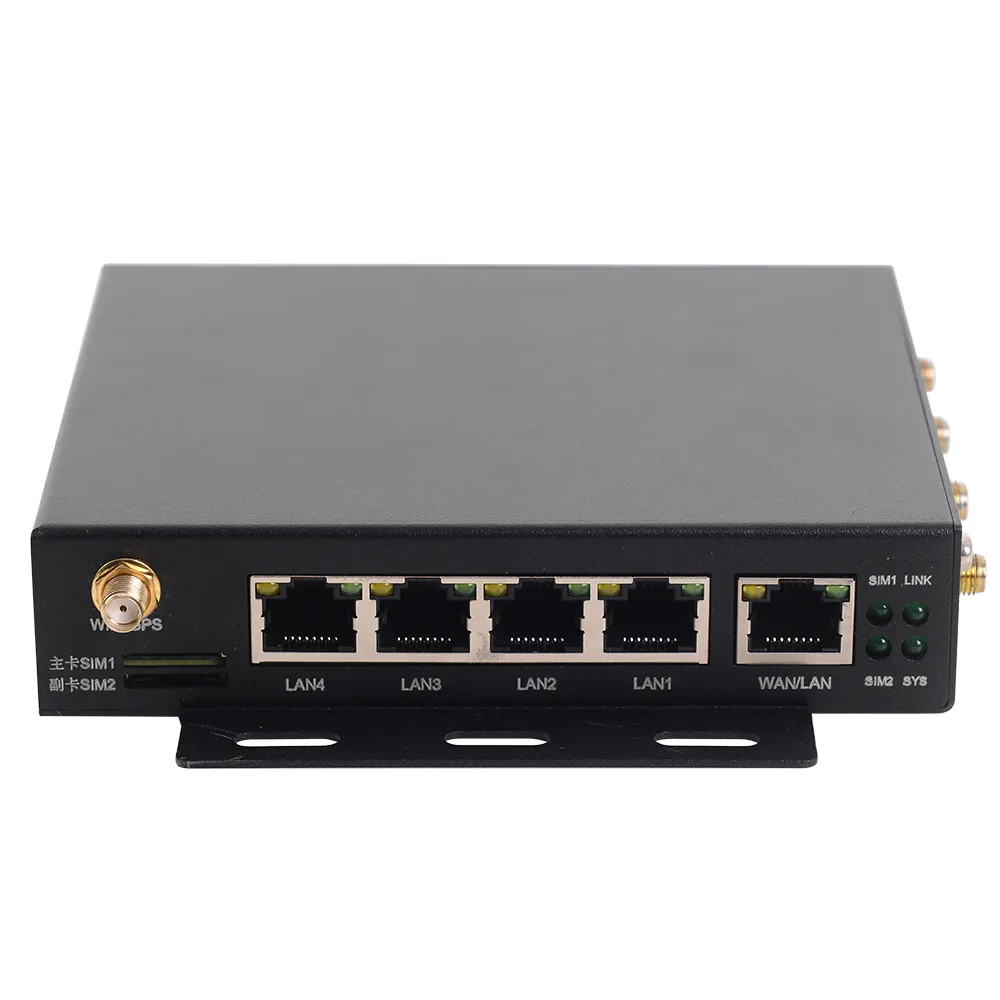
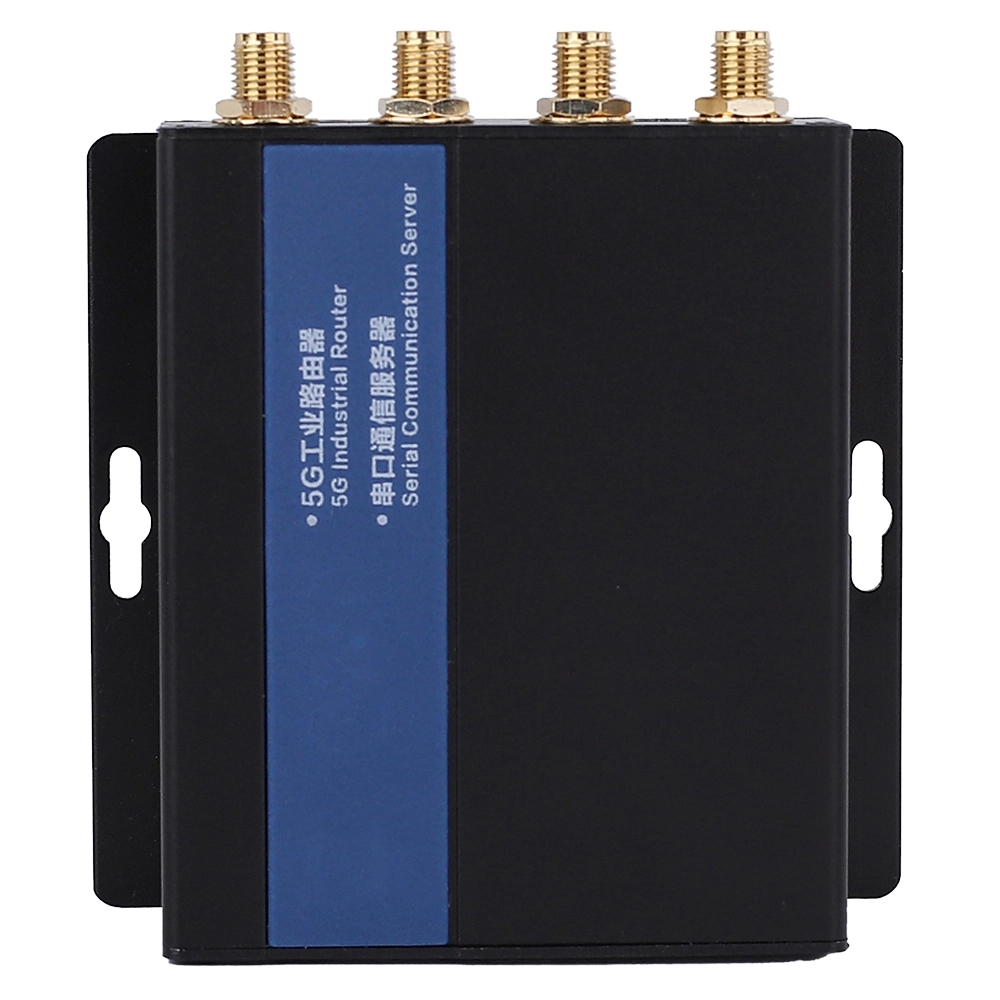
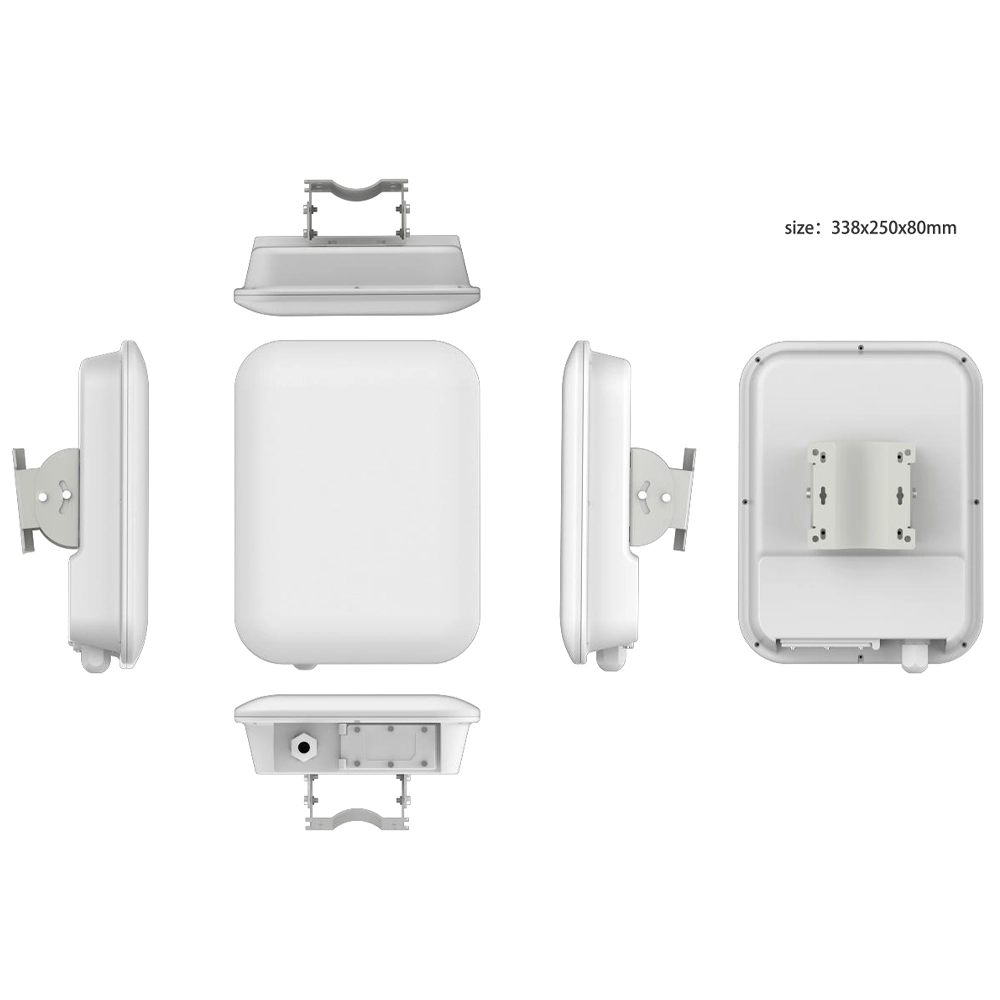
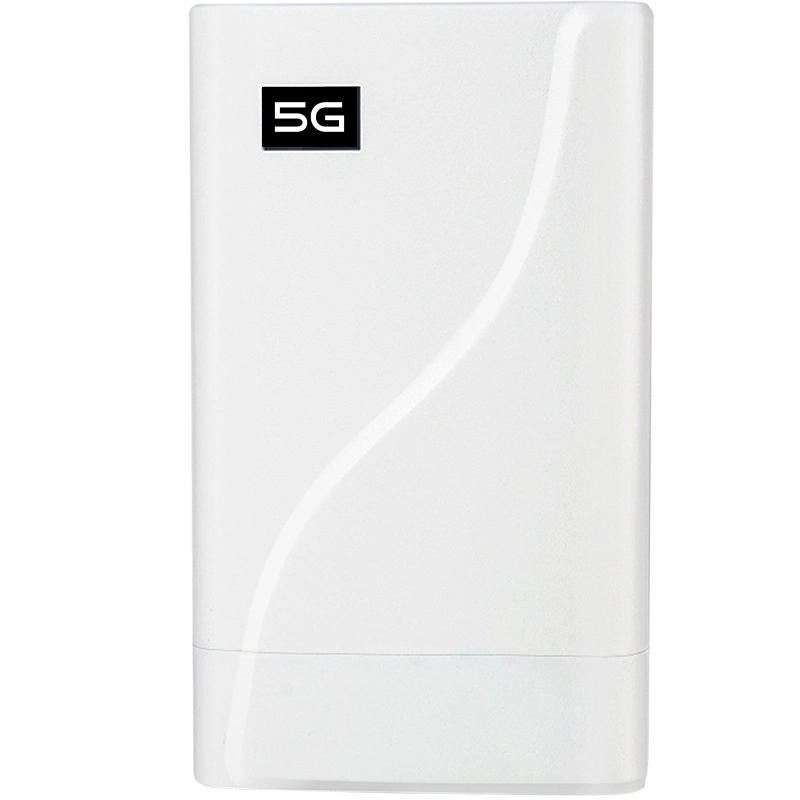
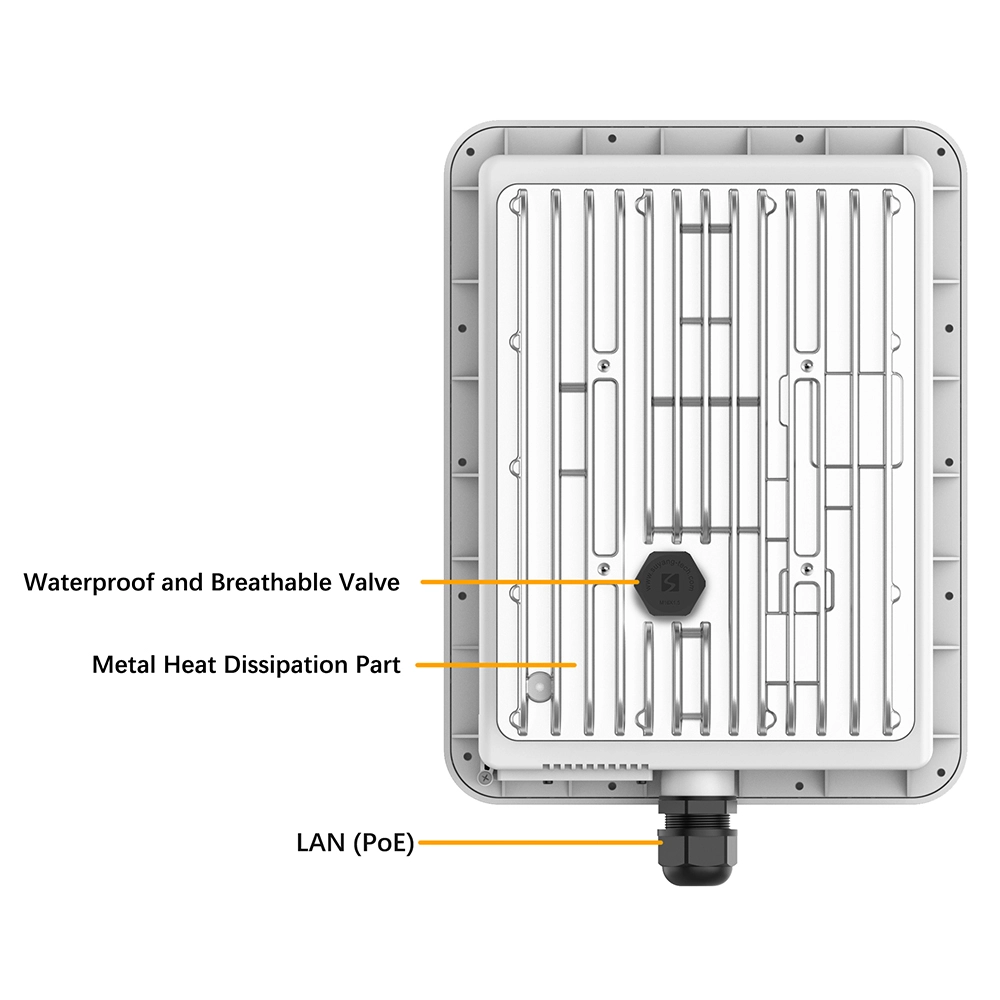
Serial communication mainly divided into two types: asynchronous and synchronous. The one we often refer in daily life such as classic RS-232 interface on 5g industrial cellular router, typically falls under asynchronous serial communication. In asynchronous communication, sender and receiver do not share clock signal line to synchronize the bit timing. So how does receiver know where a bit starts and ends? The secret lies in the fact that both parties must pre-agree on the exact same communication parameters, most importantly the baud rate. Data is packd into frame format, each frame carries its own start bit and stop bit as boundary markers. Receiving end relies on these markers and agreed baud rate to locate and parse the data. Synchronous communication such as Serial Peripheral Interface (SPI) protocol, provides separate clock signal line, the master or one of the communicating parties generates clock pulses, data is sampled on the edges of the clock, achieving precise synchronization and typically higher transmission efficiency, but requiring an extra connection line.
In-depth Analysis of Asynchronous Serial Data Frame Structure
Understanding asynchronous serial communication hinges on analyzing its data frame, a complete data frame is not just the user’s payload. It typically consists of the following sequential parts: First, a start bit at logic low level which marks the beginning of the data frame, waking communication line from an idle high level, this is followed by 5 to 9 payload data bits, most commonly 8 bits, exactly one byte. After data bits comes an optional parity bit, the sender calculates a parity value based on the number of ‘1’s in the data bits; receiver checks it to detect single-bit errors. Finally, there are one or more stop bits, usually at logic high level to ensure a clear separation between frames and provide processing time for receiving device. This rigorous framing format ensures data can be identified accurately without clock line.
Baud Rate: The Lifeline of Communication Speed
Baud rate is the most well-known parameter in serial communication, it defines the number of symbols transmitted per second. In binary systems, where one symbol typically represents one bit, baud rate is often roughly understood as bits per second (bps), common baud rates include 9600, 19200, 115200 etc. It is crucial that both communicating parties are set to the exact same baud rate, otherwise the receiver’s sampling timing will be off which result in garbage data. The choice of baud rate involves trade-offs between speed, transmission distance and system stability. Higher baud rates increase data throughput but are more susceptible to interference over long distances, but lower baud rates offer better noise immunity.
The Art of Configuring Data Bits, Stop Bits and Parity
Along with baud rate, data bits, stop bits and parity constitute language rules of serial communication. The number of data bits determines the payload per frame, seven bits are often used for pure ASCII characters, while eight bits are used for arbitrary binary data. Stop bit length can be 1, 1.5 or 2 bits, mainly providing buffer time at the end of a frame. Parity is a simple error-detection mechanism, Odd parity requires the total number of ‘1’s in the data and parity bits to be odd; Even parity requires it to be even. If receiver’s computed parity doesn’t match the agreement, it knows an error occurred during transmission. These parameters like secret passwords between communicating parties, any mismatch will cause communication failure.
Classic Physical Interface Standard: RS-232’s Rise, Fall and Legacy
When discuss serial communication, its most famous physical layer standard which is RS-232 inevitably comes to mind. Established by the Electronic Industries Alliance (EIA), it defines voltage levels, connector types and signal functions etc. Traditional RS-232 uses voltages of around ±12V to represent logic states, employs DB9 or DB25 connectors and includes a full set of modem control signals. It was configuration on personal computers, used to connect mice, modems and various peripherals. Although largely replaced by USB in modern consumer electronics, RS-232 still widely used in industrial environments, specialized equipment, 5g industrial cellular router and legacy systems. The design philosophy behind its control signals (such as Request to Send, Clear to Send and Data Terminal Ready) has had a lasting impact.
Adapting to Industrial Needs: RS-485 and RS-422 Standards
To overcome RS-232’s drawbacks—short transmission distance, point-to-point only and poor common-mode noise rejection—more robust industrial standards emerged. RS-422 uses differential signaling, where the voltage difference between two wires represents the logic state. This method effectively rejects external electromagnetic interference, achieve transmission distances over one kilometer. RS-485 builds upon RS-422 by supporting multi-point communication, allow multiple transceivers on single bus for true networking. RS-485 typically operates in half-duplex mode on balanced differential lines, it has become the cornerstone of industrial fieldbus networks, widely used in building automation, security systems, data acquisition and more other fields.
Evolution of Logic Levels: From TTL to UART
Within integrated circuit for short-distance board-level communication, TTL (Transistor-Transistor Logic) level is typically used, close 0 V represents logic 0 in this standard, close supply voltage such as 3.3V or 5V represents logic 1. UART (Universal Asynchronous Receiver/Transmitter) module commonly integrated into modern microcontrollers typically uses TTL levels for its I/O. When connect to standard RS-232 device, a level shifter chip is needed to convert TTL levels to positive and negative voltages required by RS-232 and vice versa. Understanding differences between these level standards and the need for conversion is the key to design and connect serial systems.
UART: Hardware Heart of Serial Communication
UART is hardware module that actually performs conversion between serial and parallel data, its core functions summarized as “parallel-to-serial conversion” (transmit) and “serial-to-parallel conversion” (receive). When transmitting, UART takes parallel data written by processor, formats it according to specified frame structure and baud rate, converts it into a serial bit stream and outputs it on TX pin. When receiving, it monitors RX pin, detects start bit, samples subsequent bits according to baud rate, reassembles them into parallel data and makes it available for processor to read. It handles generating and checking parity bits additionally, as well as various status flags (data ready, framing error and overrun error etc.). UART is bridge between microcontroller and serial world.
Full-Duplex, Half-Duplex and Simplex Communication Modes
According to data flow directions, serial communication can be divided into three modes. Full-duplex mode requires separate transmit and receive channels, allowing simultaneous two-way data transmission, like a two-way road. Standard RS-232 and most UARTs support full-duplex. Half-duplex mode shares a single data channel, both parties can send and receive, but not simultaneously, taking turns like walkie-talkies. RS-485 bus typically operates in half-duplex mode. Simplex mode has fixed data flow direction, like a radio broadcast which transmit only but not receive. Understanding these modes is crucial to design system connections and communication protocols.
Flow Control: Safety Valve Against Data Loss
When processing speed of communicating parties not match (e.g. a computer send data to a slow printer), data loss will be occured, flow control will solve this problem. Hardware flow control uses dedicated signal lines, such as Request to Send (RTS) and Clear to Send (CTS) in RS-232. Receiver pulls CTS low to tell sender to pause. Software flow control (XON/XOFF) uses special control characters inserted into data stream (XOFF to pause and XON to resume). While it needn’t extra wires, control characters themselves cannot be sent as normal data, which is a limitation. Proper use of flow control is important to ensure reliable communication.
Core Role of Serial Communication in Embedded Development
In embedded system development, serial communication is irreplaceable debugging and diagnostic tool. In early stages of development, before graphical interfaces are ready, serial port becomes engineer’s “eyes” and “ears” into the system’s internal state. By outputting debug information, variable values and program status via serial port, developers can clearly understand code execution flow and quickly locate issues. Furthermore, many embedded devices receive configuration commands, upload operational data and undergo firmware updates through serial port. Its low demands on system resources make it preferred channel for embedded devices to interact with outside world.
Application Layer Protocols Built on Top of Serial Communication
Serial communication itself is only responsible for transparently transmitting raw byte streams. To conduct meaningful conversations, an application-layer protocol must be defined. These protocols specify data organization formats, command meanings and response mechanisms. For example, the widely used Modbus RTU protocol in industrial applications is an application-layer messaging protocol based on serial communication. It encapsulates data into messages containing address, function code, data and checksum fields, enabling read/write operations on remote device registers and coils. Other examples include serial commands for barcode scanners and custom data reporting formats for sensors. These “languages” built on serial physical layer give serial communication rich application-level meaning.
Bridging Modern Computers with Serial Devices
Due to trend towards thinness and portability, modern laptops and desktop motherboards rarely include traditional serial ports, but this hasn’t hindered the usage of serial communication as USB-to-serial converters emerged, these converters internally integrate a bridge chip and level-shifting circuitry. It appears as a standard USB device to the operating system, but a virtual serial port is created. Users can simply install appropriate driver and interact with industrial equipment, development boards etc., through this virtual port just like using a native serial port. This technology perfectly bridges the gap between traditional serial devices and modern computer interfaces.
Common Troubleshooting Steps
Although serial communication seems simple, but connection problems are universal, systematic approach to troubleshooting is essential. First, check whether physical connection is correct and reliable, include cables, connectors and pin assignments. Second, verify the parameter settings on both sides are identical, such as baud rate, data bits, stop bits and parity, serial debugging tool and loopback test (connecting TX to RX) can help to check local serial hardware. Third, check whether logic level standards match and whether a level converter is needed. Finally, review application layer protocol to confirm whether data format and commands sent match the expectations of the target device. Follow this sequence from hardware to software and from lower to upper layers can efficiently solve most serial communication issues.
Future Outlook and Irreplaceability of Serial Communication
In era of thriving Ethernet, wireless networks and high-speed serial buses, serial communication might seem somewhat ancient, but its core advantages of simplicity, reliability, low cost and low power align perfectly with the rigid requirements of many application scenarios. On the edge of Industrial Internet of Things (IIoT), countless sensors, actuators and controllers are still connected via serial communication or the fieldbuses derived from it. In deep embedded devices, serial port act as bootloader and emergency maintenance channel is irreplaceable. The value of a technology lies not in its novelty but in whether it can solve a problem appropriately. Serial communication, in its most unadorned way, accomplishes most fundamental and critical connection tasks. This reliability, approved by time, ensures it will continue to occupy a solid place in the technological landscape of the future.
From mainframe-era terminal connections to nerve endings of the modern IoT, serial communication has spanned over half a century of technological change. It may not be as dazzling as newer flashy technologies, but like bedrock of the digital world, it silently and robustly supports the operation of countless systems. Serial communication is not just a specific technology but grasp a design philosophy that reduces complexity to its essence. Amidst the wave of pursuing higher, faster, stronger, persistent pursuit of reliability, certainty and cost-effectiveness is always worth pondering and inheriting for every technology practitioner.


What can we do for you?