
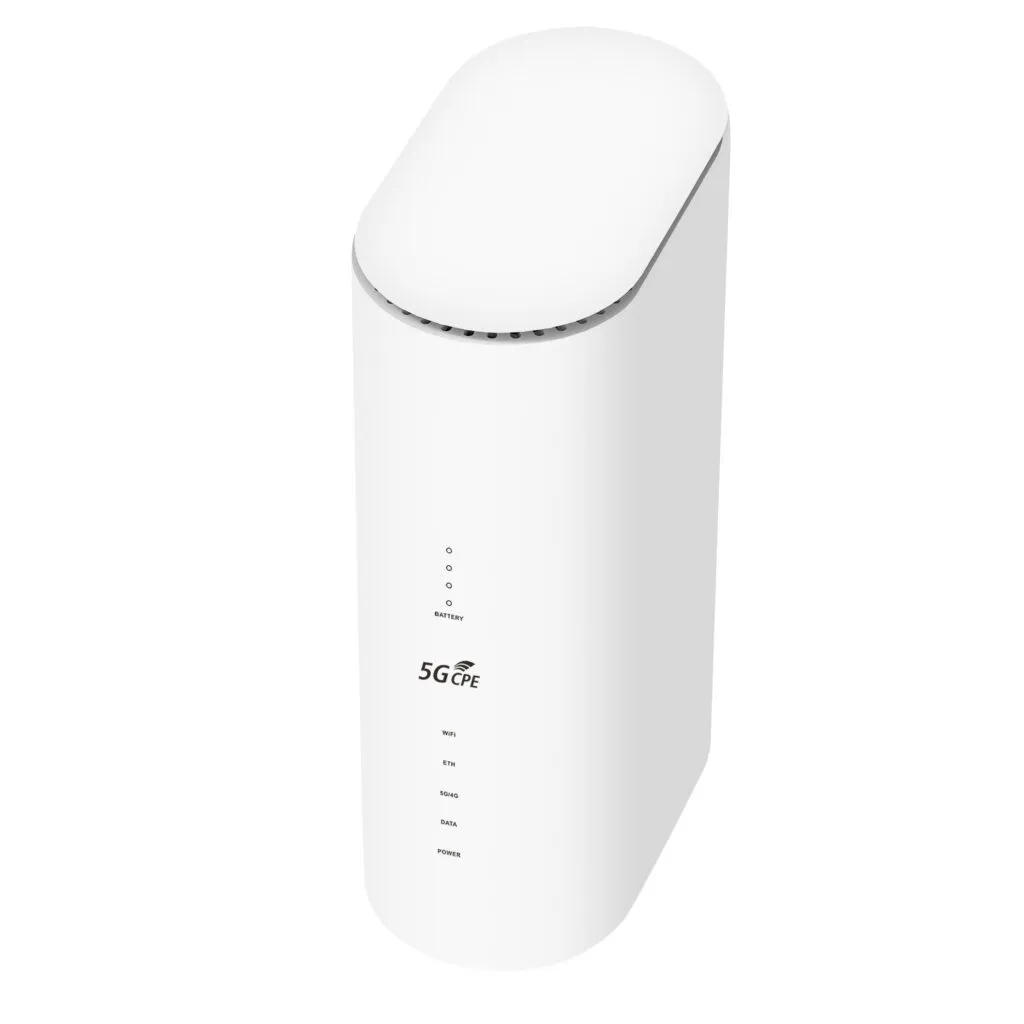
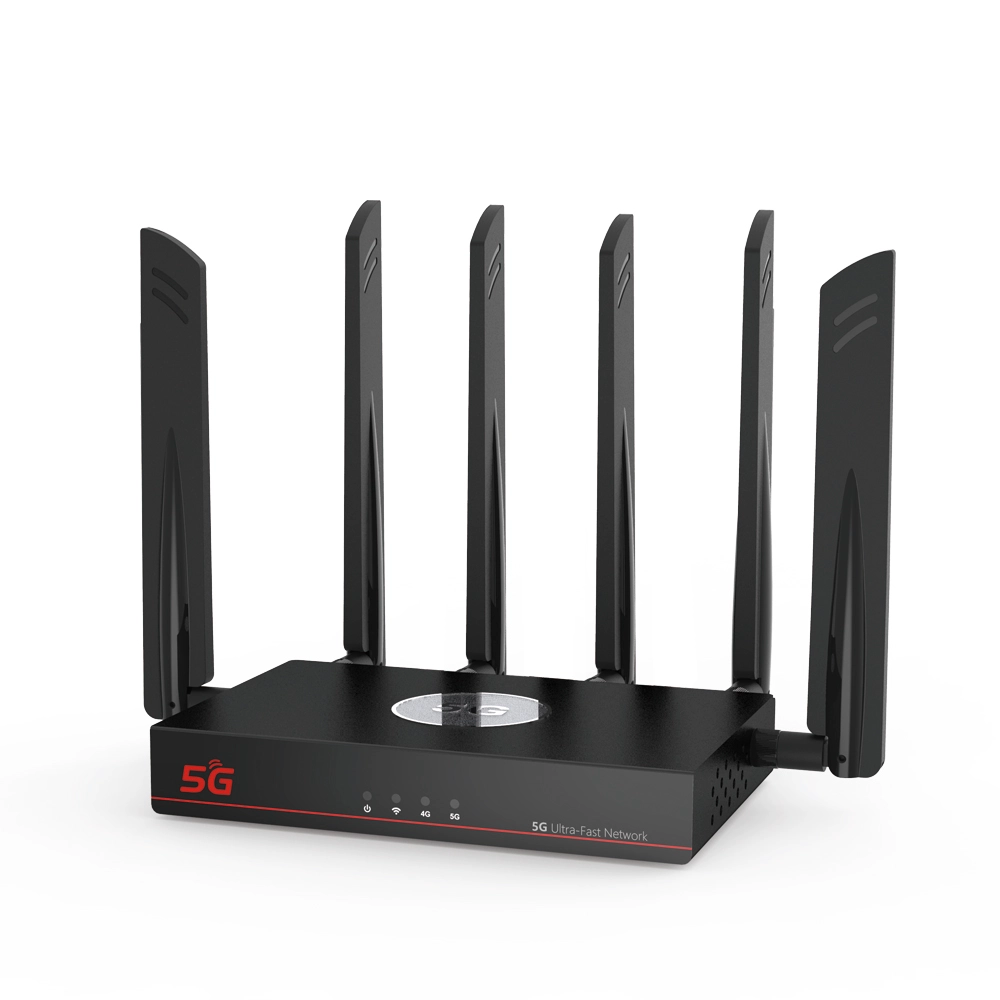
As 5G technology matures, 5g cellular wifi router becoming more widespread, with increasing demand for 5g cellular wifi router, the need for 5g cellular wifi router support MESH networking is also growing. But what’s mesh network and it’s advantages?
Wireless Mesh network also known as “multi-hop” network, is a new wireless network technology that is completely different from traditional wireless networks. It consists of mesh routers and mesh clients, among which mesh routers form backbone network and are connected to wired Internet cables, responsible for providing multi-hop wireless Internet connections for mesh clients.
In traditional wireless local area network (WLAN), each client accesses network through a wireless link connected to an Access Point(AP), forming a local Basic Service Set(BSS). If users want to communicate with each other, they must first access a fixed AP, this network structure is called single-hop network. In a wireless Mesh network, any wireless device node can serve as an AP and a router at the same time, each node in the network can send and receive signals, each node can communicate directly with one or more peer nodes.
The biggest benefit of this structure is if the nearest AP is congested due to excessive traffic, the data can be automatically rerouted to a neighboring node with smaller communication traffic for transmission. By analogy, the data packet can also continue to be routed to next nearest node for transmission according to network conditions until it reaches the final destination, this access method is multi-hop access.
In fact Internet is a typical example of a Mesh network, for example when we send an E-mail, the email does not arrive directly in the recipient’s mailbox, but is forwarded from one server to another through a router, and finally reaches the user’s mailbox after multiple routing and forwarding. During the forwarding process, routers generally choose the most efficient transmission path so that the email can reach the user’s mailbox as quickly as possible.
Comparing with traditional switched networks, wireless Mesh networks eliminate the need for wiring between nodes, but still have the redundancy mechanism and rerouting functions provided by distributed networks. In a wireless Mesh network, if you want to add a new device, you only need to simply connect the power supply. It can automatically configure itself and determine the best multi-hop transmission path. When devices are added or moved, the network can automatically detect topology changes and automatically adjust communication routing to obtain the most effective transmission path.
Comparing with traditional WLAN, wireless Mesh network has several unparalleled advantages:
1.Easy to deploy and install: Installing a Mesh node is very simple, just take the device out of box and connect it to power supply is ok. Due to greatly simplified installation, users can easily add new nodes to expand the coverage and network capacity of the wireless network. In a wireless Mesh network, not every Mesh node requires a wired cable connection, which is the biggest difference from a wired AP. The design goal of Mesh is to minimize the number of wired devices and wired APs, thus reduce the total cost of ownership and installation time greatly, the cost savings brought by this is very considerable. The configuration and other network management functions of wireless Mesh networks are the same as traditional WLANs, users’ experience in using WLANs can be easily applied to Mesh networks.
2.NLOS:NLOS configuration can be easily achieved with wireless Mesh technology, so it has broad application prospects in outdoor and public places. Users with direct line-of-sight to transmitter receive wireless signals first, then forward the received signals to users who are not in direct line-of-sight. In this way, the signal can automatically choose the best path to continuously jump from one user to another, and finally reach target user without direct line of sight. In this way, users with direct line of sight effectively provide wireless broadband access to nearby users without direct line of sight. The wireless Mesh network’s non-line-of-sight transmission feature greatly expands the application fields and coverage of wireless broadband.
3.Stability:The usual way to achieve network stability is to use multiple routers to transmit data, information will be sent over alternate paths by other router if one router fails. E-mail is an example of this. Email information is divided into several data packets then sent through multiple routers through Internet, and finally assembled into information that reaches the user’s inbox. Mesh networks is more robust than single-hop networks because they do not rely on the performance of a single node. In a single-hop network, the entire network will be paralyzed if a node fails. But in Mesh network structure, each node has one or several paths to transmit data, if the nearest node fails or is interfered, data packets will be automatically routed to an alternate path for transmission, and the operation of the entire network will not be affected.
4.Flexible structure: In a single-hop network, devices must share AP. If several devices want to access the network at same time, communication congestion will occur and system will become slow down. But in a multi-hop network, devices can be connected to the network through different nodes at same time, so there will be no reduction in system performance. Mesh networks also provide greater redundancy mechanisms and communication load balancing capabilities. In a wireless Mesh network, each device has multiple transmission paths available, the network can dynamically allocate communication routes based on communication load of each node, thus effectively avoiding node communication congestion. Single-hop networks cannot dynamically handle communication interference and access point overloading.
5.High bandwidth: The physical characteristics of wireless communication determine that the shorter the communication transmission distance, the easier to obtain high bandwidth, because once wireless transmission distance increases, various interferences and other factors will cause increasing data loss. Therefore choose to transmit data over multiple short hops will be an effective way to obtain higher network bandwidth, and this is the advantage of Mesh networks. In a Mesh network, a node can not only transmit and receive information, but also act as a router to forward information to its nearby nodes, as more nodes are connected to each other and the number of possible paths increases, the total bandwidth will increase greatly also.In addition, because transmission distance of each short hop is short, the power required to transmit data is also smaller. Since multi-hop networks usually use lower power to transmit data to neighboring nodes, and wireless signal interference between nodes is also smaller, the network’s channel quality and channel utilization efficiency are greatly improved, thus enabling higher network capacity. For example, in high-density urban network environments, Mesh networks can reduce mutual interference between adjacent users using wireless networks and greatly improve channel utilization efficiency.
6.Can be used outdoor:Mesh wireless network is a double-edged sword, it can extend wireless LAN infrastructure to places where it is impossible to wire an access point, but this will reduce backhaul link throughput for customers connected to mesh wireless network access points in the mean time, and the same goes for the end. In addition, power support is still required at remote end. For example, bus stations already have power support, and management of hotspot control panels requires almost no bandwidth, access points at bus stops will not serve clients with Wi-Fi, instead it has its own RJ-45 port that can be enabled and configured to provide virtual LAN required by hotspot.

What can we do for you?