
Picture this: you’ve deployed a critical sensor network for a remote agricultural monitoring system, or you’re setting up a temporary security and payment network for a large outdoor festival. Everything is ready, but then a sudden, heavy downpour hits. Your network goes dark. The culprit? A router that couldn’t handle getting wet. In today’s world, where data is the lifeblood of operations, reliable connectivity isn’t just a convenience—it’s a necessity, even in the harshest environments. This is where the specialized world of outdoor routers comes in. An outdoor router isn’t just a regular indoor unit placed in a box; it’s an engineered solution built from the ground up to conquer the elements. The core challenge for businesses and integrators is finding a device that delivers unwavering, high-speed internet access while simultaneously battling water, dust, extreme temperatures, and physical shocks. Selecting the wrong one can lead to frequent downtime, costly repairs, and failed projects. This comprehensive guide is designed to cut through the confusion. We’ll walk you through the essential features, from IP ratings and thermal resilience to cellular technology choices, helping you select the perfect waterproof outdoor router to ensure your outdoor operations are always online, rain or shine.
What is a Waterproof Outdoor Router and Why Do You Need One?
At its most basic, a waterproof outdoor router is a networking device designed to provide internet connectivity—typically via cellular networks like 4G LTE or 5G—in environments that would quickly destroy standard equipment. Unlike consumer-grade routers meant for climate-controlled offices and homes, these are built with ruggedness as a core principle. But why is this specialization so critical? The answer lies in the relentless assault of outdoor conditions. Moisture is public enemy number one for electronics. It can cause short circuits, corrosion on circuit boards, and connector failure. Dust and debris can clog ventilation ports, leading to overheating, or interfere with internal components. Temperature extremes are another major factor; components can freeze or overheat, causing performance throttling or complete shutdown. Finally, physical factors like UV radiation from the sun can degrade plastics and coatings over time, while vibration from nearby machinery or wind can loosen internal connections.
Therefore, the need for a purpose-built outdoor router becomes clear in numerous scenarios. Consider the following applications:
- Remote Industrial Monitoring: Oil and gas pipelines, mining operations, and renewable energy sites (solar farms, wind turbines) are often in isolated locations with no wired infrastructure. A rugged router transmits vital sensor data on pressure, flow, and equipment health back to a central SCADA system.
- Construction Site Connectivity: Modern construction relies on cloud-based project management software, VoIP communications, and video surveillance for security and progress tracking. A durable router provides a mobile network hub for the entire site office and trailers.
- Transportation and Fleet Management: Mounted on buses, trains, or maritime vessels, these routers enable real-time GPS tracking, onboard passenger WiFi, and digital signage, all while enduring constant vibration and weather exposure.
- Smart City Infrastructure: Traffic management systems, public safety cameras, environmental sensors, and digital kiosks all require a reliable, always-on network connection installed in utility cabinets or on light poles.
- Agricultural Technology: Precision farming uses soil moisture sensors, automated irrigation controls, and drone mapping, all of which depend on a network backbone that can survive in fields.
- Outdoor Events and Hospitality: For festivals, stadiums, or remote resorts, providing guest WiFi and supporting point-of-sale systems demands a robust networking solution that can be quickly deployed and left unattended.
Key Features to Evaluate When Choosing Your Outdoor Router
Selecting the right outdoor router means looking beyond basic specs and understanding the engineering that goes into survivability. Here are the non-negotiable features you must scrutinize.
Ingress Protection (IP Rating): Your First Line of Defense
The IP (Ingress Protection) rating is the universal standard that defines a device’s protection against solids (like dust) and liquids (like water). It’s a two-digit code (e.g., IP67) where the first digit represents solid particle protection and the second digit represents liquid ingress protection. For any true outdoor router, you should typically look for a rating of IP65 or higher.
- IP65: \"Dust-tight\" (complete protection from dust) and protected against low-pressure water jets from any direction. This is suitable for most outdoor environments where the router might be under an eave or in a partially sheltered location, defending against rain and dust.
- IP66: Dust-tight and protected against powerful water jets. This offers a higher assurance against heavy rain, storm conditions, or accidental spraying during cleaning.
- IP67: Dust-tight and protected against immersion in water up to 1 meter for 30 minutes. This is the gold standard for many demanding applications. A router with an IP67 rating can survive temporary flooding, being submerged during a flash flood, or installation in a pit that might collect water. It provides a massive safety margin.
- IP68: Dust-tight and protected against continuous immersion in water under conditions specified by the manufacturer (usually deeper and longer than IP67). This is for permanent underwater deployment or the most extreme environments.
Operating Temperature Range: Beating the Heat and the Cold
Electronic components have strict thermal limits. A commercial router designed for 0°C to 40°C will fail in a desert installation where cabinet temperatures can soar past 60°C, or in arctic conditions that drop below -20°C. Industrial and outdoor routers specify a \"wide temperature\" operating range.
- Standard Industrial Range: -20°C to +60°C. This covers many temperate climate applications.
- Extended Industrial Range: -40°C to +75°C. This is what you should look for in a truly robust waterproof outdoor router. It means the device uses industrial-grade components (chips, capacitors, batteries if present) and a thermal design that can dissipate heat effectively in high temperatures and start up reliably in deep freeze conditions without condensation damage.
Durability and Build Quality: More Than Just a Shell
The physical construction is what translates those IP and temperature ratings into real-world resilience. Key aspects include:
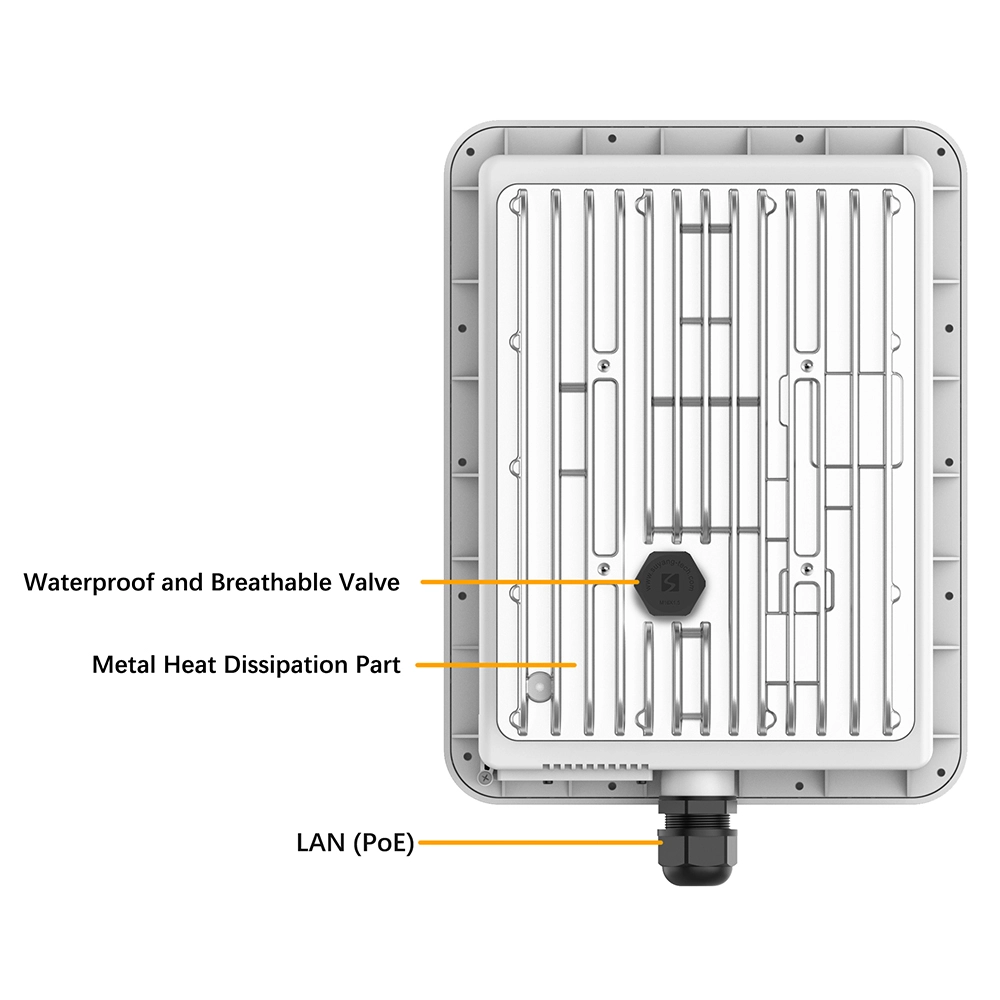
- Housing Material: Heavy-duty aluminum alloy or steel housings are common. They offer excellent heat dissipation, EMI/RFI shielding, and superior resistance to physical impact and UV degradation compared to plastic. A metal case is a strong indicator of a professional-grade rugged outdoor router.
- Vibration and Shock Resistance: For mobile applications (vehicles, trains) or installations near heavy machinery, the router must withstand constant shaking and occasional impacts. Look for specifications mentioning compliance with MIL-STD-810G or similar standards for vibration and shock. Internal components may be secured with additional potting or damping materials.
- Corrosion Resistance: For coastal or chemical plant environments, a powder-coated or anodized finish that resists salt spray and corrosive gases is essential.
- Mounting Options: Versatile mounting kits (pole, wall, DIN-rail) allow for flexible and secure installation in various outdoor settings.
Cellular Connectivity: 4G LTE vs. 5G for the Great Outdoors
The \"brains\" of your outdoor connectivity is the cellular modem. Your choice between 4G and 5G depends on application needs, coverage, and budget.
- 4G LTE Outdoor Routers: 4G networks are mature, widely available, and often offer excellent coverage in remote areas. A high-quality 4G outdoor router with support for multiple carrier bands (including low-band frequencies like Band 12, 13, or 5 for better penetration and range) is a reliable and cost-effective workhorse for most IoT and M2M applications. Speeds are sufficient for sensor data, VoIP, and standard-definition video.
- 5G Outdoor Routers: 5G brings transformative benefits: vastly higher speeds (for high-definition video streaming, large file transfers), ultra-low latency (critical for real-time control, autonomous vehicles), and network slicing (dedicated virtual networks). A 5G outdoor router is future-proof for bandwidth-hungry applications like multi-camera AI video analytics at a construction site or live broadcasting from a remote event. However, 5G coverage, especially the high-speed mmWave bands, is still concentrated in urban areas. Sub-6 GHz 5G offers a better balance of improved speed and coverage for outdoor industrial use.
Power over Ethernet (PoE) and Industrial Ports
A truly versatile outdoor router does more than just provide internet; it acts as a central hub for other outdoor equipment.
- Power over Ethernet (PoE): PoE capability allows the router to deliver both data and electrical power over a single Ethernet cable to connected devices like IP cameras, wireless access points, or sensors. This simplifies installation dramatically by eliminating the need to run separate power lines to each device. Look for PoE standards (e.g., 802.3af, 802.3at) and total power budget.
- Industrial Serial Ports (RS232/RS485): Many legacy industrial devices (PLCs, sensors, gauges) communicate via serial protocols. A router with built-in RS232/RS485 ports can bridge these \"old-world\" devices to the modern IP network, enabling remote monitoring and control without replacing existing infrastructure.
- Digital Input/Output (DI/DO): These GPIO pins allow the router to interact with the physical world. A DI can monitor the status of a door sensor or alarm, while a DO can trigger a relay to turn on a pump or a light based on a network command.
Installation and Maintenance Best Practices
Even the best waterproof outdoor router can fail if installed incorrectly. Proper deployment ensures longevity and performance.
- Location, Location, Location: Choose a mounting spot that minimizes direct exposure to the harshest elements if possible. Under an eave, on the shaded side of a pole, or inside a well-ventilated (but sealed) outdoor cabinet can extend life. Ensure there is a clear line of sight to the cellular tower for the best signal strength; consider an external antenna port and a properly tuned external antenna if the signal is weak.
- Seal All Connections: The router’s ports are potential weak points. Always use the provided waterproof cable glands or connector caps. For Ethernet cables running to other devices, use outdoor-rated, UV-protected cables with waterproof connectors.
- Power Considerations: Use a stable, regulated power supply. In areas with lightning or power surges, install an inline surge protector on both the power and any outdoor Ethernet lines to protect the router.
- Ventilation and Heat Management: While the router is designed for high temperatures, avoid installing it in a small, sealed metal box in direct desert sun, as this can create an oven effect. Allow for air space around the unit.
- Routine Maintenance: Periodically inspect the physical unit for any damage to the casing or cable seals. Check for debris blockages. Remotely monitor the router’s status (signal strength, temperature, uptime) via its management interface to proactively identify issues before they cause an outage.
FAQ: Your Waterproof Outdoor Router Questions Answered
What is the difference between a waterproof router and a regular router?
A regular router is designed for indoor, climate-controlled environments. A waterproof router is engineered with sealed casings (high IP rating), wide-temperature components, and ruggedized construction to withstand rain, dust, extreme heat/cold, UV radiation, and vibration, making it suitable for permanent outdoor deployment.
Can I just put a regular indoor router in a waterproof box?
This is not recommended. While it might keep water out, it can create a heat trap, causing the indoor router to overheat and fail quickly. Outdoor routers are designed to manage heat dissipation in sealed environments. Additionally, their internal components are rated for temperature extremes and humidity that indoor components are not.
How do I know if I need a 4G or a 5G outdoor router?
Choose a 4G LTE router if your primary needs are reliable, widespread coverage for IoT data, basic connectivity, or if you are operating in an area with limited 5G infrastructure. Choose a 5G router if your application requires very high bandwidth (e.g., multiple HD video streams), ultra-low latency (real-time control), or you want to future-proof your installation in an area with strong 5G coverage.
What does \"Dual SIM failover\" mean, and why is it important?
Dual SIM failover means the router has two SIM card slots, typically for two different mobile network operators. If the primary network loses signal or goes down, the router automatically and seamlessly switches all connectivity to the secondary SIM card’s network within seconds. This provides critical network redundancy, ensuring uninterrupted operation for applications where connectivity is vital, like security or payment systems.
How long can I expect a high-quality waterproof outdoor router to last?
With proper installation and in a suitable environment, a well-made industrial waterproof outdoor router can have an operational lifespan of 5 to 10 years or more. Key factors affecting longevity include the severity of environmental exposure, the quality of power supply, and adherence to the specified operating temperature range. Regular remote monitoring can help predict and prevent failures.

What can we do for you?