
Picture this: you’re on a remote construction site, miles from the nearest fiber optic line. A critical piece of equipment needs a software update, a security camera needs to stream live footage, or your team needs to access cloud-based blueprints. In these moments, a reliable internet connection isn’t a luxury; it’s the backbone of your operation. This is where the power of an outdoor cellular router comes into play. Unlike consumer Wi-Fi extenders that fail at the first sign of rain or dust, a purpose-built outdoor cellular router is engineered to be your unwavering digital lifeline in the harshest environments. But with so many options boasting 4G, 5G, and various technical specs, how do you choose the right one? This comprehensive guide cuts through the noise. We’ll walk you through the essential factors—from deciphering weatherproof ratings to selecting the perfect antenna—ensuring you invest in a solution that delivers robust, reliable connectivity exactly where you need it most.
Understanding the Core Challenge: Why Standard Routers Fail Outdoors
The fundamental mistake many businesses make is trying to use indoor networking equipment outside. The challenges of remote and outdoor locations are unique and multifaceted. First and foremost is signal strength. Cellular signals in remote areas, valleys, or dense industrial settings can be weak and inconsistent. A standard router’s internal antenna simply can’t cope. Then comes the environment itself. Temperature extremes are a silent killer for electronics. Components rated for a cozy office (0°C to 40°C) will fail in a freezing winter (-20°C) or a scorching summer sun that pushes surface temperatures past 60°C. Moisture, dust, and corrosion follow closely behind. A light drizzle or airborne dust on a job site can seep into vents, short-circuiting boards and causing permanent failure.
Furthermore, power availability is a constant hurdle. Many remote locations lack easy access to standard AC power. Relying on generators or temporary wiring is costly and unreliable. Finally, there’s the issue of security and management. These networks often carry sensitive operational data, yet they are physically exposed and require remote configuration and monitoring capabilities that consumer gear lacks. An outdoor cellular router is specifically designed as a system to overcome all these obstacles. It’s not just a router in a box; it’s an integrated solution combining rugged hardware, intelligent cellular connectivity, and remote management software to deliver enterprise-grade performance where it’s needed most.
Decoding the Specs: What to Look for in an Outdoor Cellular Router
Navigating product specifications can feel like reading a foreign language. Let’s translate the most critical ones into plain English, so you know exactly what you’re buying.
1. Cellular Technology: 4G LTE vs. 5G – Which Do You Really Need?
The choice between 4G LTE and 5G isn’t always about getting the \"newest\" technology; it’s about matching the technology to your application’s specific needs. 4G LTE is a mature, widely available, and often more cost-effective technology. For most industrial Internet of Things (IoT) applications—such as transmitting sensor data from a water treatment plant, enabling credit card transactions at a remote farmers market, or providing basic internet for a temporary office—4G LTE offers more than enough bandwidth and reliability. Its coverage is extensive, making it a safe bet in many rural areas.
5G, on the other hand, brings two key advantages: dramatically higher speeds and significantly lower latency. If your outdoor application involves streaming high-definition video from multiple security cameras in real-time, supporting augmented reality for field technicians, or managing large data uploads from scientific equipment, then 5G is the clear choice. However, it’s crucial to check 5G coverage maps for your specific location, as its rollout, especially the high-speed mmWave variant, is still focused on urban centers. A future-proof strategy is to select a router that supports both 4G and 5G, ensuring compatibility today and readiness for tomorrow’s network upgrades.
2. The Ruggedness Trinity: IP Rating, Temperature, and Build Quality
This is where industrial-grade equipment separates itself from the pack. The three key indicators of ruggedness are:
- IP (Ingress Protection) Rating: This two-digit code is your guarantee against solids and liquids. For a true outdoor cellular router, you should look for a minimum of IP65. The ‘6’ means it is completely dust-tight—no dust ingress. The ‘5’ means it can withstand low-pressure water jets from any direction. For applications exposed to harsh weather on towers, vehicles, or coastal areas, IP67 (immersion up to 1m for 30 minutes) or IP68 is recommended. Don’t settle for anything less than IP65 for permanent outdoor installation.
- Operating Temperature Range: Electronics have strict thermal limits. A commercial router might operate from 0°C to 40°C. A robust outdoor cellular router should handle at least -30°C to 70°C. This wide temperature range ensures it will boot up on a freezing morning and continue operating when mounted in a sealed enclosure heating up under the summer sun. Components like industrial-grade capacitors and conformal coating on the circuit board are used to achieve this reliability.
- Build Quality & Materials: Look for a metal casing (aluminum alloy is common) instead of plastic. Metal provides superior heat dissipation, electromagnetic interference (EMI) shielding, and physical durability. The device should also be designed to resist vibration and shock, which is critical for mobile deployments on vehicles or heavy machinery.
3. Antennas: The Unsung Heroes of Signal Strength
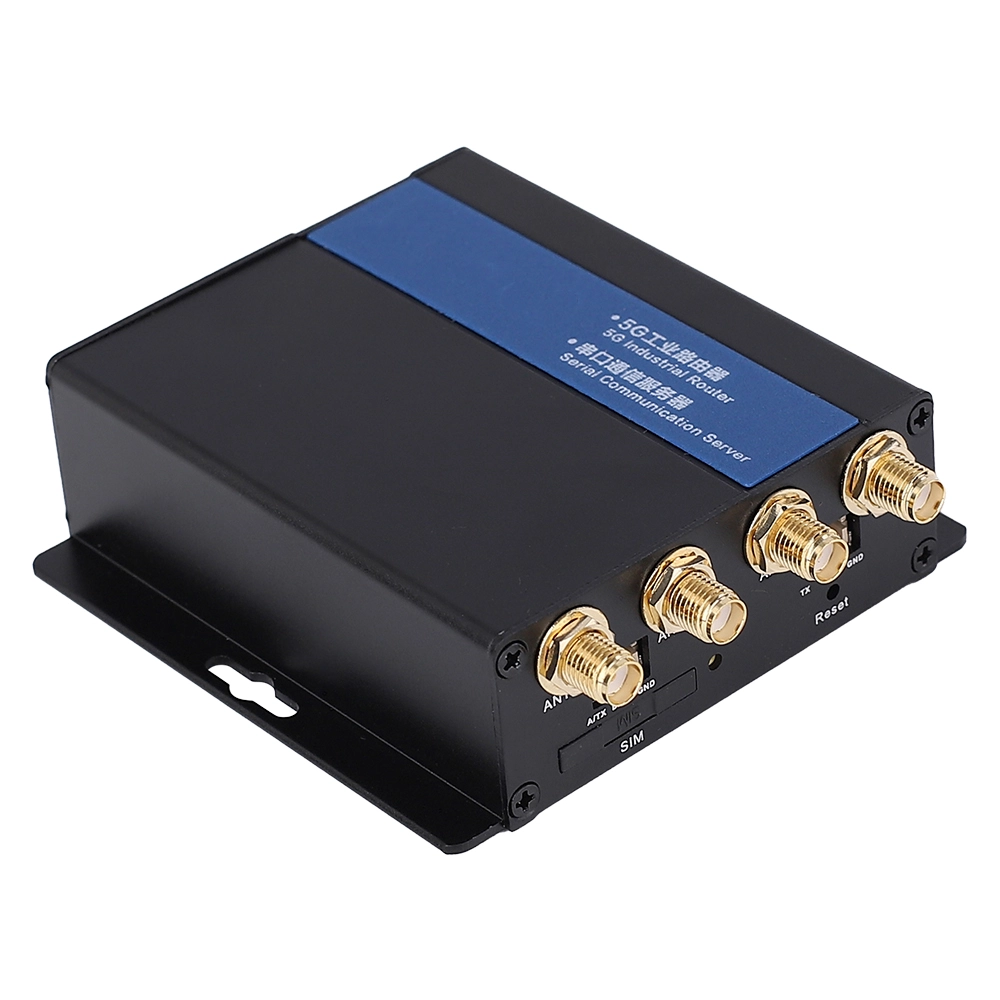
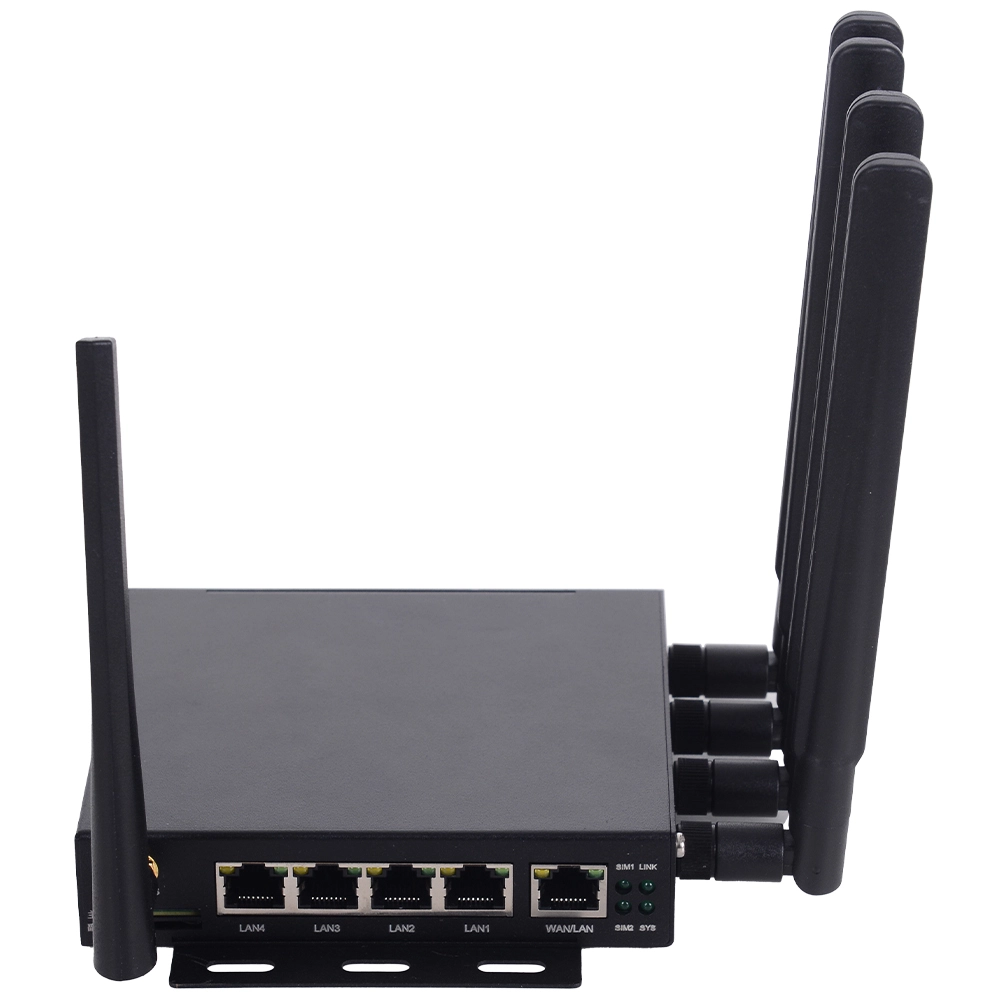
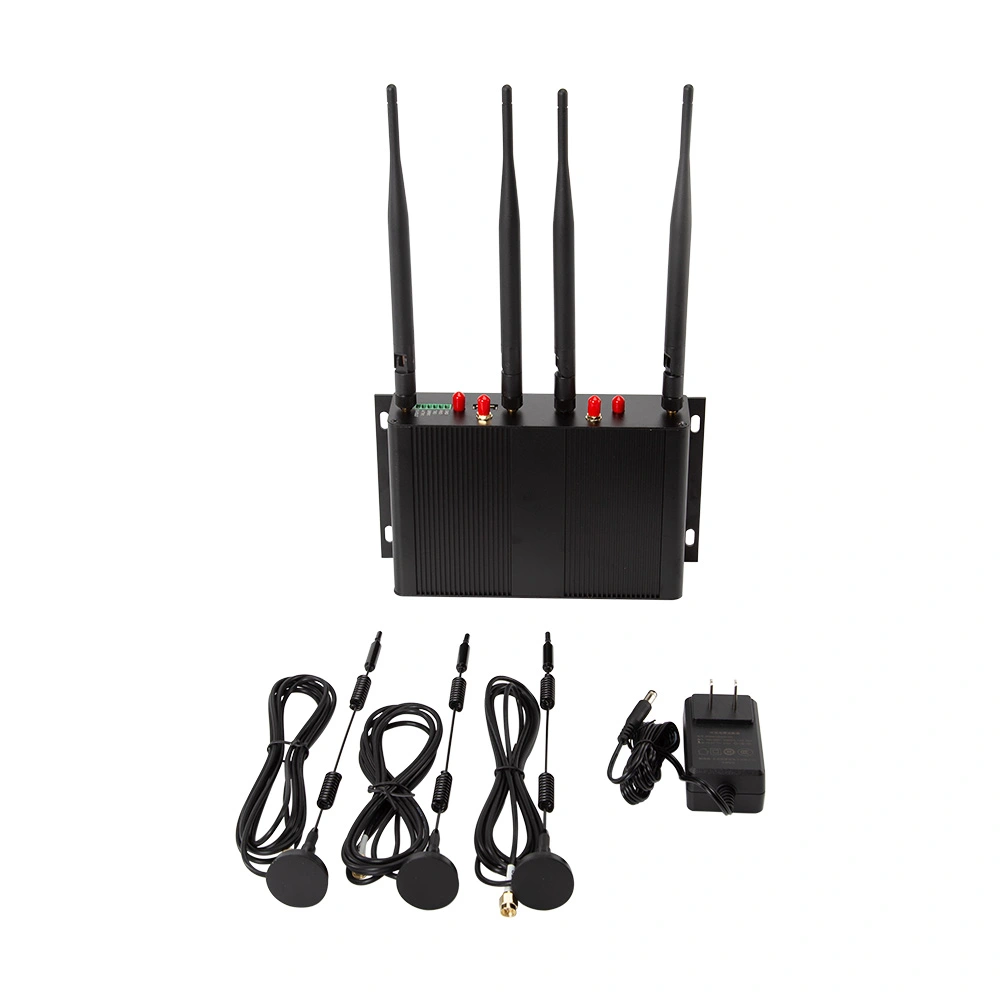
Think of the cellular modem as the engine and the antennas as the wheels. No matter how powerful the engine, with poor wheels, you’re going nowhere. Most outdoor cellular routers come with external antenna ports (typically SMA or TNC connectors), which is a non-negotiable feature. Using high-gain external antennas is the single most effective way to improve signal strength and stability. You have choices:
- Omni-directional Antennas: These capture signal from all directions (360 degrees). They are a good general-purpose choice when the location of the nearest cell tower is unknown or changes (e.g., on a moving vehicle).
- Directional Antennas (Yagi, Panel): These focus the signal in a specific direction, like a flashlight beam. They provide much higher gain and range when you can point them directly at a known cell tower. They are ideal for fixed installations like remote monitoring stations.
- MIMO Antennas: Multiple-Input Multiple-Output (MIMO) technology uses two or more antennas to send and receive data streams simultaneously, greatly increasing data throughput and connection reliability. For best performance with 4G LTE or 5G, ensure your router and antenna setup support MIMO (e.g., 2×2 MIMO).
Investing in quality, properly installed antennas is often more impactful than upgrading to a more expensive router.
4. Power and Installation Flexibility
Outdoor locations demand flexible power solutions. A versatile outdoor cellular router will support a wide range of DC input voltages (e.g., 9-36V DC), allowing it to be powered directly from vehicle batteries, solar panel systems with charge controllers, or industrial DC power supplies. Some models even integrate Power over Ethernet (PoE), which allows both data and power to be delivered over a single Ethernet cable, simplifying installation for devices like outdoor cameras or access points. Also, consider mounting options—does it have standard DIN-rail mounting for industrial cabinets, or pole/wall-mounting brackets for easy deployment in the field?
Real-World Applications: Where Outdoor Cellular Routers Shine
The theory is solid, but how does it translate to real business value? Let’s look at a few scenarios:
- Construction & Temporary Sites: Provide secure internet for site offices, enable real-time equipment telematics, support video surveillance for asset security, and allow for on-site software updates for machinery.
- Agriculture & Environmental Monitoring: Connect soil moisture sensors, weather stations, and automated irrigation systems across vast fields. Transmit data back to a central platform for analysis and decision-making.
- Public Safety & Emergency Response: Deploy instant command center communications, vehicle-mounted video for police or fire services, and connectivity for temporary medical stations during events or disasters.
- Digital Signage & Outdoor Media: Manage and update content on roadside billboards, bus shelter displays, or stadium scoreboards from a central location without needing physical access.
- Remote Industrial Monitoring: Monitor pump stations, oil and gas pipelines, water treatment facilities, and electrical substations located far from network infrastructure.
In each case, the outdoor cellular router acts as the critical gateway, transforming a remote, \"unconnected\" asset into an intelligent node on your network.
Making the Smart Choice: A Checklist for Your Purchase
Before you finalize your decision, run through this checklist:
- Coverage Check: What is the primary cellular technology (4G/5G) and carrier coverage like at my exact deployment site?
- Environmental Audit: What are the min/max temperatures, exposure to water/dust, and potential for physical shock or vibration?
- Bandwidth Needs: Do I need to stream video (high bandwidth) or just send small sensor data packets (low bandwidth)?
- Power Source: Do I have AC power, DC power, or do I need a solar/battery solution?
- Antenna Strategy: Can I install external antennas? Do I know the direction of the cell tower?
- Security & Management: Does the router offer a built-in firewall, VPN (IPsec/OpenVPN), and a cloud-based platform for remote management?
- Future-Proofing: Would a router that supports both 4G and 5G provide a better return on investment over its lifespan?
Why Choose Our Ruggedized Outdoor Cellular Router Solution?
With over a decade of experience in designing and manufacturing industrial communication equipment, we understand the stakes. Our series of outdoor cellular routers are engineered from the ground up to meet the challenges we’ve outlined. Built with an industrial-grade metal housing, they boast an IP67 rating for ultimate protection against dust and moisture. They operate reliably across a staggering temperature range of -40°C to +75°C, ensuring performance from arctic cold to desert heat. We offer models spanning robust 4G LTE and cutting-edge 5G connectivity, all with multiple external antenna ports to support high-gain and MIMO setups for the strongest possible signal.
Beyond the hardware, we provide the support to ensure your deployment is a success. We offer comprehensive customization, from firmware tweaks to specific carrier certifications. Our routers come with advanced, yet user-friendly, cloud management software, giving you visibility and control over your remote networks from a single dashboard. Don’t leave your critical connectivity to chance. Let our experts help you select and configure the ideal outdoor cellular router for your unique application.
Frequently Asked Questions (FAQs)
What is the main advantage of an outdoor cellular router over using my phone’s hotspot?
While a phone hotspot can work in a pinch, it lacks the durability, signal strength, and reliability for professional, permanent use. An outdoor cellular router is built with rugged components for constant operation in harsh weather, supports powerful external antennas for far better reception, offers more advanced security (firewalls, VPNs), and allows multiple devices to connect stably without draining a phone battery.
How do I know if I need a 4G or a 5G outdoor router?
Choose 4G if your primary needs are general internet access, IoT sensor data, transactional data, or basic video in areas with strong LTE coverage. It’s often more cost-effective. Choose 5G if your application requires very high bandwidth (e.g., multiple HD video streams), ultra-low latency for real-time control, or if you are in an area with strong 5G coverage and want to future-proof your investment. A dual-mode router that supports both is an excellent versatile choice.
What does an IP67 rating mean for my router?
An IP67 rating is a rigorous international standard. The \"6\" means the device is completely dust-tight—no dust can enter. The \"7\" means it can be immersed in up to 1 meter of fresh water for 30 minutes without damage. This level of protection is essential for routers exposed to rain, snow, dust storms, or high-pressure washing.
Can I power an outdoor cellular router with solar panels?
Yes, absolutely. Most quality outdoor cellular routers accept a wide range of DC input voltages (e.g., 12V). They can be efficiently powered by a solar panel system that includes a solar charge controller and a battery (like a deep-cycle AGM or Lithium battery). This creates a self-sustaining power solution perfect for truly off-grid locations.
How difficult is it to install and configure an outdoor cellular router?
Installation is straightforward for anyone with basic technical skills. It involves mounting the unit, connecting the external antennas, and providing power. Configuration is typically done via a simple web interface. For complex setups (like VPNs or specific network rules), our technical support team provides detailed guides and can offer direct assistance to get you up and running smoothly. Many of our routers also feature zero-touch provisioning for large-scale deployments.

What can we do for you?