
In today’s hyper-connected world, being tethered to a single location for reliable, high-speed internet is a luxury few can afford. Whether you’re a digital nomad crafting emails from a beach cafe, a field engineer uploading critical data from a remote site, a content creator live-streaming from an outdoor event, or a family on a road trip trying to keep everyone entertained, the need for portable, powerful, and secure internet is universal. This is where the search for the best 5G mobile router with SIM card slot begins. But with so many options promising the world, how do you cut through the noise and find a device that truly delivers uninterrupted connectivity, robust security, and the flexibility your mobile lifestyle demands?
The core pain points are all too familiar: spotty, insecure public Wi-Fi that puts your data at risk; frustratingly slow connections that buffer your video calls into a pixelated mess; the struggle to connect more than a couple of devices at once; and the sheer difficulty of getting any decent signal once you venture off the beaten path. Consumer-grade portable hotspots often buckle under these pressures, offering limited battery life, weak antennas, and minimal security features. Choosing the right tool for the job requires moving beyond basic specs and understanding how a professional-grade mobile router is engineered to solve these exact problems.
This comprehensive guide is designed to be your roadmap. We’ll dissect the critical factors—from raw 5G speed and carrier compatibility to battery endurance, portability, advanced security, and multi-device support. We’ll compare what differentiates a premium mobile router from a simple hotspot. Most importantly, we’ll connect these features to real-world use cases like remote work, mobile command centers, live event broadcasting, and emergency response, helping you make an informed decision to stay productively and securely online, wherever your journey takes you.
What is a 5G Mobile Router and Why Do You Need One?
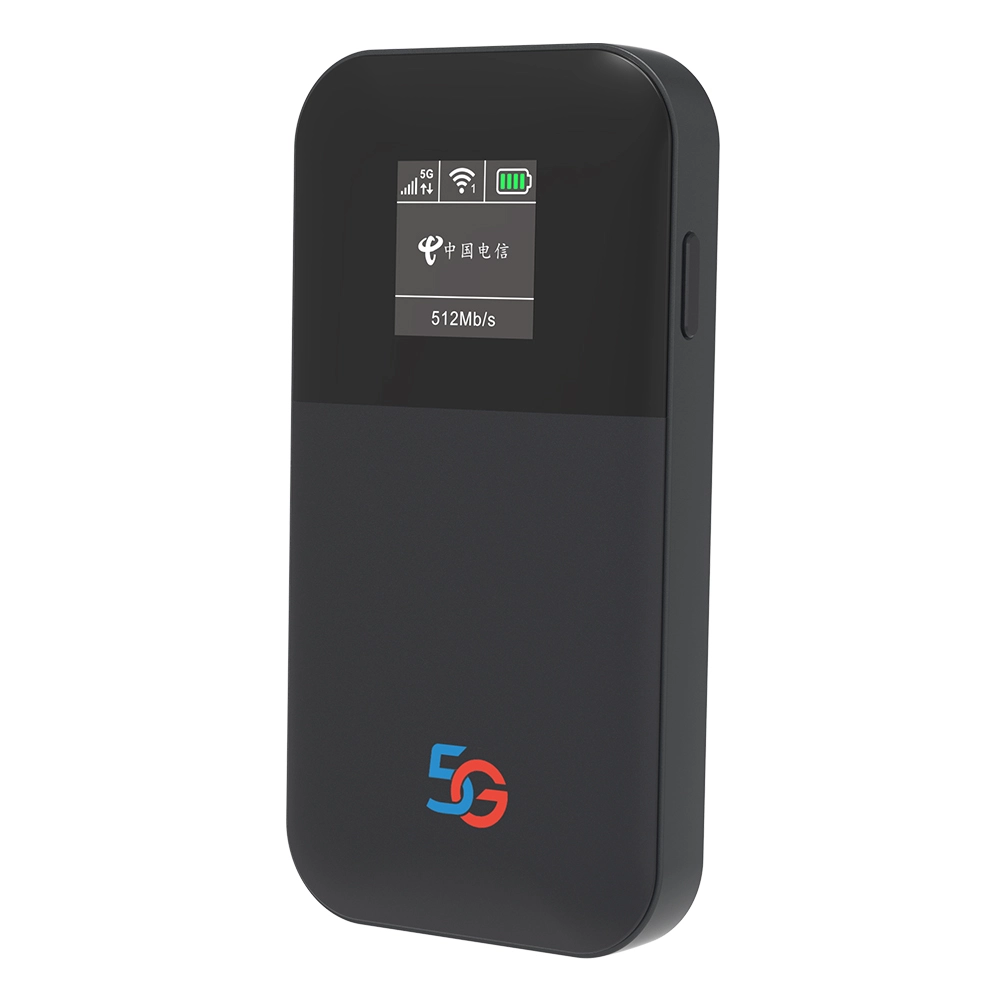
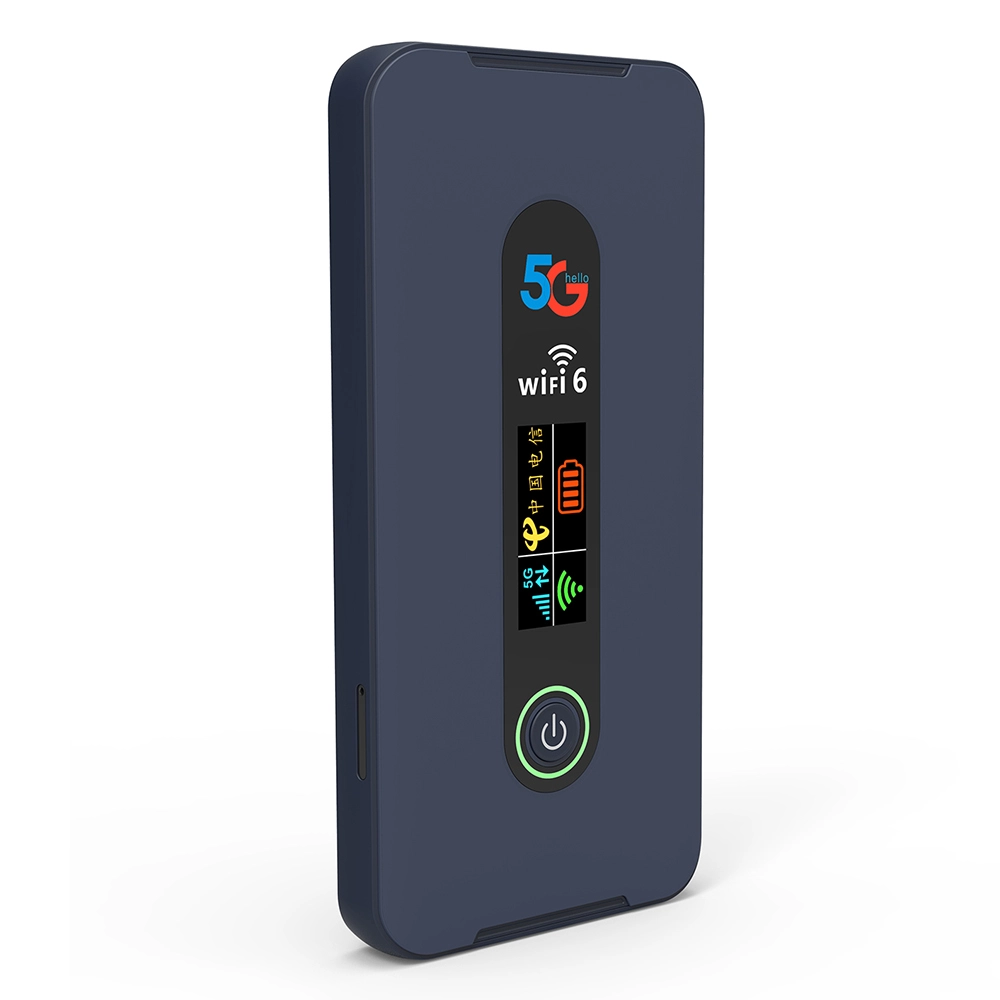
At its heart, a 5G mobile router is a compact, portable device that creates a private Wi-Fi network by connecting to the internet via a cellular data SIM card. Think of it as your personal, pocket-sized internet tower. But unlike the basic \"Mi-Fi\" dongles of the past, modern portable 5G routers are sophisticated pieces of technology. They harness the power of 5G networks—offering potential download speeds that can rival or even exceed many home broadband connections—and distribute that connection via Wi-Fi 6 (or Wi-Fi 6E) to your laptops, tablets, smartphones, and other IoT devices.
So, why might you need one instead of just using your phone’s hotspot? The answer lies in performance, reliability, and scale. Your smartphone is a jack-of-all-trades; its primary function is communication, with hotspot capability as a secondary feature. This often means it has a less powerful Wi-Fi transmitter, a smaller battery dedicated to sharing the connection, and it can overheat quickly when acting as a hub for multiple devices. A dedicated 5G mobile router with SIM card is engineered for one primary purpose: to be the best possible mobile internet hub. It features high-gain external antennas (often removable for upgrades), a large-capacity battery designed for sustained output, sophisticated cooling systems, and robust networking software that can manage dozens of connections simultaneously without breaking a sweat. For professionals, the difference is between a \"maybe it will work\" connection and a \"mission-critical, I can depend on this\" connection.
Key Factors to Consider When Choosing Your Mobile Router
Selecting the best 5G mobile router isn’t just about picking the one with the biggest number on the box. It’s about matching the device’s capabilities to your specific needs and environment. Let’s break down the essential checklist.
1. 5G Performance and Network Compatibility
Not all 5G is created equal. You need to ensure the router supports the 5G bands used by your preferred carrier (or carriers, if you travel internationally). Look for support for key sub-6 GHz bands (like n1, n3, n5, n7, n8, n20, n28, n38, n41, n66, n71, n77, n78) and, if you require ultra-low latency and peak speeds in dense urban areas, mmWave bands (n257, n258, n260, n261). A superior router will also support 4G LTE Cat-20 or higher as a fallback, ensuring you have coverage even when 5G signals are weak. The modem inside matters too; leading-edge modems from Qualcomm provide better signal processing, efficiency, and heat management.
2. Battery Life and Power Options
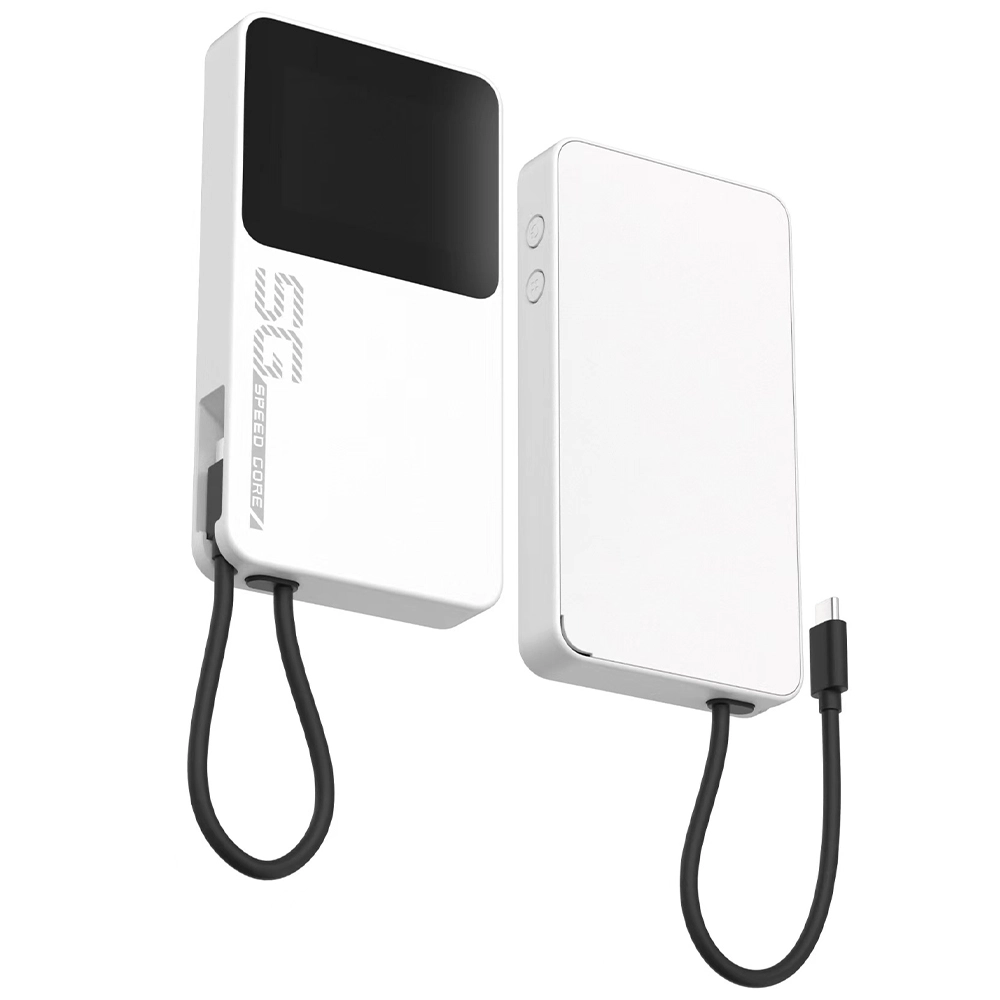
Portability means power independence. Battery capacity, measured in milliamp-hours (mAh), is crucial. A 3000mAh battery might last 6-8 hours with light use, while a 5000mAh or larger battery can power a full workday. Look for routers that support USB-C Power Delivery (PD) for fast charging, and crucially, the ability to operate while plugged in without degrading the battery—a feature essential for using it in a vehicle or as a semi-permanent backup solution. Some professional models even offer dual power inputs (DC and USB-C) for maximum flexibility.
3. Portability and Ruggedness
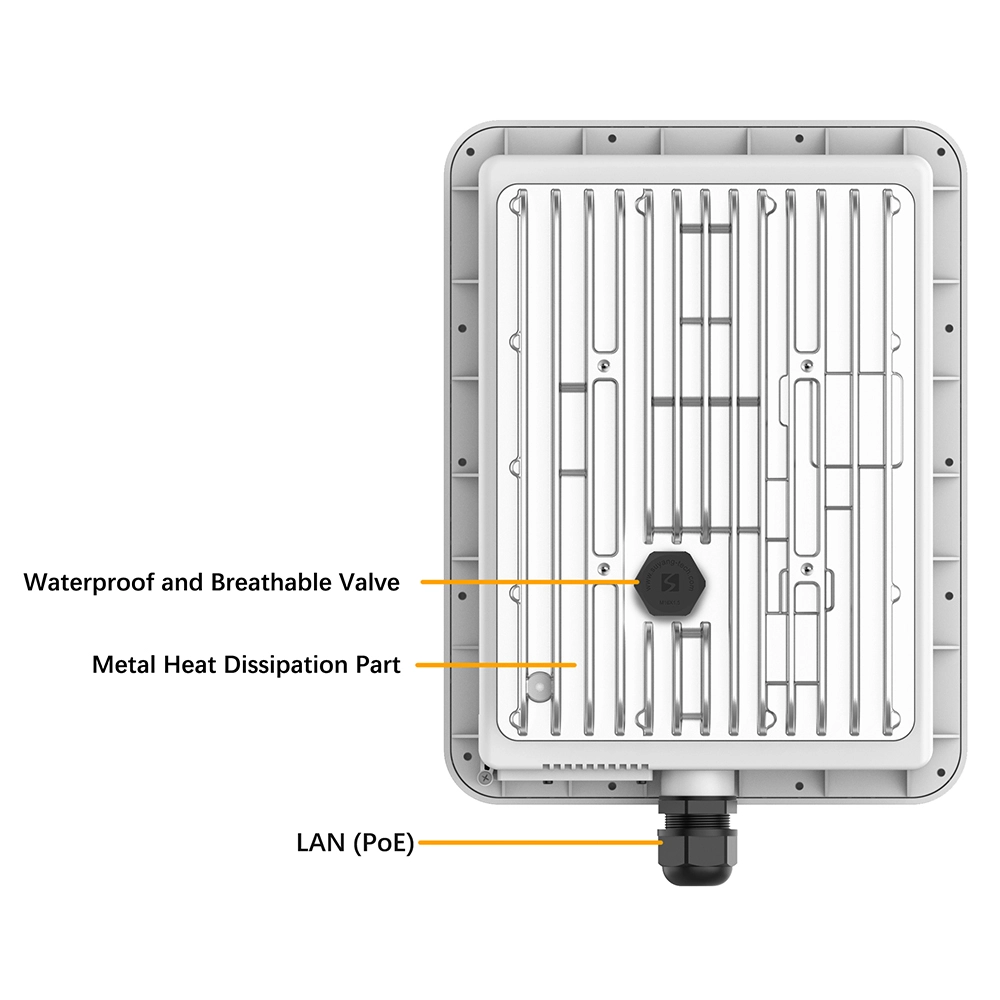
Will it live in your backpack, a truck cab, or a field kit? Size and weight matter for personal travel, but so does build quality. A metal or reinforced plastic casing offers better durability and heat dissipation than flimsy plastic. For extreme environments, some industrial-grade travel routers with SIM card capabilities offer basic ingress protection (like IP54) against dust and water splashes. Consider the form factor: a slim pocketable device versus a larger unit with external antenna ports for maximum signal strength.
4. Security Features: Your Mobile Firewall
Using any open or public network is a security risk. A premium mobile router acts as your first line of defense. Essential security features include a built-in, hardware-accelerated firewall to monitor and control incoming/outgoing traffic. Support for multiple VPN protocols (IPsec, OpenVPN, WireGuard) is critical, allowing you to establish a secure tunnel back to your home or office network, encrypting all data passing through the public cellular network. Look for routers that can function as both a VPN client and server. For businesses, features like VLAN support, access control lists (ACLs), and integration with enterprise security platforms are paramount.
5. Connectivity and Device Management
How many devices will you connect? Consumer hotspots may support 10-15 devices, but performance often degrades quickly. Professional 5G hotspots can comfortably handle 32, 64, or even 128+ simultaneous connections, making them suitable for small offices on the move or event venues. Check for Wi-Fi 6 (802.11ax) support, which provides better efficiency and speed in crowded airspace. A built-in Ethernet port is a hugely valuable feature, allowing you to connect a single wired device (like a desktop PC or a security camera) for the most stable possible connection or to use the router as a bridge to a larger local network.
Comparing Top Use Cases: Which Router Fits Your Life?
Understanding the specs is one thing; seeing them applied to real-life scenarios is another. Let’s match common needs with the ideal router profile.
The Digital Nomad & Remote Worker
Priority: Reliability, security, all-day battery. You’re working from coffee shops, co-living spaces, and hotel rooms. You need a connection you can trust for video conferencing, large file transfers, and accessing sensitive company data. Your ideal router is compact, has a 4000mAh+ battery, strong VPN client support (like WireGuard for speed), and excellent performance on international 4G/5G bands. A device that can also connect to and secure a sketchy hotel Ethernet port is a major bonus.
The Content Creator & Live Streamer
Priority: Raw upload speed, low latency, stability. Buffering or dropped frames during a live stream is a disaster. You need a router that maximizes the upload capabilities of 5G (especially on TDD bands like n41/n78). Features like band locking can help you manually select the most stable carrier band. A router with multiple external antenna ports to connect high-gain directional antennas can be a game-changer for locking onto the best signal at an outdoor event site. Wired Ethernet for your streaming PC is non-negotiable for the ultimate stability.
The Field Operations & IoT Professional
Priority: Ruggedness, advanced networking, remote management. Whether it’s for a temporary construction site, a mobile medical unit, or a fleet of agricultural sensors, the router must withstand temperature variations, dust, and vibration. It needs industrial-grade components for 24/7 operation. Features like static/dynamic routing, support for industrial protocols (for IoT gateways), and a cloud-based management platform to monitor and configure hundreds of deployed routers from a central dashboard are essential. This is where the line between a consumer best 5G mobile router with SIM card slot and an industrial IoT gateway blurs.
The Traveling Family
Priority: Ease of use, good coverage, data management. Keeping everyone connected in an RV or during long trips requires a router that’s simple to set up, can cover a larger area (like a campsite), and has parental controls or data usage limits to manage multiple devices. Long battery life or easy 12V car adapter power is key. A model with a clear display showing data consumption helps avoid bill shock.
Beyond the Device: The Importance of Service and Support
Purchasing a sophisticated piece of networking technology is just the beginning. The true test comes when you need help: configuring a complex VPN, troubleshooting a connectivity issue in a foreign country, or understanding a specific feature. This is where the vendor’s expertise and commitment to support become critical differentiators. Look for providers that offer comprehensive technical documentation, active community forums, and—most importantly—responsive, knowledgeable technical support. A company with deep experience in industrial and professional communications, like ours with over a decade in 4G/5G cellular solutions, brings a level of reliability and post-purchase partnership that generic consumer brands cannot match. We engineer our devices for mission-critical use and back them with the support infrastructure they require.
FAQs: Your Questions About 5G Mobile Routers Answered
1. Can I use any SIM card in a 5G mobile router?
Generally, yes, as long as the router is unlocked. However, you must ensure the router supports the specific 5G and 4G LTE frequency bands used by your chosen mobile network operator (carrier). It’s always best to check the router’s band support list against your carrier’s published network bands. Using a SIM from a carrier whose primary bands are not supported will result in poor performance or no service.
2. How is a mobile router different from using my smartphone’s hotspot?
A dedicated mobile router typically offers significantly better performance, range, and battery life for sharing internet. It has more powerful internal antennas (and often external ports), can handle more simultaneous connected devices without slowdowns, and is designed to run coolly for extended periods. Your phone’s hotspot is a convenient secondary function, but it can drain your phone’s battery quickly, cause it to overheat, and provide weaker coverage.
3. What does \"failover\" mean in the context of a dual-SIM mobile router?
Failover is a crucial reliability feature. In a dual-SIM router, you can install SIM cards from two different network providers. The router is primarily connected to the internet via the first SIM (the main line). If that network connection fails, becomes weak, or reaches a data limit, the router will automatically and seamlessly switch all traffic to the second SIM card. This ensures continuous, uninterrupted internet connectivity, which is vital for business-critical and remote monitoring applications.
4. Are 5G mobile routers secure for online banking and work?
A high-quality 5G mobile router can be more secure than public Wi-Fi or even some private networks. The cellular connection itself is encrypted between your device and the carrier’s tower. Furthermore, professional routers include built-in firewalls and support for VPN (Virtual Private Network) clients. By connecting the router itself to a VPN service or your company’s VPN server, all data passing through it is encrypted end-to-end, making it extremely secure for financial transactions and accessing sensitive work data.
5. How do I maximize the battery life of my portable router?
Several strategies can help: First, reduce the Wi-Fi transmission power if you’re using devices close by. Second, set a schedule for the Wi-Fi to turn off during hours you don’t need it. Third, if you have a model with removable antennas, use them only when necessary for better signal, as the router uses more power to boost a weak signal. Finally, connect fewer devices and avoid bandwidth-heavy activities like 4K streaming when running solely on battery. For all-day use, consider a model with a large battery capacity (5000mAh+) or use it with a compatible power bank.

What can we do for you?