
In today’s hyper-connected world, a dropped Wi-Fi signal at home is a minor annoyance. But in an industrial setting—whether it’s a remote oil rig, a busy traffic intersection, or an automated factory floor—a network failure isn’t just inconvenient; it’s catastrophic. It can halt production, compromise safety, and lead to massive financial losses. This is where consumer-grade routers fail, and purpose-built industrial routers rise to the challenge. For over a decade, Junhaoyue has been at the forefront of this critical technology, engineering robust connectivity solutions that thrive where others cannot. This guide will take you deep into the world of industrial routers, explaining their core technology, the life-saving redundancy of dual SIM designs, and providing a clear framework to select the perfect industrial IoT router for your specific needs and budget.
What is an Industrial Router? The Backbone of Modern Industry
At its core, an industrial router performs the same basic function as the one in your home: it connects devices to a network, often bridging between a local wired network (like Ethernet) and a wider area network (like the cellular internet). But the similarity ends there. An industrial router is engineered for mission-critical reliability in environments that are hostile to electronics. Let’s break down what makes them fundamentally different and why they are non-negotiable for serious applications.
First, consider the physical environment. A standard router is designed for a climate-controlled office or home, operating in a comfortable 0°C to 40°C range. An industrial router from Junhaoyue, however, is built to withstand extreme temperatures, typically from -40°C to 75°C. This means it can be installed in a freezing cold storage facility, a scorching desert solar farm, or an uninsulated metal cabinet under the sun without skipping a beat. This wide temperature range operation is achieved through careful component selection, advanced thermal design in the PCB layout, and rigorous testing.
Second is ruggedness. Industrial sites are full of vibration from heavy machinery, conductive dust, and sudden power surges. Junhaoyue’s routers feature robust, fanless metal enclosures that dissipate heat efficiently while providing superior protection against physical impact and electromagnetic interference (EMI). They are designed to resist corrosion and often carry IP ratings (like IP30 or higher) indicating their level of sealing against dust and moisture. Every unit undergoes 100% testing on the production line, including vibration and surge tests, to ensure it can survive the rigors of daily industrial life.
Beyond durability, the functionality is tailored for industrial control. A key feature is support for Virtual Private Networks (VPNs), including IPsec, OpenVPN, and L2TP. This allows you to create a secure, encrypted tunnel over the public internet, connecting remote sites (like a wind turbine) directly and safely to your central control center as if they were on the same local network. Another common feature is GPS integration, which is invaluable for asset tracking in logistics or pinpointing the location of mobile equipment or vehicles.
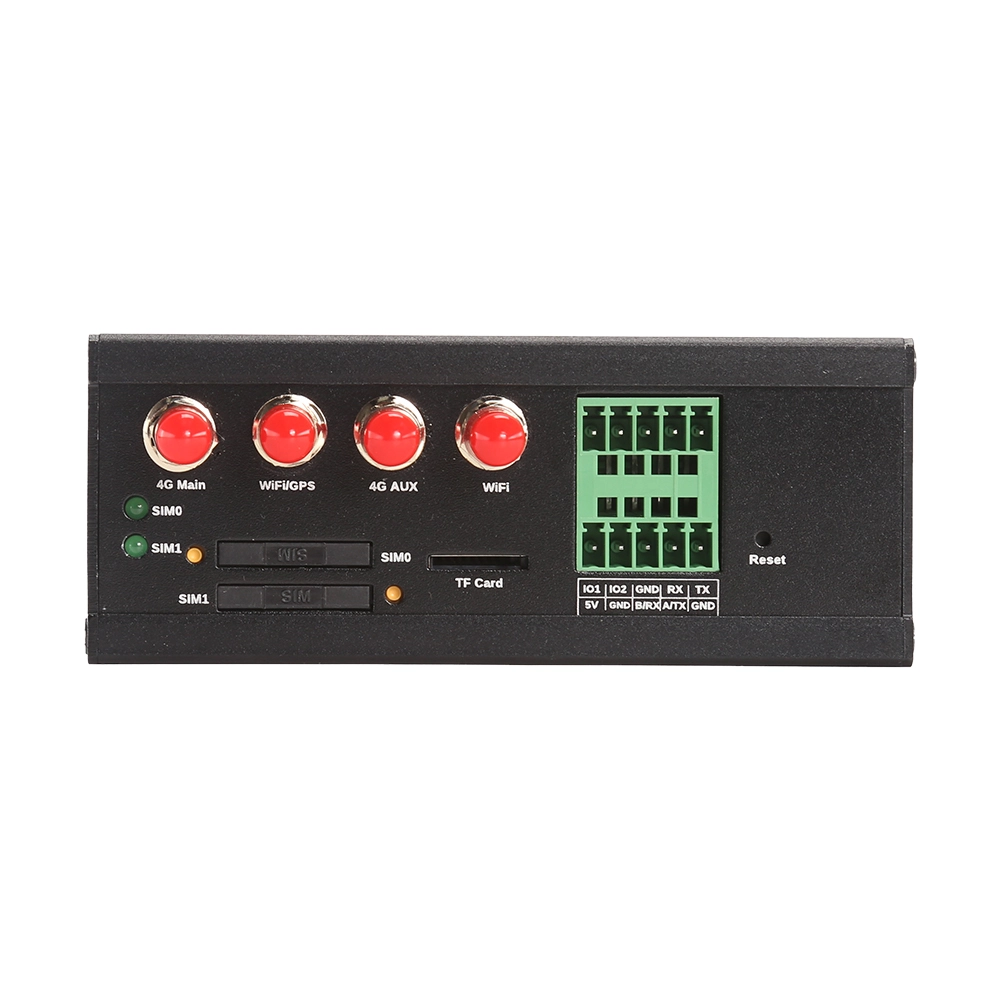
Connectivity options are also expanded. While a home router might have four LAN ports, an industrial router often includes multiple Ethernet ports that can be configured for different network segments, serial ports (RS232/RS485) to connect to legacy industrial equipment like PLCs and sensors using protocols like Modbus, and digital input/output (DI/DO) pins to monitor alarms or trigger events. This turns the router into a true IoT gateway, aggregating data from diverse sources and sending it to the cloud reliably via 4G or 5G cellular networks. When evaluating an industrial router price, it’s these industrial-grade components, extended temperature certifications, and specialized interfaces that justify the investment over a consumer device.
How Dual SIM Industrial Routers Eliminate the Single Point of Failure
For many industrial applications, \"good enough\" connectivity isn’t good enough. A traffic monitoring camera that goes offline during rush hour loses critical data. A remote payment terminal at a fuel station that disconnects can’t process transactions. A smart grid sensor that fails to report a fault could lead to a wider blackout. In these scenarios, the cost of downtime is measured in revenue, safety, or public trust. This is where the intelligence and redundancy of a dual SIM industrial router become your most valuable insurance policy.
The core concept is network failover. A dual SIM router is equipped with two cellular modems and SIM card slots. You can insert SIM cards from two different mobile network operators (MNOs)—for example, one from Verizon and one from AT&T. The router is continuously monitoring the health and signal strength of the primary connection (SIM 1). If it detects a failure—such as the tower going down, the SIM card running out of data, or severe signal degradation—it automatically and seamlessly switches all data traffic to the backup connection (SIM 2). This switch happens in seconds, often without any dropped data packets, ensuring your critical application remains online. This is far superior to manual intervention, which could take hours if a site is unattended.
But redundancy isn’t the only mode. Advanced dual SIM industrial routers also support link aggregation or load balancing. In this mode, the router can use both cellular connections simultaneously, combining their bandwidth. This is ideal for data-intensive applications like transmitting high-definition video from multiple security cameras or uploading large batches of sensor data. It not only increases throughput but also enhances reliability; if one link degrades, the other can pick up the slack without a full failover event.
Choosing the right SIM strategy is part of the procurement process. You might choose two different carriers to protect against a localized outage from a single carrier. Alternatively, you might use two plans from the same carrier but on different network technologies (e.g., 5G as primary, 4G LTE as backup). Junhaoyue’s routers provide flexible management interfaces where you can set failover triggers based on signal strength, packet loss, or specific timeouts, tailoring the behavior to your exact needs.
Of course, this advanced functionality is housed in the same rugged package. A dual SIM industrial router designed for a smart grid substation or an outdoor traffic cabinet must also offer the wide temperature tolerance, vibration resistance, and surge protection we discussed earlier. It’s the combination of intelligent software for network management and hardened hardware for environmental survival that makes these devices indispensable for mission-critical infrastructure. When you’re managing assets spread across a city or a country, the ability to trust your connectivity—and have a proven backup—is priceless.
A Step-by-Step Guide to Selecting Your Industrial IoT Router
With a clear understanding of what industrial routers are and the power of dual SIM redundancy, the next challenge is selecting the right one from a crowded market. The industrial router price spectrum is wide, and the most expensive model isn’t always the right fit. Conversely, choosing based on price alone can lead to costly failures and replacements. This guide will help you navigate the selection process like a pro, focusing on your application’s specific requirements.
Step 1: Define Your Application and Environment. This is the most critical step. Start by asking:
- Where will it be installed? Is it in a controlled electrical room, on a factory floor with metal shavings, or in a fully exposed outdoor location? This determines the required ingress protection (IP rating), operating temperature range, and need for a rugged metal casing.
- What is it connecting? List your devices: How many IP cameras, PLCs, or sensors? Do you have legacy serial (RS485) devices? This defines the number of Ethernet ports, the need for serial ports, and the requirement for protocol conversion (e.g., Modbus TCP to Modbus RTU).
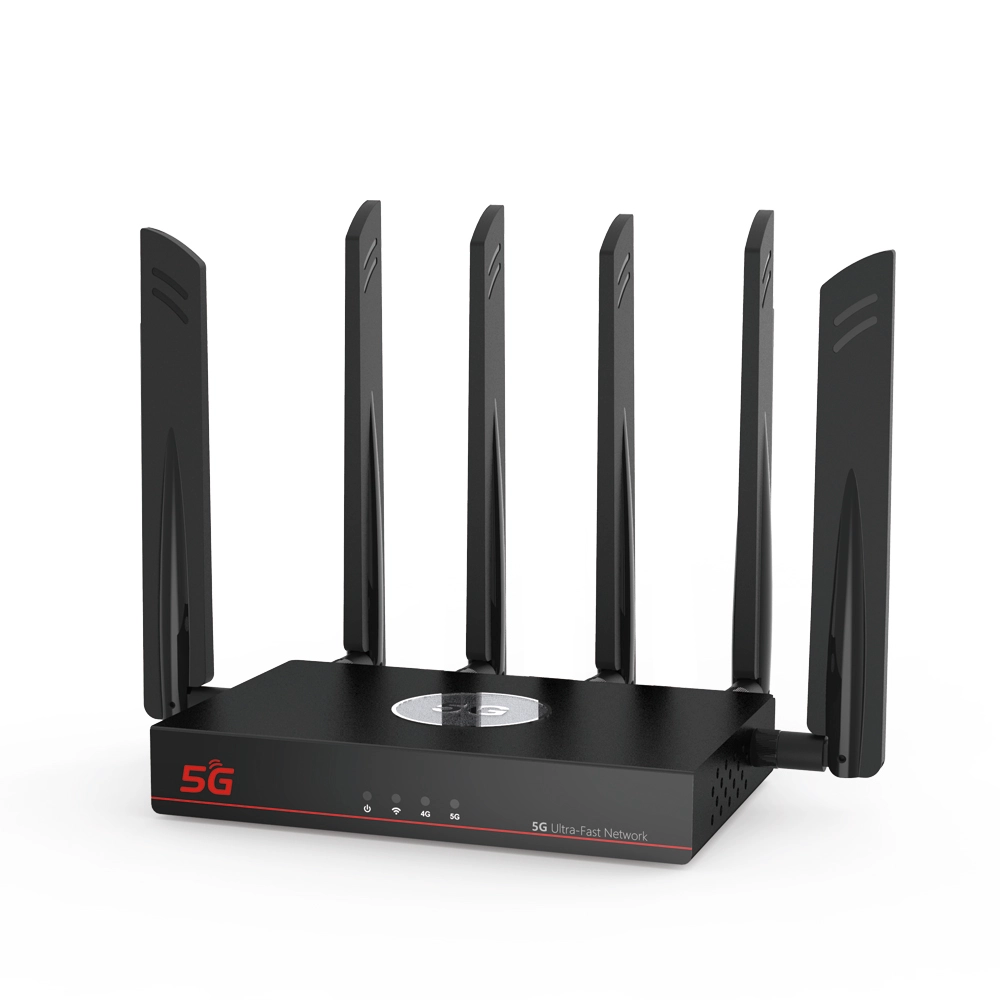
- What is the data profile? Is it small, periodic sensor readings (a few kB per hour) or constant, high-bandwidth video streams (several Mbps)? This influences the required cellular technology (4G LTE may suffice for sensors, while 5G is better for video) and data plan sizing.
Step 2: Assess Connectivity and Reliability Needs.
- How critical is uptime? If even short disconnections are unacceptable, a dual SIM industrial router with automatic failover is mandatory. For less critical monitoring, a single SIM model may be sufficient.
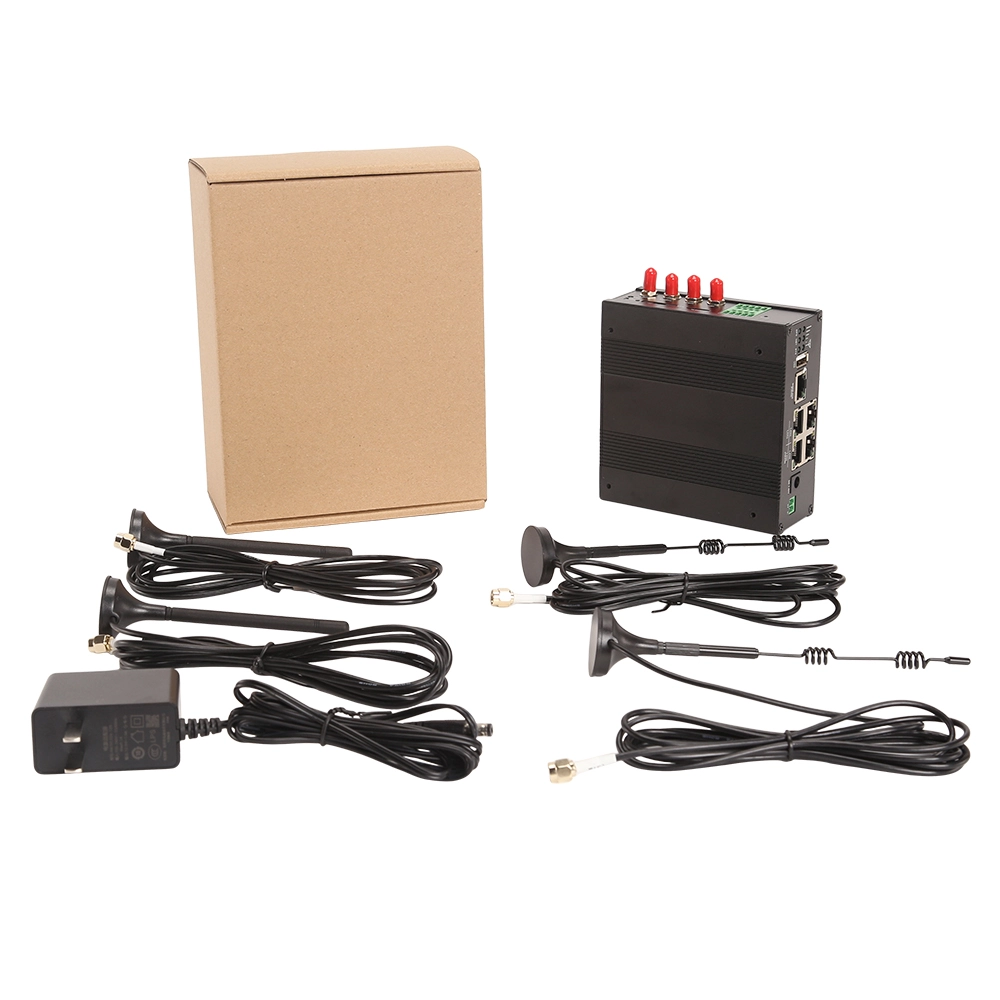
- What are the local cellular conditions? Survey the site for signal strength from major carriers. A router with high-gain external antenna connectors can often overcome weak signal challenges.
- Do you need secure remote access? If personnel need to configure devices or retrieve data remotely, built-in VPN client/server support (IPsec, OpenVPN) and a robust firewall are essential security features.
Step 3: Consider Advanced Features and Management. Modern industrial IoT routers are more than just pipes; they are intelligent edge devices.
- Edge Computing: Can the router run lightweight applications or scripts locally? For example, it could pre-process sensor data, filtering out noise and only sending alerts or aggregated summaries to the cloud, saving bandwidth and cloud processing costs.
- Cloud Management Platform: Does the manufacturer offer a cloud service (like Junhaoyue’s management platform) that allows you to monitor, configure, and update hundreds of deployed routers from a single dashboard? This is a huge operational advantage for large-scale deployments.
- Protocol Support: Ensure the router supports the languages of your devices, such as Modbus, MQTT (for lightweight IoT messaging), or CAN bus for vehicular applications.
Step 4: Evaluate Total Cost of Ownership (TCO) and Vendor Support. The industrial router price is just the entry point.
- Longevity & Warranty: Industrial devices should have a long lifecycle (5-10+ years). Check the manufacturer’s commitment to long-term hardware availability and firmware support.
- Customization: Can the vendor customize the firmware, hardware interfaces, or enclosure to fit your unique need? Junhaoyue’s extensive R&D experience allows for such tailored solutions.
- Technical Support: What level of post-sales support is offered? Look for vendors that provide comprehensive documentation, responsive 24/7 technical support, and reliable warranty service. The ability to get expert help during a crisis is part of the product’s value.
By systematically working through these steps, you move from a vague need for an \"industrial internet router\" to a precise specification. You’ll be able to confidently select a device that delivers the right performance, reliability, and security for your smart city, smart manufacturing, or smart transportation project, ensuring your investment drives value for years to come.



What can we do for you?