
Imagine a critical piece of machinery on a remote oil rig suddenly loses its connection. Production halts, safety monitoring goes blind, and every minute of downtime costs thousands. Now, imagine the same thing happening when your home Wi-Fi drops during a movie stream. The inconvenience is real, but the stakes are worlds apart. This fundamental difference in consequence is why the routers powering these scenarios are built differently. If you’re deploying technology in demanding environments—factories, vehicles, utilities, or outdoor sites—using a standard home or office router is a gamble you can’t afford. This guide will unpack exactly what sets an industrial router apart, why its specialized features are non-negotiable, and how to understand its core functionalities to make an informed choice for your critical operations.
What is an Industrial Router? The Backbone of Machine Connectivity
At its core, an industrial router performs the same basic function as the one in your living room: it connects devices to a network, often the internet. But that’s where the similarity ends. An industrial router is the hardened, intelligent, and reliable backbone of Machine-to-Machine (M2M) and Industrial Internet of Things (IIoT) communications. It’s engineered not for browsing and streaming, but for ensuring that data from sensors, cameras, PLCs (Programmable Logic Controllers), and other equipment flows uninterrupted and securely, even in the most challenging conditions. Think of it as the difference between a family sedan and a military-grade armored vehicle. Both transport people, but one is built for comfort on paved roads, while the other is built for mission-critical survival in any terrain. The primary role of an industrial internet router is to provide \"always-on\" connectivity for applications where failure is not an option, such as automated manufacturing lines, smart grid substations, autonomous guided vehicles (AGVs), and remote environmental monitoring stations.
Key Design Philosophies: Ruggedness, Reliability, and Longevity
The design of an industrial router is dictated by its operating environment. While a consumer router enjoys a climate-controlled home, its industrial counterpart must withstand extremes.
- Extended Temperature Ranges: Consumer routers typically operate from 0°C to 40°C (32°F to 104°F). An industrial router is built to function flawlessly in a freezer warehouse at -30°C (-22°F) or in a steel mill control room reaching 75°C (167°F). This is achieved through industrial-grade components and careful thermal design.
- Physical Durability: They often feature robust metal casings instead of plastic, providing superior protection against physical impact, vibration (crucial for vehicles and machinery), and dust/water ingress. Many carry IP (Ingress Protection) ratings like IP30 for basic dust resistance or IP65 for being dust-tight and protected against water jets, making them suitable for wash-down areas in food processing or outdoor installations.
- Electrical Robustness: Industrial environments are electrically noisy. Industrial routers include protection against power surges, electrostatic discharge (ESD), and electromagnetic interference (EMI). They support wide-range DC power inputs (e.g., 9-36V DC or 12-48V DC) to handle unstable power sources common in vehicles, solar-powered sites, or factories.
- Long-Term Availability: Unlike consumer models that are replaced yearly, industrial routers have lifecycle commitments of 5-10 years or more. This is vital for businesses that deploy hundreds of units and cannot afford a forced upgrade because a router model was discontinued.
Critical Features That Define Industrial-Grade Performance
Beyond surviving the environment, industrial routers pack features tailored for professional use. Understanding these will help you evaluate your needs.
1. Cellular Connectivity: 4G LTE and 5G
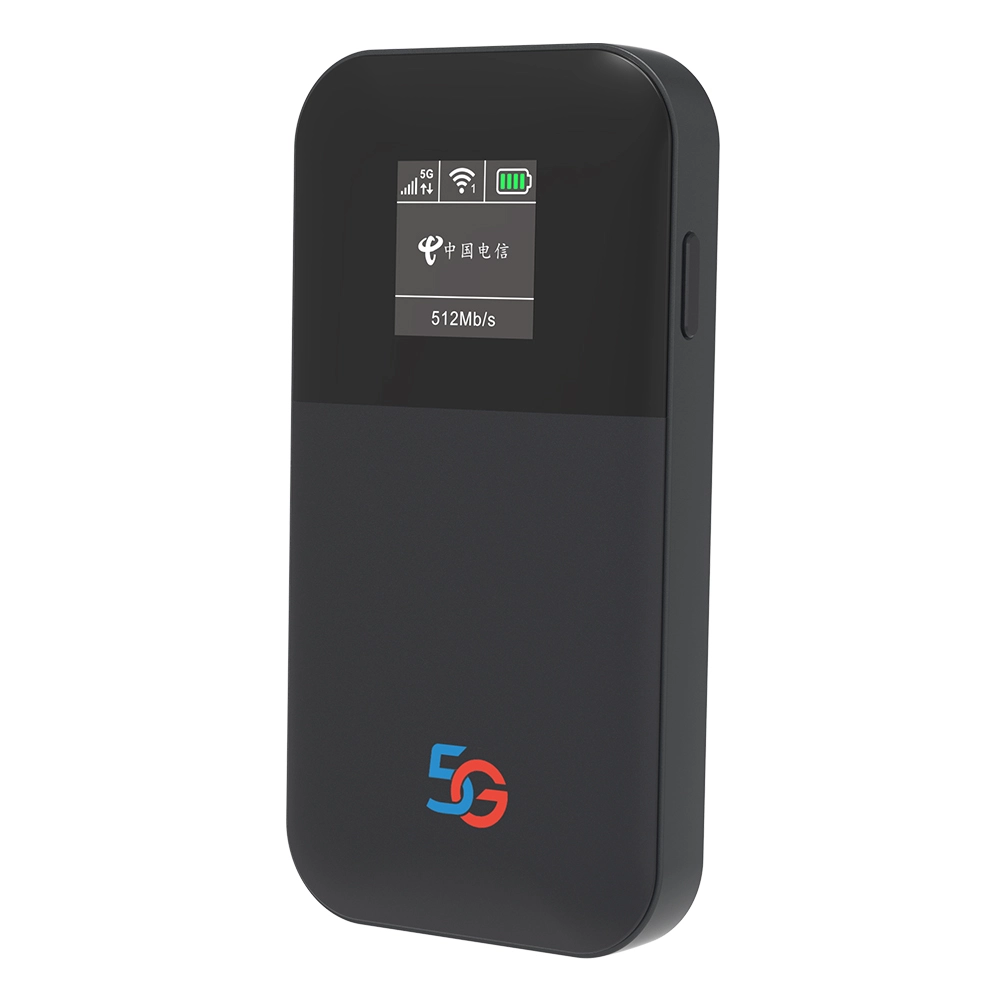
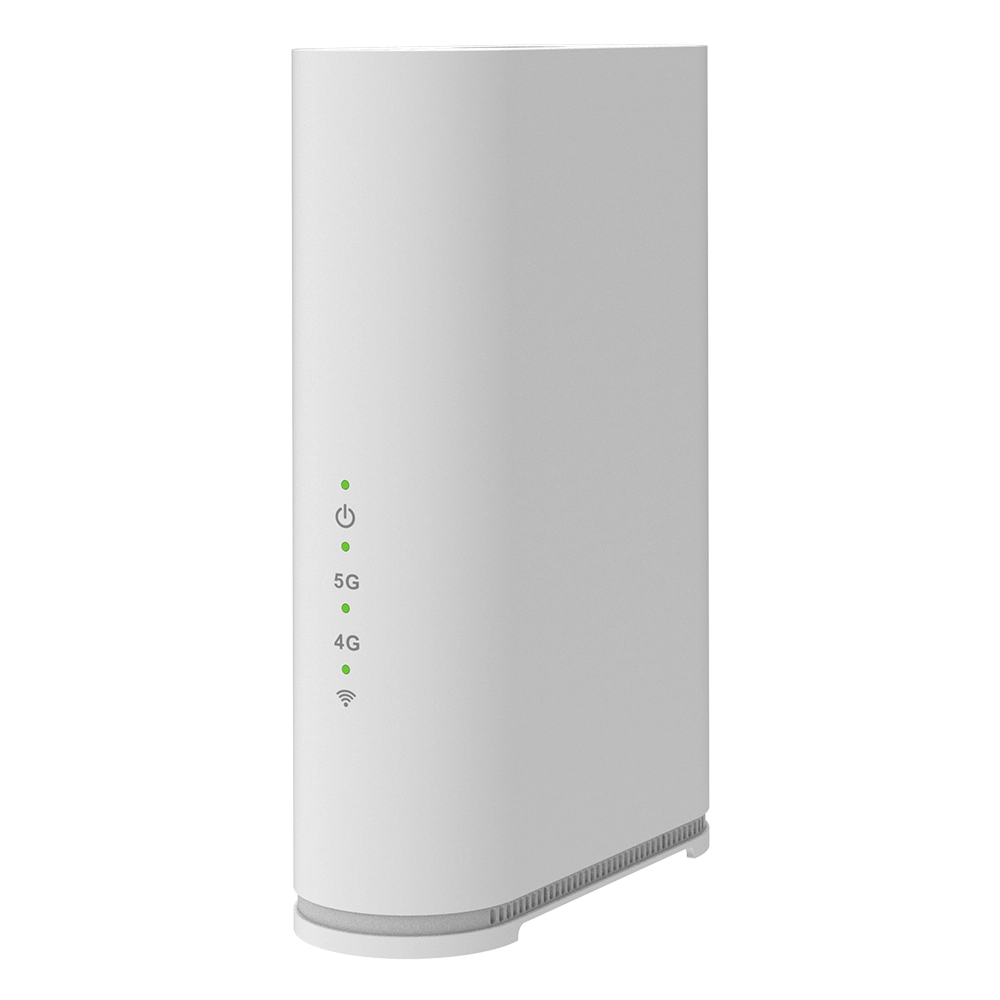
While Ethernet is common, the hallmark of a modern industrial router is integrated cellular connectivity. This provides primary or backup internet access anywhere there’s cellular coverage, eliminating dependency on fixed lines. The choice between 4G and 5G depends on your data needs. 4G LTE offers excellent coverage and reliability for most monitoring and control applications. 5G, particularly in its faster iterations, unlocks potential for high-bandwidth uses like real-time HD video analytics from multiple cameras, augmented reality maintenance guides, or ultra-responsive control of mobile robotics. A forward-looking business might consider a router that supports both, ensuring a smooth transition as 5G networks expand.
2. Advanced Security: The First Line of Defense
An industrial network is a high-value target. Industrial routers come with enterprise-level security features that consumer devices lack:
- Integrated VPN (Virtual Private Network): This creates an encrypted \"tunnel\" for all data passing between the remote site and your central network. It’s essential for protecting sensitive operational data. Look for support for robust protocols like IPsec, OpenVPN, and WireGuard.
- Stateful Firewall: Actively monitors and controls incoming and outgoing network traffic based on security rules, blocking unauthorized access attempts.
- VLAN Support: Allows you to segment the local network at the router level. For example, you can keep critical control system traffic completely separate from employee guest Wi-Fi, enhancing security and network performance.
3. GPS for Location and Asset Tracking
For mobile applications—like fleet management, logistics, or construction equipment—a built-in GPS receiver is invaluable. It enables real-time asset tracking, geofencing (receiving alerts if a vehicle leaves a designated area), and can even tie location data to sensor readings (e.g., \"temperature alarm at GPS coordinates X,Y\").
4. Flexible Network Interfaces
Industrial routers speak the language of industry. Alongside standard Ethernet ports, they often include:
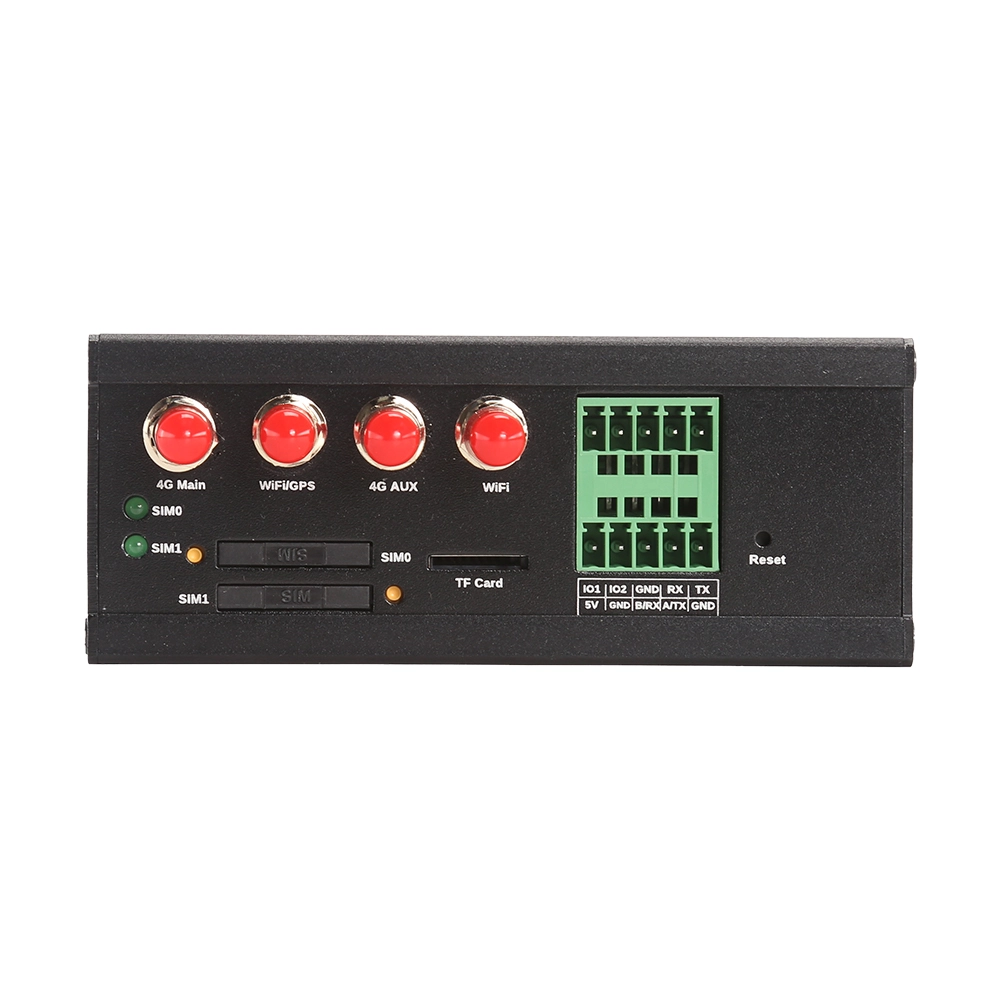
- Serial Ports (RS-232/485): To connect to legacy industrial equipment like PLCs, sensors, or scales that still use serial communication.
- Digital I/O (Input/Output): Simple pins that can detect a dry contact closure (e.g., a door sensor) or trigger a relay (e.g., to power cycle a device remotely).
- PoE (Power over Ethernet): To power connected devices like IP cameras or VoIP phones directly through the Ethernet cable, simplifying installation.
The Power of Redundancy: Dual SIM Industrial Routers
For mission-critical applications, a single point of failure is unacceptable. This is where dual SIM industrial router technology becomes a game-changer. It provides two primary forms of redundancy: failover and aggregation.
What is Dual SIM Failover?
This is the most common and critical use. The router is equipped with two SIM cards, typically from different mobile network operators (MNOs). It uses the first SIM as its primary connection. The router continuously monitors the health of this connection—checking for signal loss, network congestion, or complete outage. The moment a problem is detected, it automatically and seamlessly switches all traffic to the secondary SIM on the backup network. This switch happens in seconds, often without dropping active connections like VPN tunnels. This ensures high availability for applications like remote monitoring of utility substations, payment systems at fuel stations, or telemedicine units in ambulances, where even brief downtime has significant consequences.
What is Link Aggregation?
Some advanced dual SIM industrial routers can do more than just failover; they can perform link aggregation (also called bonding). This technology combines the bandwidth of both cellular connections into a single, faster, and more resilient data pipe. For instance, if each SIM provides 50 Mbps, aggregation could deliver a usable throughput close to 100 Mbps. More importantly, if one connection degrades, the router intelligently routes traffic through the better-performing link, maintaining speed and stability. This is ideal for bandwidth-intensive mobile applications, such as broadcasting live video from a news van or uploading large datasets from a field research vehicle.
When evaluating a dual sim industrial router, it’s crucial to understand which modes it supports. True industrial-grade devices offer configurable policies, letting you prioritize failover for reliability or aggregation for performance based on your specific needs. The peace of mind and operational continuity provided by this technology often justify the industrial router price premium associated with these advanced models.
Industrial IoT Routers: The Brains at the Edge
As the IIoT evolves, routers are becoming more than just communication pipes; they are evolving into intelligent industrial IoT router gateways. These devices bring compute power to the \"edge\" of the network.
What is Edge Computing?
Instead of sending every byte of raw sensor data to a distant cloud server for processing, an edge-capable industrial IoT router can process and analyze that data locally. For example, a router on a factory floor can analyze vibration data from a motor, identify an anomalous pattern indicating impending failure, and immediately send only a critical alert to maintenance staff—rather than streaming constant, high-frequency raw data. This reduces latency (crucial for real-time control), lowers cellular data costs, and minimizes bandwidth usage.
Protocol Conversion and Data Handling
A key function of an industrial IoT router is to act as a universal translator. Industrial environments use a plethora of communication protocols: Modbus TCP/RTU for industrial automation, MQTT for lightweight IIoT messaging, CAN bus for vehicles, and more. A sophisticated router can collect data from devices using these different \"languages,\" convert it into a standard format like JSON, and securely forward it to your chosen cloud platform (AWS IoT, Azure IoT, private servers). This simplifies system integration dramatically.
Making the Right Choice: A Practical Framework
With so many options, selecting the right router can feel overwhelming. Use this decision framework to narrow down your choices. Start by asking these key questions:
- Application & Environment: Where will it be installed? (Factory floor, vehicle, outdoor cabinet, harsh climate). This dictates the required ruggedness (temperature rating, IP rating, vibration resistance).
- Connectivity Needs: What is the primary WAN (Wide Area Network) connection? (Ethernet, 4G, 5G). Do you need backup? If yes, a dual SIM industrial router is essential.
- Data Requirements: How much data needs to be transmitted, and how often? (Small sensor readings hourly vs. continuous video streams). This influences the needed cellular generation and data plan.
- Local Device Interfaces: What needs to connect to the router locally? (Ethernet devices, serial PLCs, USB modems, via Wi-Fi). List the required ports and wireless standards.
- Security & Management: Do you need a built-in VPN for secure remote access? How will you monitor and configure hundreds of routers? Centralized cloud management is a valuable feature for large deployments.
- Budget & Total Cost of Ownership (TCO): While the upfront industrial router price is a factor, consider TCO. A more reliable, feature-rich router may have a higher initial cost but prevent vastly more expensive downtime, reduce support tickets, and last longer, offering better value over its lifetime.
By systematically working through these points, you move from being overwhelmed by specifications to being an informed buyer who can match the tool precisely to the job.
Investing in Connectivity Infrastructure
Choosing between a consumer-grade device and a purpose-built industrial router isn’t just about buying a piece of hardware; it’s an investment in the reliability and security of your operational technology. The rugged design, advanced cellular capabilities like dual SIM failover, robust security suite, and intelligent edge features of a modern industrial internet router are not mere luxuries—they are foundational components for any business leveraging IoT in non-office environments. They mitigate risk, ensure continuity, and provide the scalable, manageable backbone required for digital transformation. In the connected industrial landscape, your network is only as strong as its weakest link. Don’t let that link be an underpowered router.





What can we do for you?