
GSM Fixed Wireless Terminal Basics and Product Features
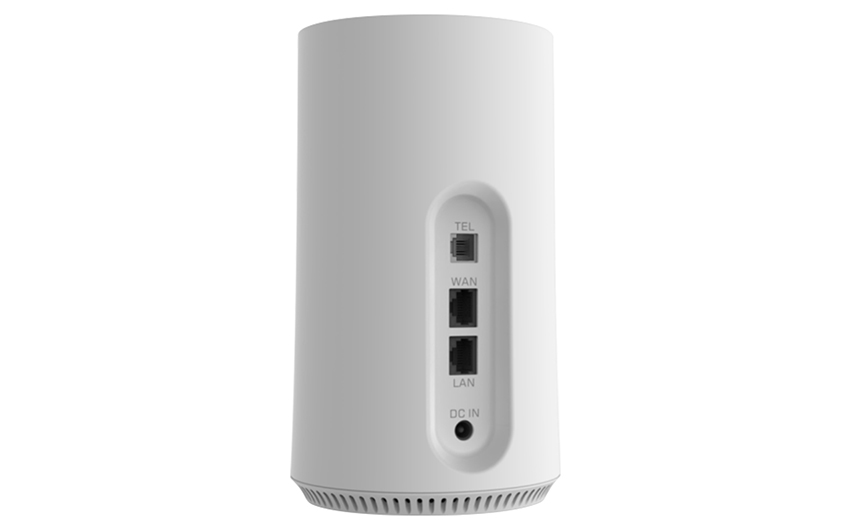
A GSM fixed wireless terminal, often shortened to GSM FWT, uses a mobile network to provide a fixed telephone connection. The device accepts a GSM SIM card and converts the cellular signal into an ordinary RJ11 telephone interface. Users can connect a wired phone and make local, long-distance, international or IP calls without installing a conventional PSTN line.
Junhaoyue GSM terminals use the Quectel M26 module for stable long-term operation. The modular hardware and software design supports maintenance and product upgrades, while the open interface structure allows the terminal to work with telephones, PBX systems, billing equipment, alarm panels and other analog voice devices.
Typical deployment scenarios
GSM FWTs are especially useful where fixed telephone wiring is unavailable, too expensive or too slow to install. Rural communities, mountain regions, temporary offices and remote service points can obtain telephone access anywhere a supported GSM signal is present. The device can also serve business halls, public telephone booths, buses, trains and taxis.
Emergency communication is another common use. During a highway incident or natural disaster, a cellular terminal can provide an immediate voice path without waiting for a fixed line. Elevator alarm systems and other safety equipment can use the RJ11 connection to place a call through the GSM network when triggered.
For operators and service providers, a GSM FWT can support public-phone, billing or unattended applications. It may connect to an IC-card phone, smart-network terminal or coin-operated telephone. These configurations allow service providers to extend voice access into locations that would otherwise be difficult to cover economically.
Telephone and billing functions
In addition to basic calling, models can support LCD status display, signal-strength indication, caller ID, timing and billing. Automatic IP dialing applies a stored prefix before selected calls, and different charging modes can be configured for the intended business model. Reverse-polarity or 12/16 kHz billing signals are available on compatible versions for connection to a metering device.
The terminal uses the same basic calling habit as a fixed telephone. A user picks up the handset, hears a dial tone, enters the destination number and completes the call over the GSM network. Incoming calls ring the connected phone, and caller information can be presented in FSK or DTMF format when supported by the network and handset.
Product features
- Modular hardware and software simplify upgrades and application changes.
- An SMA antenna connector supports a magnetic-base omnidirectional antenna, Yagi antenna or panel antenna.
- Operator and cell-lock functions can restrict the terminal to an approved network environment.
- SIM and PIN protection prevents unauthorized card or configuration changes.
- Incoming-call controls can allow, limit or block calls according to the project requirement.
- Automatic local-area-code settings simplify common dialing patterns.
- Optional one-key dialing provides a direct contact function for dedicated applications.
- RJ11 connection supports ordinary telephones, PBX systems and VoIP gateways with FXO interfaces.
- FSK or DTMF caller ID provides compatibility with different markets.
- Call hold, call waiting and conference calling are available when supported by the mobile network.
- Low-power design works with an external adapter or optional built-in battery.
Technical reference
A typical quad-band GSM model supports 850, 900, 1800 and 1900 MHz and accepts 1.8 V or 3 V SIM cards. The operating range is approximately -30 to +80 degrees Celsius with 5 to 90 percent relative humidity. Power may be supplied from AC 110-240 V through the included adapter, with DC 5 V or 12 V at the terminal depending on the model. Normal power consumption is no more than about 5 W.
The antenna and installation position have a direct effect on call quality. The terminal should be placed in a ventilated location with adequate mobile signal and away from equipment that may cause radio interference. If indoor signal is weak, an external higher-gain antenna can be selected after confirming the operator frequency and cable requirements.
Choosing the right terminal
Confirm the local GSM bands, SIM service, caller-ID format, number of RJ11 ports and the connected equipment before selecting a model. PBX, billing and alarm applications may require different feed current, metering signals, dialing rules or security settings. A sample test with the actual SIM and field equipment is the best way to verify compatibility.
GSM networks continue to support important voice and machine applications in many markets. Where coverage is available, a fixed wireless terminal provides an economical bridge between mobile infrastructure and existing analog equipment, helping operators and businesses extend service without the cost of new fixed-line construction.

Junhaoyue Editorial Team