
What is a Routing Node?
In today's world, where digital information flows ceaselessly, the network serves as the vascular system of society, and the traffic command center that ensures data packets reach their destinations with precision is the routing node. A routing node is a critical hub in network communications, responsible for forwarding data packets between different networks and ensure that information is transmitted accurately and efficiently. It is not only the infrastructure of the Internet but also a core component of various network architectures, include blockchain and enterprise intranets. Understand its working principles, types and deployment strategies is essential to build a stable and reliable network environment. Whether we browse the web in our daily lives, enterprises conduct cross-border data transmissions or emerging blockchain networks carrying out value exchanges, all of these operations rely on these silently working critical hubs.
1.Core Definition and Basic Functions of Routing Nodes
In simple terms, a routing node is a network device or software entity equipped with the capabilities of data packet forwarding and routing decision-making. Its core mission is to serve as an "intelligent relay station" between networks. When data is sent from one network to another, it does not arrive directly; instead, it needs to be relayed through one or more routing nodes in succession. Each routing node maintains a "map"—the routing table—which records path information to destinations on different networks. By consulting this table, the node selects an optimal "next-hop" path for each incoming data packet and forwards it accordingly. This process repeats until the data packet reaches its final destination. This is the essence of routing.
2.The Fundamental Difference Between Routing and Switching
People often confuse routing with switching, understand the distinction between the two is key to gain a deeper understanding of routing nodes. Switching typically occurs within the same local area network (LAN), operates at the data link layer, and forwards data frames rapidly based on physical addresses (MAC addresses). It behaves more like a postman delivering mail according to house numbers. Routing, on the other hand, operates at the network layer, handles communication between different networks, and makes decisions based on logical addresses like IP addresses. It needs to understand the overall network topology, functioning more like a dispatching center that plans routes across cities or even countries. A routing node must possess the "cross-network" perspective and decision-making capability.
3.Key Components of a Routing Node
A typical routing node—whether a hardware router or a software implementation—consists of several indispensable components. First are the multiple network interfaces, used to connect to different network links. Second is the CPU and memory, responsible for executing routing protocol calculations, maintaining the routing table and forwarding data packets. The core is the routing table itself, a database stored in memory. In addition, the routing node runs routing protocols, such as OSPF Open Shortest Path First or BGP (Border Gateway Protocol), which enable the node to automatically exchange network information with neighboring nodes, dynamically learn and update the routing table, and adapt to changes in network topology.
4.Routing Table: The Node's Internal Navigation Map
Routing table is the brain of the routing node. Each entry in the table typically contains several key fields: destination network address, subnet mask, next-hop address, outgoing interface and metric. The metric is an important cost indicator that may represent hop count, bandwidth, delay or reliability. Routing algorithms select the optimal path by comparing the metrics of different routes. The routing table can be established through static configuration that set by an administratormanuallyor dynamic learning (automatically acquired via routing protocols). An accurate and efficient routing table is the fundamental guarantee that data packets are correctly forwarded.
5.Detailed Data Packet Forwarding Process
When a data packet arrives at a routing node, a precise relay race begins. The node first checks the packet's destination IP address, then performs a bitwise "AND" operation between this address and the subnet mask of each entry in the routing table, compares the result with the destination network address, and looks for the best match (longest prefix match). Once found, the packet is encapsulated into a data frame suitable for the outgoing interface's link, the frame's destination physical address is set to the interface address of the next-hop node, and it is finally sent out through the designated outgoing interface. This entire process is completed in an extremely short time—for high-performance core routers, billions of such packets need to be processed every second.
6.The Role and Classification of Dynamic Routing Protocols
To enable routing nodes to automatically adapt to network changes, dynamic routing protocols came into being. Based on their scope of operation, they can be divided into Interior Gateway Protocols (IGPs) and Exterior Gateway Protocols (EGPs). IGPs are used within the same autonomous system (AS), such as RIP (Routing Information Protocol), OSPF (Open Shortest Path First) and IS-IS (Intermediate System to Intermediate System). They allow all nodes within the system to reach a consensus on network topology by flooding or propagating routing information. EGPs are used between different autonomous systems, with BGP (Border Gateway Protocol) being the most typical example. BGP exchanges reachability information based on policies and is the cornerstone that enables the Internet to interconnect into a global network. These protocols ensure the resilience and scalability of the Internet.
7.The Internet Core: Backbone Routing Nodes
In the architecture of the Internet, the routing nodes located on the backbone network bear the heaviest tasks. These nodes are operated by large telecom carriers or Internet Exchange Points (IXPs) and are interconnected via ultra-high-speed optical fibers. They run BGP and maintain the global Internet routing table, which contains hundreds of thousands of prefix entries. Backbone routers require extremely high processing power and forwarding performance, typically employ distributed architectures that separate line cards, switch fabrics and control planes. The connections and policies between these nodes directly determine the direction and quality of global Internet traffic—they are truly the "information superhighway hubs."
8.Deployment Considerations for Enterprise Routing Nodes
For enterprise networks, the deployment strategy of routing nodes is closely tied to business continuity and security. Enterprises typically deploy routers at the network perimeter as the exit connect to WANs or the Internet. Multiple factors must be considered during deployment: redundancy—achieved through dual-system hot standby or dynamic protocols for path backup; security—integrating firewalls, intrusion prevention systems (IPS), and implementing Access Control Lists (ACLs); Quality of Service (QoS)—prioritizing critical business traffic; and VPN support—providing secure tunnels for remote access and site-to-site connectivity. A well-planned enterprise routing architecture is the cornerstone that supports modern digital business operations.
9.Routing Nodes in Home and Small Office Scenarios
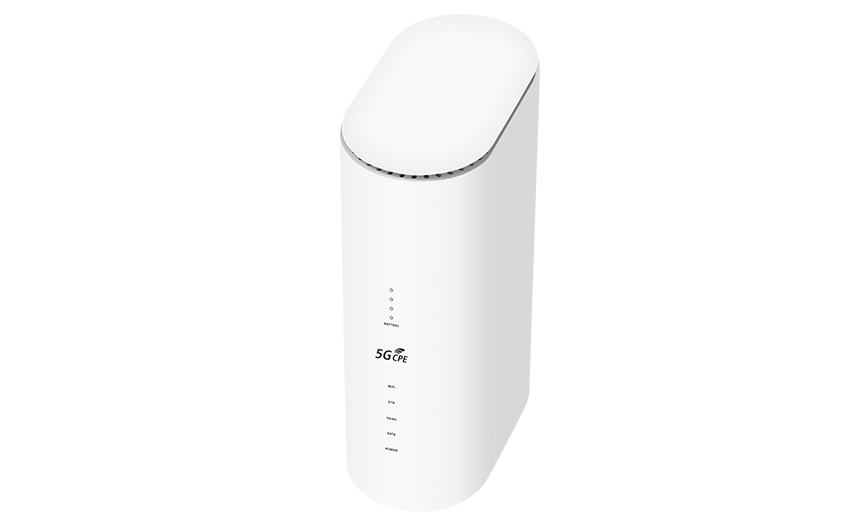
The common sim based router 4g or cellular 5g router found in our homes is actually a composite device that integrates routing, switching, wireless access point (AP) and even modem functions. In this scenario, the routing node's functions are relatively simplified. It typically assigns IP addresses to internal devices via DHCP (Dynamic Host Configuration Protocol) and uses NAT (Network Address Translation) to allow multiple devices to share a single public IP address for Internet access. Its routing table mostly consists of a default route provided by the ISP and simple LAN routes. Although it is not as complex as enterprise-grade equipment, its stability and ease of use directly affect the network experience of ordinary users.
10.Revolution Brought by Software-Defined Networking (SDN) to Routing Concepts
The rise of Software-Defined Networking (SDN) technology has brought revolutionary changes to routing. In an SDN architecture, the control plane (decision-making function) of routing is separated from the data plane (forwarding function). The control plane is centralized into software called a controller, which has a global view of the entire network and uniformly manages and programs the flow tables of all switching devices (the data plane) in the network via southbound interfaces such as OpenFlow. This makes the deployment of network policies and the adjustment of routing extremely flexible and fast, provide unprecedented agility for scenarios such as cloud data centers and WAN traffic engineering.
11.Special Routing Nodes in Blockchain Networks
In the blockchain domain, the term "node" has a broad meaning and includes routing functions responsible for propagating transactions and block information. For example, in Bitcoin or Ethereum networks, full nodes, while verifying transactions and blocks, also play the role of routing nodes: they establish connections with multiple peer nodes, receive, verify and forward transaction and block data. The nodes in the network self-organize into a peer-to-peer (P2P) overlay network and use specific propagation protocols such as Bitcoin's flood propagation to ensure that information spreads quickly and reliably throughout the entire network. This decentralized routing mechanism is the foundation of blockchain's censorship resistance and resilience.
12.Routing Optimization in Content Delivery Networks (CDNs)
Content Delivery Networks (CDNs) deploy edge nodes in various locations to cache content closer to users. One of their core technologies is intelligent routing. When a user requests content, the CDN's routing system (typically based on DNS or Anycast technology) directs the user to the optimal edge node. The criteria for this "optimal" judgment may be geographic distance, network latency, node load or cost. This is essentially application-layer routing, which goes beyond the traditional network-layer concern of IP address reachability, with the core goals of improving user experience and reducing origin server pressure.
13.Routing Nodes in Virtualized and Cloud Environments
In cloud computing and virtualized environments, routing functions are increasingly implemented as software. Virtual routers run as virtual machines or containers on commodity servers, provide isolation and interconnection for virtual networks. The Virtual Private Cloud (VPC) services offered by cloud providers are essentially highly programmable, software-defined virtual routing platforms where users can customize routing tables, configure VPN gateways and more. This virtualized routing offers extremely high elasticity and scalability, enable the deployment of network resources to be as on-demand and rapid in seconds as computing resources.
14.Security Challenges and Protection of Routing Nodes
As critical control points of the network, routing nodes themselves are also major targets of security attacks. Common threats include routing protocol spoofing like BGP hijacking, Distributed Denial of Service (DDoS) attacks that exhaust node resources, and exploit vulnerabilities to gain control privileges. Protective measures must be multi-layered: at the protocol level, technologies such as RPKI (Resource Public Key Infrastructure) and ROA (Route Origin Authorization) are used to verify the authenticity of routing information; at the device level, strict access management and timely system patch updates are implemented; at the network level, traffic scrubbing devices are deployed to counter DDoS attacks. Ensure the security of routing nodes is equivalent to ensure the smooth flow and trustworthiness of the network's main arteries.
15.Future Trends: Artificial Intelligence and Routing Intelligence
As network scale and complexity surge, traditional routing decisions based on fixed algorithms are facing challenges. Artificial intelligence, particularly machine learning is being introduced into the field of routing optimization. By analyzing massive amounts of network traffic data, AI models can predict congestion, identify anomalies and dynamically adjust routing strategies to achieve global optimization of overall network performance such as throughput and latency. In future, intelligent routing nodes with self-learning and self-optimizing capabilities may become the norm, enable networks to more proactively and intelligently adapt to ever-changing demands and environments.
16.Practical Points for Deployment and Operations
In the actual deployment and operation of routing nodes, several key practices should not be overlooked. During the planning and design phase, it is necessary to clearly define network layering such as core, distribution, access and IP address planning. During the configuration phase, the principle of least privilege should be followed, unnecessary services should be disabled, and ACLs should be meticulously configured. During the operations phase, continuous monitoring should be implemented, with attention paid to CPU and memory utilization and link traffic; configuration files should be backed up regularly; and a change management process should be established. Good operational habits are the guarantee to prevent network outages and quickly locating faults.
17.Key Metrics to Measure Routing Node Performance
To evaluate the quality of a routing node requires attention to a range of performance metrics. Throughput refers to the number of data packets or bits that the device can forward per second and is a core capability indicator. Forwarding latency is the time a data packet spends from entering the device to leave it, which is critical for real-time applications. Routing convergence time is the time it takes for all routing tables to become stable and consistent after a network topology change—the shorter the time, the faster the network recovers. There are also routing table capacity and reliability (Mean Time Between Failures, MTBF). These metrics collectively define the service level of a routing node.
18.Ubiquitous Intelligent Hubs
From the ordinary devices connecting our homes, to the super hubs supporting the operation of the global Internet, to the innovative forms empowering blockchain and cloud computing, routing nodes—with their indispensable "intelligent relay" function—are deeply embedded in every layer of the digital world. They are not merely cold technological devices but are the guarantee of the orderly and efficient operation of the information society. Understand their principles and development not only helps us to better use the network but also provides insight into the direction of future network technology evolution. As technologies continue to converge and develop, routing nodes will undoubtedly continue to evolve, silently safeguarding every connection and delivery in the digital world in smarter, safer and more efficient ways.